
Tree Surgeon Cambuslang Glasgow: Tree Care From the Clyde to Cathkin Braes
- Free, no-obligation quotes, with a site visit before any price is fixed
- BS3998-standard felling, climbing and rigging work carried out by NPTC-qualified staff
- Fully insured, from a single garden tree to multi-tree commercial clearance
Cambuslang sits on the south bank of the Clyde, with the Clyde Walkway running along its northern edge and Cathkin Braes rising on its south-eastern boundary -- ground shaped as much by the old collieries, the Clyde Iron Works and Hallside Steelworks that once stood here as by anything planted on purpose. Trees growing on reclaimed industrial ground don't always behave the way one in an undisturbed garden does below the surface, and that's before getting to the more ordinary calls: a fence-line sycamore overgrowing a back garden in Halfway, a leylandii hedge in Flemington that's got away from someone, or storm-loosened branches over a driveway in Westburn.
Housing here runs from Victorian terraces and tenements near the town centre out to newer estates on the fringes, and both ends of that range turn up the same basic questions about what a tree actually needs and what's allowed on it. Glasgow Trees has worked across Lanarkshire since 2005, and every call-out starts the same way: someone comes to look at the actual tree before any decision gets made about what it needs.
Whatever the job -- a single overgrown tree, a boundary hedge that's got away from you, or storm damage on a commercial site -- the standard doesn't change: work carried out to British Standard BS3998, and a written, no-obligation quote agreed before a date gets booked in.
What a Cambuslang Tree Booking Actually Covers
- Full tree removal, of any size, including dismantling in sections where a straight fell isn't safe near a house, fence or road
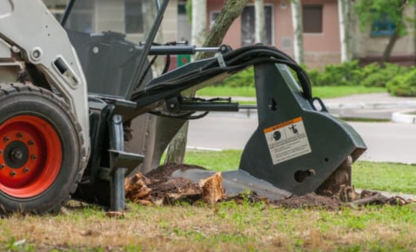
- Stump grinding and stump removal once the tree itself is down
- Crown reduction, crown thinning and crown lifting to bring a tree back within bounds or clear it off a roof or driveway
- Pollarding and coppicing, where a tree's growth habit calls for it rather than a straightforward prune
- Deadwooding and formative pruning on younger trees to head off problems before they set in
- Hedge cutting and land or bush clearance, including larger overgrown boundary hedges
- Wood chipping on site, with chip left as mulch or bagged for you to keep if you'd like it
- Emergency call-outs for wind-blown or storm-damaged trees, including partially fallen limbs still hung up in the canopy
- Commercial and local authority contracts, with method statements and risk assessments provided where the client needs them
- Liaison with South Lanarkshire Council where a tree is covered by a Tree Preservation Order or sits in a Conservation Area
Not Included / Costed Separately
- Hauling large volumes of timber or logs off site isn't automatic -- chip and smaller brash are cleared as standard, but if you want full log and timber removal rather than keeping it as firewood, say so when you book so it's priced in
- Replanting, turf reinstatement or soil remediation after a stump is ground out is a separate job, not part of the removal price
- Formal written arboricultural survey reports (the kind a mortgage lender, insurer or planning application sometimes asks for) are a different service to a routine site visit and quote, and are costed separately
- Tower scaffold or mobile crane hire for exceptionally large or awkwardly sited trees isn't included in a standard quote -- it gets priced once the access problem is seen in person
- Any Tree Preservation Order application fee set by South Lanarkshire Council itself, where one applies, is the landowner's cost -- the paperwork can be handled on your behalf but the council sets its own charges
- Evening, weekend or same-hour emergency response can carry a call-out premium on top of the standard day rate, which is confirmed before work starts, not after
How a Cambuslang Job Runs, From Your Call to a Cleared Site
- Getting in touch -- You tell us what's going on: roughly the tree's size, where it sits on the plot, whether it's dead, storm-damaged, or possibly covered by a Tree Preservation Order, and anything urgent -- a tree down across a driveway after wind gets flagged for a faster response than a routine hedge trim.
- A proper look before a price is written down -- Someone comes out to look at the actual tree, not a photo of it -- checking access (can a chipper get up the close or driveway, are there overhead lines to work around), the tree's condition, and, for anything that might sit within a Conservation Area or under a TPO, a check against South Lanarkshire Council's records before any figure goes on paper.
- Consent, scheduling and the work itself -- If a tree needs consent before work can start, that gets sorted first -- a Tree Preservation Order or Conservation Area notice can carry a six-week wait with the council, and it's better to know that on day one than after a date's booked in. Once cleared, the work follows: climbing, rigging and dismantling, or ground-based felling where there's room, all carried out to BS3998, with a stump grinder or wood chipper brought in as needed rather than left running for no reason.
- A cleared site and a straight invoice -- Brash is chipped, the site swept and raked, and any agreed timber stacked or removed. Before anyone leaves there's a walk-round with you, an invoice matching the quote (extra work only ever added with your agreement first), and honest advice on anything worth keeping an eye on -- a neighbouring tree, or a stump that'll need a second grind once it's dried out.
What Tree Work Costs in Cambuslang, and Why the Range Is Wide
Tree removal prices in the UK generally run from around £150 for a small garden tree up to roughly £4,800 for a large, mature tree in a difficult position, with day-rate labour typically sitting between £180 and £250 -- figures drawn from industry-wide sources like MyJobQuote, Checkatrade and MyBuilder rather than anything specific to one firm. Where your job lands in that range depends on the tree's height and species, how close it is to a house, greenhouse, garden wall or overhead line, whether a crane or scaffold tower is needed to get at it safely, and how much timber has to be hauled away afterwards rather than chipped on site. Stump grinding on its own is usually a smaller job, often in the low hundreds of pounds for an average domestic stump, though a large or multi-stemmed stump -- more common on ex-industrial ground around Cambuslang where old root systems have had decades to establish -- costs more simply because of the extra time on the grinder. None of these figures replace an actual look at your tree -- a quote given without seeing the access, the lean, the deadwood, or how close it is to a fence line isn't a real quote, which is why every price here comes after a free site visit, not before one.
Choosing Between a Gardener, a Small Firm and a Qualified Tree Surgeon
| What you need | General gardener or handyman | Small local firm, no NPTC papers | Glasgow Trees |
|---|---|---|---|
| Climbing and felling to BS3998 | Not typically qualified | Varies, often unverified | Yes, NPTC/Lantra qualified team |
| Public liability insurance for tree work specifically | Often covers gardening, not felling | Sometimes limited or excluded | Fully insured for tree surgery |
| Handling TPO/Conservation Area checks with South Lanarkshire Council | Not usually offered | Sometimes, informally | Checked before quoting, notice period explained upfront |
| Machinery for large or storm-damaged trees (stump grinder, timber crane, 360 excavator) | Rarely available | Limited equipment range | Full range operated in-house |
| Method statements/risk assessments for commercial or council contracts | Not provided | Not usually provided | Provided on request |
Reading Cambuslang's Ex-Industrial Ground Right
A lot of Cambuslang was collieries, the Clyde Iron Works or Hallside Steelworks within living memory, and ground that's been through decades of mining and heavy industry doesn't always carry a tree's roots the way an old established garden does -- buried foundations, made-up ground and old workings can all affect how stable a tree actually is, which matters as much as the tree's own condition when deciding whether it needs taking down or can be safely reduced instead. Set against that, the tenement back courts and terraced gardens nearer the town centre call for the opposite skill: rope and harness work in a tight space with washing lines, sheds and a neighbour's fence a few feet away, where a section has to come down exactly where it's aimed. Glasgow Trees has traded under that name since 2005, works to British Standard BS3998 on every job, and is registered at Clyde Offices on West George Street in Glasgow city centre, rather than run off a van and a mobile number alone. Every quote is free, with no obligation to book.
Cambuslang's Ground: From the Clyde Walkway to Cathkin Braes
Cambuslang is one stop among several this team covers along the M74 corridor -- Rutherglen and Burnside sit right next door, with Glasgow, East Kilbride and the wider South Lanarkshire area easily reached from here -- but Cambuslang itself has enough variety in its own ground to be treated as its own patch rather than a stop on the way somewhere else.
The Clyde Walkway runs along the town's northern edge, following the river through ground that's flat, often damp underfoot, and shaped by the industry that once lined the riverbank. Cathkin Braes rises on the south-eastern boundary, the highest ground in the wider Glasgow area and now a country park with its own established woodland, quite different underfoot from the flood plain below. In between, neighbourhoods like Halfway, Flemington, Westburn and Newton carry a mix of older tenement back courts, interwar and postwar housing, and newer estates built on reclaimed colliery and steelworks land.
Any tree close to the Clyde or the Walkway itself brings its own access questions -- soft ground, limited vehicle access, sometimes a longer carry for chip and brash -- and any tree covered by a Tree Preservation Order or sitting within a Conservation Area needs sign-off through South Lanarkshire Council's planning team before work goes ahead; that's the department keeping the area's TPO list and administering Conservation Area consent.
What Cambuslang Customers Usually Ask First
How much does tree surgery cost in Cambuslang?
As a rough guide, UK tree removal typically runs from around £150 for a small garden tree to roughly £4,800 for a large mature tree in a difficult spot, with day-rate labour usually between £180 and £250. Stump grinding on its own is usually cheaper again for an average domestic stump, though older stumps on ex-industrial ground can take longer to grind out. The actual figure for your tree depends on its size, species, access and how close it sits to buildings or overhead lines, so a firm price only comes after a free site visit, not before one.
Do I need South Lanarkshire Council's consent to remove a tree in Cambuslang?
It depends on whether the tree is covered by a Tree Preservation Order or sits within a Conservation Area, both matters the council's planning team deals with. If either applies, written notice or consent is needed before work starts, and there can be a statutory notice period to allow for. A site visit checks this against the council's own records before any quote is given, so it's caught before a date gets booked rather than after.
Does former industrial or ex-mining ground affect tree work in Cambuslang?
It can. A good deal of Cambuslang sits on ground that was once collieries, the Clyde Iron Works or Hallside Steelworks, and made-up or disturbed ground can affect how well a tree is rooted, which feeds into the judgement on whether it needs removing rather than reducing. It doesn't change the price of a routine job, but it's exactly the kind of thing a site visit is for rather than a guess over the phone.
How quickly can a tree surgeon respond to storm damage in Cambuslang?
Genuinely dangerous situations -- a limb hung up over a path, a tree leaning onto a fence or roof, a trunk blocking a driveway -- get prioritised over routine pruning bookings. How fast depends on what else is already scheduled that day, so it's worth calling and describing exactly what's happened rather than assuming a fixed response window.
What does stump grinding cost in Cambuslang?
A single average-sized domestic stump is usually a lower-cost job than the tree removal itself, often in the low hundreds of pounds, though a large or multi-stemmed stump takes longer to grind and costs more accordingly. Grinding is normally done once the wood has had a chance to dry out a little, and a second pass is sometimes needed on a stubborn root system.
Can you work on trees close to the Clyde Walkway or Cathkin Braes?
Yes -- both come up regularly. Ground near the Walkway itself is often flatter and damper underfoot, which can mean a longer carry for equipment and cut material, while trees within or bordering Cathkin Braes Country Park may fall under its own management arrangements alongside any general TPO or Conservation Area protection, which is checked at the quote stage.
Are you insured for tenement back-court work in Cambuslang?
Yes -- the team carries full public liability insurance for tree surgery work, and back-court jobs reached through a single close, with washing lines, sheds and neighbouring gardens close by, are a routine part of the work here rather than an unusual request.
How do I check if a tree in my Cambuslang garden is protected?
South Lanarkshire Council's planning team keeps the Tree Preservation Order register and Conservation Area maps for Cambuslang, and this can be checked as part of a free site visit rather than left for you to research alone. If a tree is protected, that doesn't usually mean it can't be worked on -- it means consent or notice is needed first, which takes time to build into the schedule.
Do you handle both domestic and commercial tree work in Cambuslang?
Yes -- everything from a single back-garden tree to larger commercial and local authority contracts, with method statements and risk assessments provided for commercial clients who need them as part of their own site paperwork.
A Cambuslang Tree Rarely Waits for a Convenient Week
A tree that's already leaning, dropping deadwood, or sitting too close to the roofline for comfort tends to get worse rather than better left alone. A free, no-obligation site visit costs nothing and gives you a straight answer on what the tree actually needs -- a full removal, a reduction, or just keeping an eye on it for another season.
Glasgow Trees
Call 0141-483-7485