
Commercial Building & Site Vegetation Clearance
Commercial Vegetation Removal Glasgow | Glasgow Trees
✓ Trading since 2005✓ BS3998 standard✓ Fully insured✓ Free quotes
Trading Since 2005
BS3998 Standard
Fully Insured
Free, No-Obligation Quotes
Introduction
Ivy working its way up a wall, self-seeded saplings pushing through a fence line, bramble and scrub creeping over a car park edge -- left for a season or two, this kind of growth turns into a genuine problem on a commercial site. It blocks sightlines to signage, narrows access roads and loading bays, and gets into brickwork, render and drainage long before anyone flags it as a job that needs doing.
Buddleia seeds itself into gutters, parapet joints and the gaps around roof edges within a single growing season, and once it's rooted in a joint it can start prising masonry apart from the inside rather than just sitting on the surface. Sycamore and ash saplings come up through cracked tarmac and along fence lines just as quickly, and ivy left on an old boundary wall or gable end can be five or six years old, with a stem as thick as a wrist, by the time it's finally dealt with. Glasgow Trees clears this kind of overgrown vegetation from commercial premises across the city, working to British Standard BS3998 with a fully insured, NPTC-qualified team.
This is a different job from a full site strip ahead of construction or an ecological impact survey. Vegetation removal is about taking back ground that's been let go -- cutting and clearing what's built up over one or more seasons on a site that's already in day-to-day use, rather than stripping a site bare before groundworks start. That might mean a single overgrown corner behind a unit, a car park edge that's crept a metre into the tarmac, a boundary hedge that hasn't been touched since a previous tenant moved out, or ivy that's spread across an entire gable wall and started lifting roof tiles at the eaves. It's also common on sites that have changed hands or changed use -- a former yard now used for parking, or a unit that stood empty for a year or two before a new tenant took it on -- where whatever was growing at the boundary simply carried on unmanaged. The sites we see this on most often are retail units with a car park edge or delivery yard nobody's responsible for day to day, industrial estates with shared access roads and servicing yards, and business parks where landscaped borders were maintained for the first year or two after handover and then left. A boundary fence that's disappeared under bramble isn't just untidy -- it can hide a gap in the fence line itself, block a fire escape route that's rarely used but still needs to be clear, or put a landlord in breach of a lease clause about maintaining common areas. A free, no-obligation site visit lets us see exactly what's involved, including what access machinery like a chipper or stump grinder will have, before any work or cost is agreed.
Key Selling Points
- Trading as Glasgow's tree specialists since 2005
- NPTC-qualified team working to British Standard BS3998
- Free, no-obligation site visit and quote
What's Included in a Vegetation Removal Job
- Removing ivy and other creeping growth from walls, fences and the trunks of retained trees, cutting the stem at the base rather than pulling it off while still attached where that risks taking pointing or render with it
- Clearing growth from around outdoor plant, meter boxes, transformer housings and other services equipment where scrub or self-seeded saplings have grown up against it and restrict access for maintenance or inspection
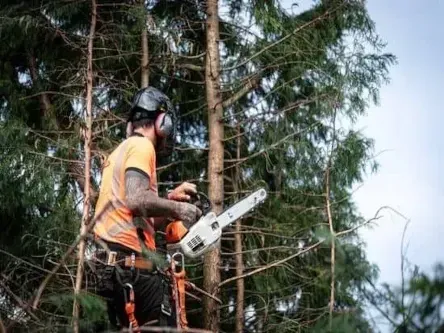
- Clearing self-seeded saplings and scrub encroaching on boundaries, car parks and access roads, including sycamore, ash and buddleia that have come up through tarmac joints, kerb lines and expansion gaps, and checking whether a sapling has already put down enough root to need digging out rather than simply cutting at ground level
- Cutting back bramble, bracken and buddleia from neglected corners, banking and drainage ditches, including growth that's started to block a culvert, soakaway or surface water gully
- Reducing overgrown hedgerows and boundary vegetation that has spread beyond its original line, including old leylandii, privet and beech hedges left uncut for several seasons and now overhanging a neighbouring property or pavement, cut back gradually where a hedge has gone well beyond its original size rather than all at once
- Removing epicormic growth and suckering from the base of trees that are being kept on site, which left unchecked can turn a single clean stem into a dense thicket around the base within a couple of seasons
- Clearing vegetation that's obstructing fire escape routes, external stairwells, emergency access points, CCTV camera sightlines or external lighting columns, all of which can become a compliance issue as well as a maintenance one, and worth flagging early if a fire risk assessment or insurance inspection is due
- Cutting back growth that's grown into and around fence panels, chain-link and palisade fencing, taking care not to damage the fence line itself while freeing it from bramble or ivy
- Chipping cut material on site with a wood chipper, or bagging and removing it where chipping isn't practical because of tight access or a live loading bay
- Cutting back overhanging branches from retained trees where they're catching on delivery vehicles, HGVs or bin lorries using a yard or access road
- Grinding out old stumps left from previous felling where they're a trip hazard, sit in a walkway, or block resurfacing or line-marking work
- Clearing vegetation encroaching on shared access roads, servicing yards or delivery routes used by more than one unit, where growth on one tenant's boundary can end up blocking a route everyone relies on
Not Included / Costed Separately
- Full site strip, grubbing out and levelling ahead of construction -- that sits under our separate site clearance service rather than this one, since it usually involves removing everything on a plot rather than selectively clearing overgrowth around what's staying
- Ecological surveys and mitigation reporting (EcIA) required for planning applications, which needs a qualified ecologist rather than a tree surgery team
- Removal of trees that are still healthy and structurally sound but simply in the way of a future development plan -- that's a planning and consultation matter rather than a vegetation clearance one, and any tree with a TPO needs the relevant council's consent regardless
- Treatment or removal of legally controlled invasive species such as Japanese knotweed, which needs a specialist licensed contractor with the right disposal consents
- Herbicide treatment or spraying for low-growing weeds in tarmac cracks, gravel margins and paved areas -- this is a cutting and clearing service, not chemical weed control
- Reinstatement, turfing or landscaping once the ground has been cleared, which is usually handled by a separate landscaping contractor once the site is clear
- Removal of asbestos sheeting, old fly-tipped material or other hazardous waste found buried in overgrown areas, which needs a licensed waste specialist and can't be handled as part of a standard clearance
- Ongoing grounds maintenance contracts and routine mowing, which fall under our separate commercial ground maintenance service rather than a one-off clearance
- Structural repairs to walls, fences or drainage that vegetation has been growing into -- we'll flag anything that looks compromised once it's exposed, but the repair itself sits with a builder or specialist contractor
How We Clear Overgrown Ground on a Commercial Site
- Enquiry and photos: A quick description of the site and, where possible, photos of the overgrown area give us a rough sense of the job before any visit is arranged -- how dense the growth looks, roughly how much ground is involved, and whether it's a boundary, a car park edge or a wall that's affected.
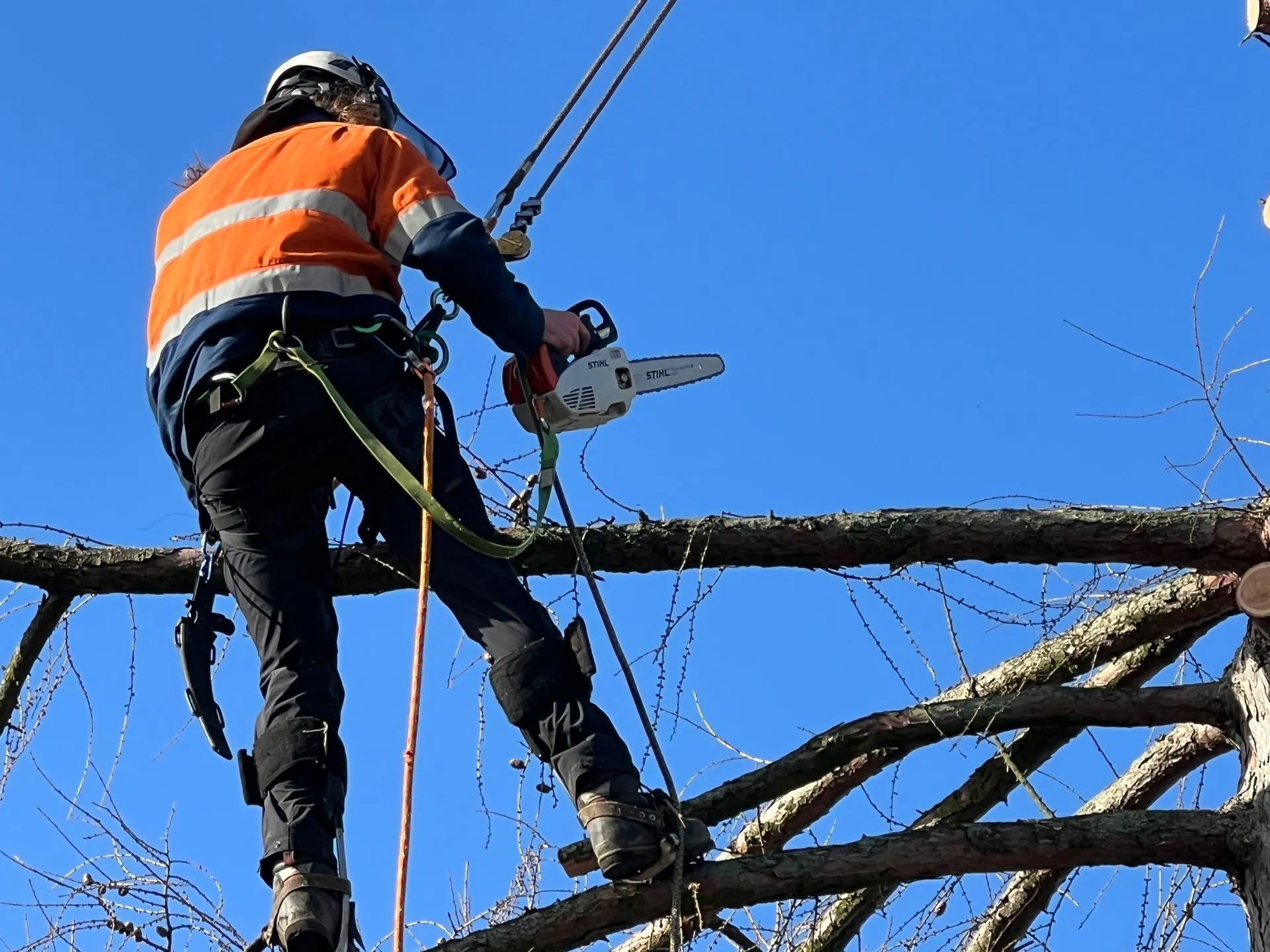
- Free site visit: We walk the site to see how dense and widespread the growth actually is, check what access machinery like a wood chipper or stump grinder will have, note anything that needs working at height or from a ladder, and confirm the quote in person rather than over the phone or from photos alone.
- Checking constraints and planning access: Before cutting starts we check whether any trees on site carry a Tree Preservation Order or sit within a conservation area, and if the timing falls within bird nesting season, broadly March to August, the work is planned or adjusted around that rather than pressing ahead regardless of what's found. Where a hedge or stand of scrub is dense enough that a nest could be hidden inside it, that section is checked on foot rather than assumed clear from a distance. For a site that's still open for business, we also agree which areas need to stay clear during working hours, where a chipper or stump grinder can be positioned without blocking a loading bay or customer parking, and whether any part of the job is better scheduled before opening or after close. For a multi-tenant site, this sometimes means agreeing access with more than one occupier or a managing agent before work can start.
- Clearing and cutting: Growth is cut back or removed with the right tool for what's there -- hand tools and brushcutters for scrub and bramble, chainsaws for woody stems and saplings, a stump grinder for old stumps, and a 360 excavator where root systems are large or embedded in hard standing. Retained trees and any features flagged during the site visit are worked around rather than cut back further than agreed.
- Chipping and disposal: Cut material is chipped on site with a wood chipper where access allows, which is quicker and avoids leaving green waste piled up against a wall or fence overnight. Where chipping isn't practical, material is bagged and removed for disposal instead, and any timber worth keeping can be left stacked on site if asked. Chippings themselves can also be left on site as mulch for a border or planted area, rather than taken away, if that's useful to whoever manages the grounds.
- Final check and sign-off: We walk the cleared area with you, or send photos to an offsite facilities or property manager, to confirm the job matches what was agreed, that access routes and sightlines are clear, and that nothing's been left that could become a trip hazard, before we leave the site. Where a stump's been ground out, the resulting hole is backfilled with the wood chippings from grinding rather than left open.
Vegetation Removal Costs for Commercial Sites
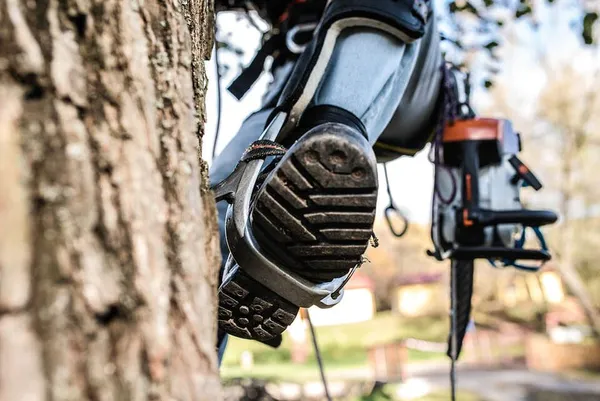
Cost depends mainly on how much ground is involved, how established the growth is, and what access machinery has to the site. A small patch of bramble and scrub behind a unit is a different job to ivy that's spread across an entire boundary wall, or a car park edge that's been left for several seasons and has saplings with real root systems rather than first-year seedlings.
Working at height on a gable wall or parapet, stump grinding, and off-site disposal by skip or vehicle rather than on-site chipping all add to the total, and a site that needs work scheduled outside normal opening hours, or machinery access agreed with a landlord or neighbouring occupier, takes longer to plan than an open car park with easy access. Time of year plays a part too -- growth cut back in winter, once it's died back and thinned out, is generally quicker to clear than the same area tackled at the height of the growing season when everything is still in full leaf and harder to see through.
Because of that spread, we don't give a flat rate over the phone or from photos alone -- two sites that both sound like "an overgrown boundary" on the phone can turn out to be very different jobs once the growth is actually walked and measured. An overgrown corner behind a single unit, cleared with hand tools and a brushcutter in a few hours, sits at one end of that range; a car park perimeter that's been left for several seasons, with saplings to fell, ivy to strip off a boundary wall and a couple of old stumps to grind, sits well beyond it, and a business park boundary strip running the length of several units is a different scale of job again. A free, no-obligation site visit lets us see exactly what's there, how it needs to be accessed and cleared, and give an accurate figure before anything is booked in, so there are no surprises once work starts.
A Team That Inspects Trees, Not Just Cuts Them
Glasgow Trees has traded as Glasgow's tree surgery specialists since 2005, and the qualifications behind commercial vegetation work go beyond cutting. The team holds NPTC Professional Tree Inspection training, which matters on a commercial site because deciding whether a stem against a wall is a genuine structural risk or a low-priority nuisance takes proper inspection knowledge, not just a chainsaw ticket -- getting that wrong either wastes a client's money removing something harmless or leaves a real risk in place.

Machinery certificates cover stump grinders, wood chippers, a 360 excavator and telehandler operation, so root systems and larger woody growth around foundations, car parks and boundary lines can be handled directly rather than passed to a subcontractor, which keeps a job to one visit instead of several.
The team also holds FMO tractor, forwarder trailer and line skidder certification, which matters most on larger commercial and estate boundaries where dense scrub or an overgrown hedgerow sits well back from a hard road surface. On ground like that, cut material can be extracted from wet or sloped ground without dragging it across a car park, flower bed or neighbouring garden, and without a second contractor needing to be brought in just to move it -- something a general grounds contractor working with a van and strimmers usually can't do. Work is fully insured throughout, and every quote is free and given after an on-site look at the job rather than a figure guessed over the phone. That combination -- inspection training, a full set of felling and machinery certificates, and access equipment most grounds contractors don't carry -- is what lets one team take a job from an ivy-covered gable wall through to a car park boundary needing a stump ground out, without handing any part of it off.
Glasgow Trees Compared With General Grounds Contractors and DIY Removal
| What matters | Glasgow Trees | General landscaping / grounds contractor | In-house facilities team (DIY) |
|---|---|---|---|
| Tree and vegetation-specific training | NPTC/Lantra qualified in tree felling, aerial work, chainsaw and rigging techniques, working to British Standard BS3998 | Usually trained in mowing and hedge trimming, not structural tree or root work | No formal qualification for cutting established growth or root systems |
| Legal checks before work starts | Tree Preservation Order and conservation area status checked before removal begins, and nesting bird checks carried out where the timing falls in the March to August season | Rarely checked as standard, which risks an unauthorised felling or pruning issue | Rarely checked, and the same legal risk applies to a DIY job |
| Equipment for embedded growth | Stump grinders, wood chippers, a 360 excavator and FMO tractor and trailer for root systems, larger woody growth and ground a van can't reach | Strimmers and hedge trimmers, limited once ivy or roots have taken hold | Domestic tools only, not suited to mature root systems or ivy on masonry |
| Working around an occupied site | Access and timing agreed in advance so machinery doesn't block a loading bay or customer parking during opening hours | Varies by contractor, often scheduled without checking site-specific access constraints | Whatever hours facilities staff can spare around their normal duties |
| Waste and disposal handling | Cut material chipped on site or bagged and removed, with timber left stacked on site if preferred | Often removed off-site with an added disposal charge, sometimes without a choice offered | Left to the client to arrange skip hire or council collection |
| Insurance in place | Fully insured tree surgeons | Cover varies and may exclude tree-specific work | Typically no public liability cover for this type of work |
| Quotes | Free, no-obligation site visit with a figure confirmed in person | Often chargeable or bundled into a wider grounds contract | No formal quote in most cases -- just staff time plus any tool hire or disposal costs |
Coverage Beyond the City Centre: Dunbartonshire, Inverclyde and Rural Stirlingshire
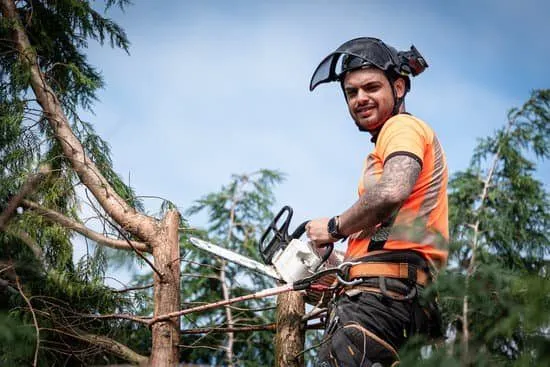
Alongside central, east, west, north and south Glasgow, the same team covers commercial premises in Clydebank and Dumbarton in West Dunbartonshire, and Greenock down the Clyde estuary in Inverclyde. Glasgow's tree canopy cover sits at around 15%, above the UK's urban average of 10%, which in practical terms means more seed-bearing trees close to commercial sites and more self-seeded saplings turning up in gutters, car park margins and gravel beds than a site in a more open town would typically see.
North of the city, Bishopbriggs, Bearsden, Milngavie and Kirkintilloch sit in East Dunbartonshire on the fringe of the Campsie Fells, and coverage extends further out to Strathblane, Killearn, Balfron and Fintry, smaller settlements where commercial and estate sites more often have mature boundary hedgerows and roadside trees rather than city-centre planting, and where a tractor-and-trailer combination can matter more than a van and strimmers. Kippen and Stirling itself are within reach too, as is Bo'ness on the Firth of Forth in the Falkirk council area, the furthest-flung point on the service map and one that's usually scheduled alongside other work in the same direction rather than as a standalone trip. Closer to Glasgow, Barrhead, Pollokshaws, Baillieston, Bothwell and Blantyre are also covered, alongside business and industrial premises in areas like Hillington, Cambuslang and along the Clyde Gateway corridor, where units backing onto rail embankments, canal ground or old riverside land tend to pick up scrub and self-seeded growth faster than a purpose-built retail park with managed borders. Coverage overall follows the M8, M74, M77, M80 and A82 corridors that link these eight council areas together, so a job on one side of the city and one on the other can both be reached within the same working day. Paisley, Erskine and Renfrew in Renfrewshire, and East Kilbride, Hamilton and Cambuslang in South Lanarkshire, are also covered, and business estates along these corridors -- where units sit close to the motorway embankment itself -- tend to see faster self-seeded growth along the boundary than sites set further back from a road.
Book Before the Next Growing Season Takes Hold
Ivy, bramble and self-seeded scrub don't stay the same size for long once the growing season gets going, and hedge and vegetation work is also restricted during bird nesting season, broadly March to August, under wildlife law. Getting a site visit booked in early means the work can be planned for a suitable window and around normal business hours, rather than rushed once growth has taken over a boundary, car park edge or fire escape route again.
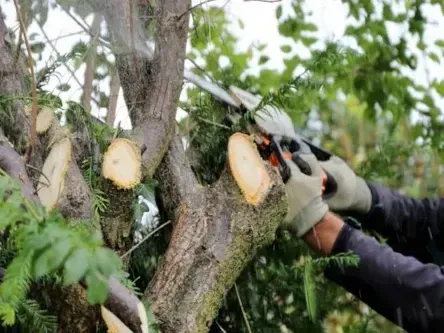
A corner that's manageable with hand tools and a brushcutter this month can need a chainsaw and a stump grinder by next season if it's left, so the earlier a site visit happens, the more options there are for how and when the work gets done. Get in touch for a free, no-obligation quote.
Frequently Asked Questions
Do you check for nesting birds or protected trees before you start cutting?
Yes. Hedge and vegetation work is restricted during the bird nesting season, broadly March to August, under wildlife law, so we check for active nests before work goes ahead, and any tree on site is checked for a Tree Preservation Order or conservation area status before it's touched. If nesting activity is found, that section of the job is held back until the nest is no longer in use, even if the rest of the site can go ahead.
What happens to the cut material?
Most cut material is chipped on site with a wood chipper where access allows, which is quicker and avoids leaving green waste piled up against a fence or wall. Where chipping isn't practical -- tight access, a live loading bay, or a restriction on machinery noise during business hours -- material is bagged and removed for disposal instead, and larger sections of timber can be left stacked on site rather than taken away, if that's more useful to the client.
Will removing ivy damage the wall underneath?
Ivy that's been established for years can leave root marks, discolouration or loosen old mortar once it's cut back, and that's generally down to the existing state of the wall and pointing rather than anything caused by the removal itself. Cutting the stem at the base and letting the growth die back naturally, rather than pulling it off while still attached, keeps disturbance to the brickwork or render to a minimum, though a wall that was already in poor repair underneath the ivy will still need separate attention from a builder. It usually takes a few weeks for the dead growth to dry out and loosen its own grip enough to be pulled clear by hand, so a wall isn't always fully bare on the day the job's done -- that's normal rather than a sign the job wasn't finished properly.
Do you remove Japanese knotweed or other invasive species?
No -- controlled invasive species like Japanese knotweed have their own legal handling and disposal requirements and need a specialist licensed contractor. Cutting or disturbing it without the right consents can spread it further rather than control it, which is part of why it's regulated separately. We'll flag it if we come across it during a site visit or while clearing other growth, but the treatment itself sits outside this service and shouldn't be attempted as part of a general clearance.
How much does vegetation removal cost for a commercial site?
It depends on how much ground is involved, how established the growth is, and how easily machinery can get to it -- a small patch of scrub is a different job to ivy across a full boundary wall, and stump grinding or off-site disposal both add to the total. Sites with restricted access, such as a car park with limited turning space for a chipper or a boundary only reachable on foot, generally take longer than an open site of the same size. A free, no-obligation site visit gives an accurate figure rather than a phone estimate or a price based on photos alone.
How quickly can a job like this be booked in?
That depends on the time of year and how much other work is on, but a site visit can usually be arranged within a few days of getting in touch, with the work itself scheduled around any nesting bird restrictions, access agreements or out-of-hours requirements the site has. Late autumn through winter, once growth has died back and before nesting season starts in March, tends to be the most straightforward window to work in, though urgent jobs -- growth blocking a fire escape or a sightline that's become a safety issue -- are dealt with regardless of the time of year.
Can you work on a site while it's still open to staff, customers or the public?
Yes, most commercial vegetation work happens around normal site use rather than requiring a full closure. On the site visit we agree which areas need to be kept clear during opening hours, where machinery like a chipper or stump grinder can be positioned without blocking access or parking, and whether any part of the job -- typically chainsaw work near an entrance or loading bay -- is better scheduled before opening or after close. A chipper does generate noise while it's running, so for a retail unit with customers close by, that part of the job is often timed for a quieter part of the day even if the cutting itself happens during normal hours.
Is the site left safe and tidy afterwards?
Yes -- cut material is chipped or removed, any stumps that are a trip hazard are ground down, sightlines to signage and cameras are checked, and the area is walked through with you, or photographed for an offsite manager, before the job is considered finished.
Do you offer a one-off clearance or ongoing maintenance to stop growth coming back?
This service is a one-off clearance -- getting overgrown ground back under control. Ivy, bramble and self-seeded saplings will start coming back the following season unless something is done to keep on top of them, and how fast depends on what's growing: bramble and buddleia can put on noticeable new growth within a few months, while a hedge that's been reduced hard tends to stay manageable for longer before it needs cutting back again. If a site wants that growth kept down going forward rather than cleared once and left again, that's better arranged as a recurring visit under our separate commercial ground maintenance service rather than repeat one-off clearances.
Don't Let This Season's Growth Become Next Year's Structural Bill
Ivy, bramble and self-seeded scrub don't stay the same size for long, and cutting is restricted during bird nesting season from March to August. Get a free, no-obligation site visit booked in now and we'll tell you straight what needs doing and what it'll cost.
0141-483-7485
Protecting Glasgow commercial properties from overgrown vegetation since 2005.
Free site visit, a fully insured NPTC-qualified team, and a straight answer on what it costs.
Get a Free Quote
🔒 Your details are safe with us. No spam, ever.