
Glasgow's Tree Specialists Since 2005
Development Site Clearance Glasgow | Tree & Scrub Removal
NPTC-qualified crew clearing trees, hedges, scrub and invasive species from Glasgow development plots to British Standard BS3998 – TPO and felling licence paperwork handled in-house, knotweed and rhododendron taken to licensed disposal, and free no-obligation site quotes.
A development plot rarely comes clear of vegetation. Before groundworks can start, every tree, hedge line, patch of scrub and any invasive species on the site needs to be identified, worked through in the right order, and either processed on site or taken away without leaving root systems or contaminated soil behind for the next contractor to inherit. That's the job covered here: clearing what's growing on a plot down to a state a groundworks team can build on, while keeping any trees the site plan requires you to retain properly protected the whole way through.
Most plots reach this stage with a mixed history behind whatever's growing on them: some trees are already flagged on a BS5837 survey submitted with the planning application, others are self-seeded growth that's gone unmanaged since the site was last worked, and boundary hedgerows can be old enough to fall under different protection rules than an ordinary garden hedge. Getting the order right matters as much as getting the work done -- felling licence or Tree Preservation Order consent needs to be in place before certain trees come down, and where knotweed, rhododendron or another problem species turns up, it's identified and disposed of at a licensed facility rather than cut back and left in a pile, with the relevant paperwork prepared alongside the clearance itself rather than after the fact. For the wider groundworks and machinery side of getting a plot construction-ready, our site preparation page covers that in more depth -- this page is specifically about the tree, hedge and vegetation clearance stage that has to happen first.
At a Glance
- Free, no-obligation site quotes
- All tree work carried out to BS3998
- Invasive species taken to a licensed disposal facility, not just cut back
Commercial Ecological Clearance Glasgow
0141-483-7485 Professional Environmental Site Preparation for Development Projects
Bottom Line Up Front: Glasgow Trees delivers comprehensive commercial ecological clearance across Central Scotland, combining 30+ years expertise with CNJ partnership capabilities for development projects requiring environmental compliance, planning permission support, and large-scale vegetation management.
Commercial development success depends on professional ecological clearance that balances environmental responsibility with project efficiency. Glasgow Trees, operating in full partnership with CNJ Tree Services, provides comprehensive commercial site preparation across Glasgow and Central Scotland, serving major developers, construction companies, and infrastructure projects with the expertise and equipment capacity that large-scale clearance demands.
Our NPTC certified team brings 30+ years combined experience to complex commercial projects, from housing developments and industrial sites to utility corridors and transport infrastructure. The strategic partnership with CNJ Tree Services provides enhanced capabilities through specialist heavy-duty equipment, extended geographic coverage, and owner-operated quality control that ensures every commercial clearance project meets planning requirements whilst supporting Glasgow’s environmental leadership goals.
Call 0141-483-7485 for your FREE commercial site assessment within 24 hours.
Expert Commercial Ecological Clearance Services Across Glasgow and Central Scotland
Commercial ecological clearance requires fundamentally different approaches than residential tree services, demanding specialist equipment, complex planning navigation, and environmental compliance management that protects both your investment and Glasgow’s urban forest. Our commercial division serves major developers, construction companies, and infrastructure projects with comprehensive clearance solutions designed for multi-acre sites and complex regulatory environments.
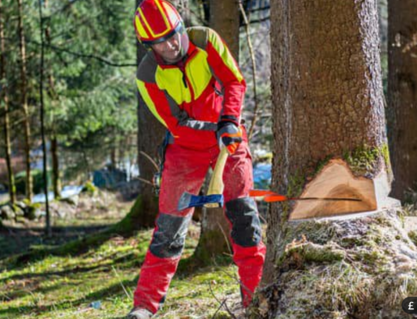
Unlike residential tree work, commercial clearance involves extensive stakeholder coordination, phased project management, and strict environmental monitoring throughout operations. Our partnership with CNJ Tree Services provides access to heavy-duty forestry mulchers, commercial excavators, and specialist transport fleet essential for efficient large-scale clearance whilst maintaining the personalised service and local knowledge that Glasgow Trees clients expect.
Commercial Project Capabilities
Large-Scale Site Preparation
- Housing developments from 1-100+ acre sites with phased clearance scheduling
- Industrial and commercial building plots requiring complete vegetation removal
- Infrastructure projects including roads, utilities, and transport corridor clearance
- Brownfield and greenfield site preparation with contaminated land support
Environmental Compliance Management
- BS5837 tree surveys and arboricultural impact assessments for planning applications
- Environmental Impact Assessment coordination with ecological consultants
- Protected species monitoring and mitigation measure implementation
- Biodiversity Net Gain calculations and offsetting project coordination
Planning Permission Navigation
- Tree Preservation Order applications and consent management throughout Central Scotland
- Conservation Area approval processes with heritage impact consideration
- Felling licence applications for commercial timber and woodland clearance operations
- Local authority consultation and planning condition discharge management
Enhanced Partnership Capabilities
- Commercial equipment access through CNJ’s heavy-duty machinery fleet for efficient large-scale operations
- Extended coverage area from Glasgow to Stirling with coordinated project management across sites
- Owner-operated quality control ensuring Callum’s hands-on involvement maintains professional standards
- Combined expertise leveraging Glasgow Trees’ local knowledge with CNJ’s commercial specialisation
- Ecological focus supporting Glasgow’s 15% tree canopy coverage through responsible clearance practices
Emergency commercial response available 24/7 – Call 0141-483-7485

Comprehensive Commercial Site Clearance Solutions
Large-Scale Vegetation and Tree Removal
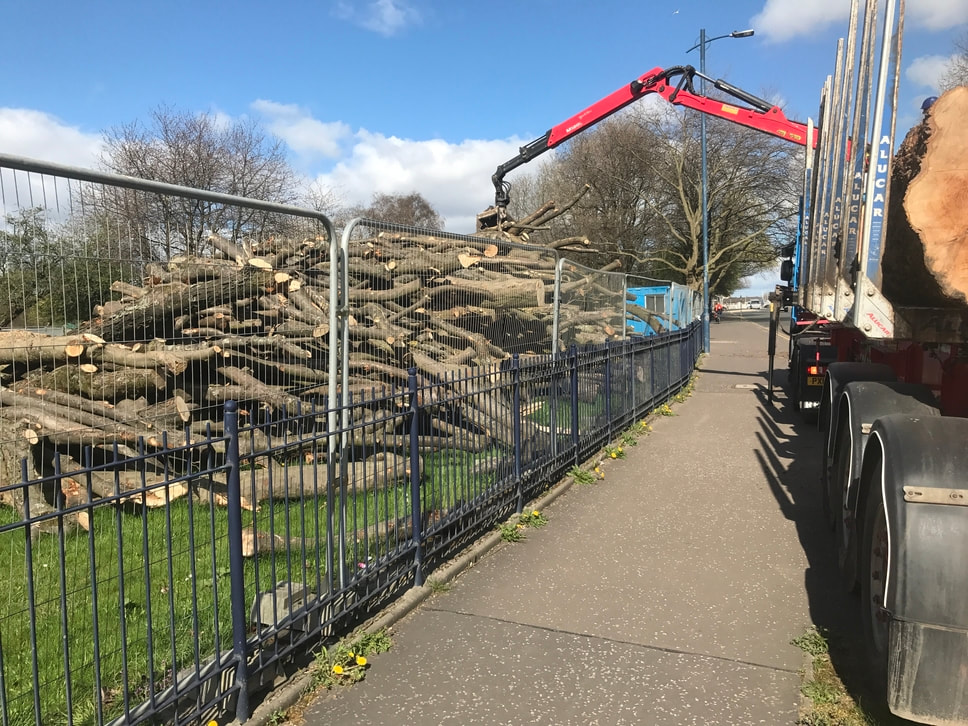
Commercial clearance demands efficiency and precision that only specialist equipment and experienced operators can deliver. Our heavy-duty forestry mulchers process extensive vegetation coverage whilst preserving soil integrity, allowing immediate site preparation without lengthy debris removal delays. Complex tree dismantling utilises crane systems and rigging equipment for safe removal near structures and utilities.
Mass vegetation clearance covers everything from invasive species eradication to complete woodland removal, with specialist techniques for Japanese knotweed, rhododendron, and other problematic species requiring careful disposal and site treatment.
Stump grinding and root extraction ensure complete site preparation ready for construction, landscaping, or infrastructure installation.
Commercial Clearance Pricing Guide:
- Small commercial sites (under 1 acre): £3,500 – £8,500
- Medium developments (1-5 acres): £8,500 – £25,000
- Large infrastructure projects (5+ acres): Detailed quotation following site survey
- Emergency commercial clearance: 24/7 availability with premium rates
Environmental Impact Assessment and Mitigation
Every commercial clearance project begins with comprehensive environmental assessment identifying protected species, sensitive habitats, and regulatory requirements that could impact project timelines or costs. Our ecological specialists conduct BS5837 tree surveys, protected species monitoring, and habitat assessments ensuring full compliance with planning conditions and environmental legislation.
Environmental method statements detail biosecurity protocols, seasonal restrictions, and mitigation measures protecting retained vegetation and neighbouring ecosystems. Habitat translocation, wildlife corridor creation, and biodiversity offsetting projects support planning approval whilst contributing to Glasgow’s environmental goals of maintaining urban forest coverage and supporting climate resilience.
Infrastructure Site Preparation
Infrastructure projects require specialist clearance approaches addressing access constraints, utility coordination, and phased operations that maintain site safety whilst accommodating other contractors. Our teams regularly clear sites for housing developments, commercial buildings, transport infrastructure, and utility installations across Central Scotland.
Utility corridor clearance demands certified operators familiar with electrical safety, gas pipeline protocols, and telecommunications infrastructure protection. We maintain approved contractor status with major utility companies, ensuring compliance with industry-specific safety requirements and coordination procedures that prevent service disruptions and costly delays.
Get your detailed commercial quotation within 4 hours of site assessment.
Professional Planning and Environmental Compliance
Planning Permission and Legal Requirements
Commercial clearance typically requires multiple permissions and consents that can delay projects if not properly coordinated. Tree Preservation Orders affect individual trees and woodland areas, requiring formal applications demonstrating justification and replacement planting proposals. Conservation Area designations impose additional restrictions on tree work and site alteration requiring heritage impact assessment and specialised approval processes.
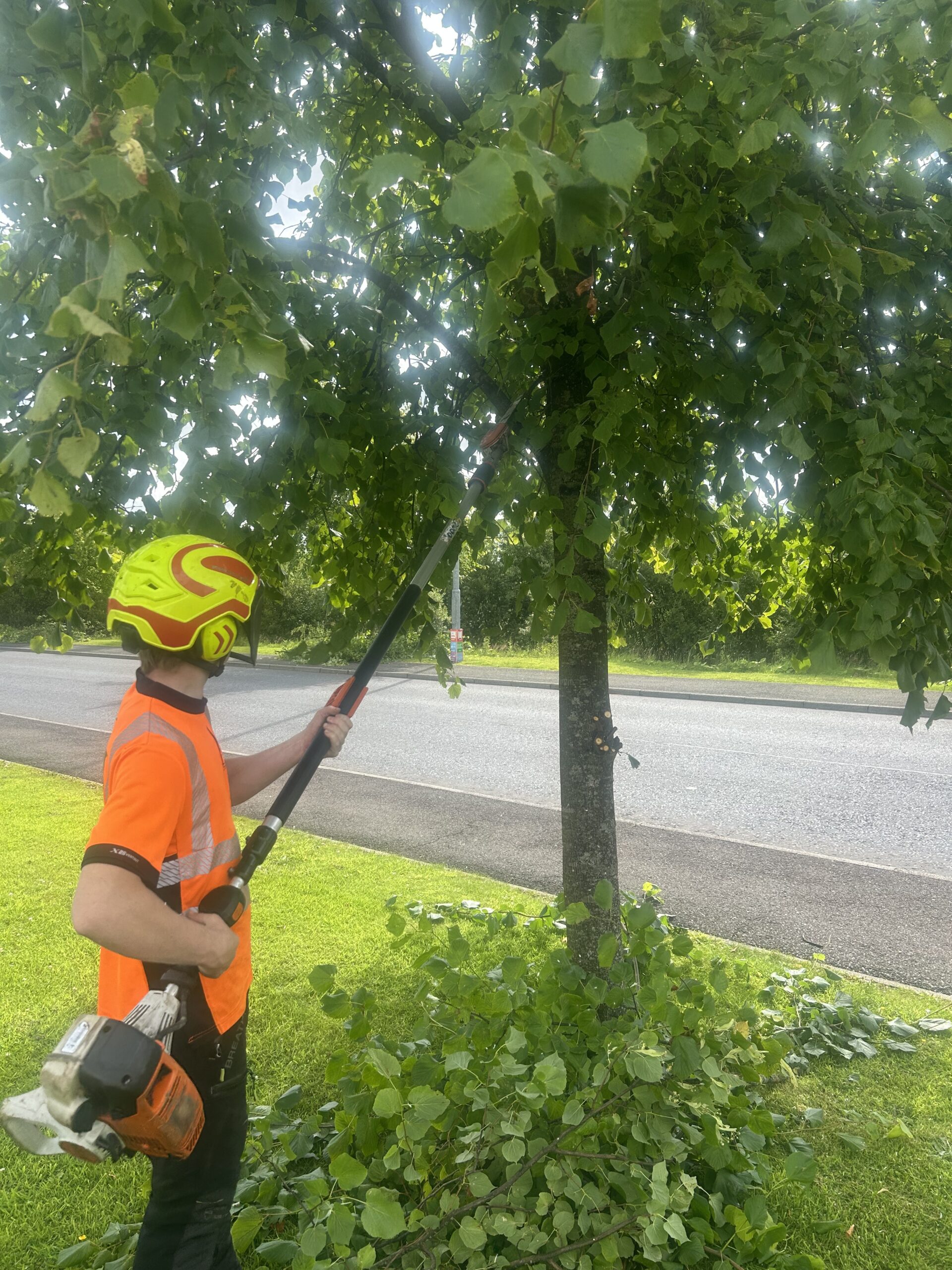
Environmental Impact Assessment requirements apply to larger developments, demanding comprehensive ecological surveys, air quality assessments, and long-term environmental monitoring commitments. Our planning specialists coordinate with local authorities, planning consultants, and environmental specialists ensuring all regulatory requirements are identified early and managed efficiently throughout the project lifecycle.
Felling licences become mandatory for commercial timber operations exceeding specific volumes, with applications requiring detailed management plans and restocking proposals. We manage the entire licensing process, from initial applications through compliance monitoring and final certification, ensuring legal compliance whilst maximising timber value where commercially viable.
Health and Safety Excellence for Commercial Projects
Commercial sites demand rigorous health and safety standards meeting construction industry requirements and protecting multiple contractor coordination. Our SSSTS/SMSTS certified site supervisors understand construction environment protocols, ensuring clearance operations integrate safely with ongoing site activities whilst maintaining productivity targets.
Risk assessments and method statements cover every aspect of commercial clearance, from machinery operation and chemical usage to waste management and environmental protection. CSCS card holding operatives demonstrate construction industry competency, whilst our comprehensive insurance coverage protects clients, contractors, and the public throughout complex operations.
CDM compliance management ensures proper coordination with principal contractors, addressing welfare facilities, emergency procedures, and hazard communication throughout multi-phase projects. Our health and safety documentation supports client compliance reporting whilst providing evidence of best practice implementation for insurance and regulatory purposes.
Environmental Monitoring and Reporting
Pre-clearance ecological surveys establish baseline conditions and identify protected species requiring seasonal work restrictions or special mitigation measures. Ongoing monitoring throughout clearance operations ensures compliance with environmental method statements and planning conditions, with regular reporting to planning authorities and environmental agencies.
Progress documentation includes photographic records, wildlife monitoring reports, and compliance certificates supporting planning condition discharge and client reporting requirements. Post-clearance monitoring continues for specified periods, ensuring mitigation measures achieve intended outcomes and supporting long-term environmental management commitments.
Partnership Benefits:
- CNJ commercial equipment access: Heavy-duty mulchers, excavators, and specialist transport fleet
- Strategic location: Fintry base between Glasgow and Stirling providing optimal coverage
- Owner-operated standards: Callum’s direct involvement ensuring quality control
- Environmental leadership: Supporting Glasgow’s urban forest goals through responsible practices
Industry-Leading Commercial Clearance Process
Site Assessment and Project Planning (Step 1)
Every commercial project begins with a comprehensive site assessment identifying vegetation types, topography, access constraints, and environmental sensitivities that influence clearance methodology and timeline planning. Our assessment teams include NPTC certified arborists, ecological specialists, and project managers ensuring all technical and logistical aspects are properly evaluated.
Ecological assessments determine protected species presence, breeding season restrictions, and habitat connectivity requirements that could affect clearance timing or methodology.
Method statement development incorporates client requirements, planning conditions, and contractor coordination needs, providing detailed timeline projections and resource allocation plans that support accurate project budgeting.
Stakeholder consultation includes neighbours, utility companies, local authorities, and environmental agencies, ensuring all relevant parties understand project scope and timing whilst identifying potential conflicts requiring early resolution. Our project management approach provides single-point contact coordination, reducing client administrative burden whilst ensuring comprehensive communication throughout complex projects.
Permit Applications and Compliance Management (Step 2)
Planning permission applications require extensive supporting documentation including arboricultural impact assessments, ecological surveys, and environmental method statements demonstrating compliance with local and national environmental policies. Our planning specialists coordinate with accredited consultants ensuring applications include all required information whilst presenting clear justification for proposed clearance activities.
Felling licence applications demand detailed forest management plans, timber volume calculations, and restocking proposals meeting Forestry Commission requirements. Protected species licensing coordination with Natural England ensures proper consultation periods and mitigation measure approval before clearance commencement, preventing costly delays and ensuring legal compliance.
Construction phase planning addresses traffic management, access arrangements, and contractor coordination requirements that support efficient site operations whilst maintaining public safety and environmental protection. Our comprehensive planning approach identifies potential complications early, implementing solutions that keep projects on schedule and within budget.
Safe and Efficient Clearance Execution (Step 3)
Phased clearance implementation minimises environmental impact whilst maintaining project efficiency through careful scheduling that respects seasonal restrictions and coordinates with other site activities. Heavy machinery deployment utilises specialist operators certified for commercial equipment operation, ensuring safety standards whilst maximising productivity through appropriate equipment selection.
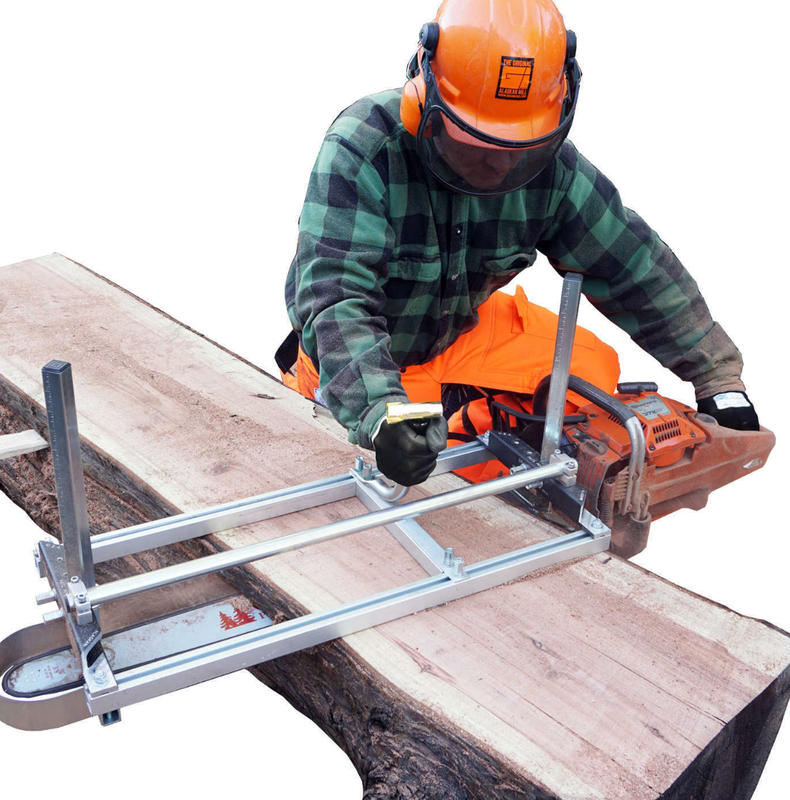
Material processing includes timber recovery for commercial use, biomass production for renewable energy, and vegetation recycling through on-site mulching where appropriate. Waste stream management ensures compliance with environmental legislation whilst minimising disposal costs through maximum material recovery and appropriate facility selection for different waste types.
Site restoration and preparation meet development requirements through soil conditioning, drainage installation, and surface preparation ready for subsequent construction phases. Our teams coordinate with groundwork contractors ensuring smooth project transition whilst maintaining environmental protection throughout handover processes.
Project Completion and Documentation (Step 4)
Comprehensive site cleanup includes complete debris removal, surface preparation, and restoration to specified standards ready for development commencement or ongoing site management. Completion certificates and photographic documentation support planning compliance demonstration whilst providing evidence of professional workmanship for client records.
Ongoing monitoring support includes recommended maintenance schedules, monitoring protocols, and emergency response availability ensuring long-term project success. Client handover includes warranty coverage, emergency contact details, and guidance on maintaining clearance areas until development completion.
Our professional completion process ensures clients receive comprehensive documentation supporting planning compliance, insurance requirements, and ongoing site management whilst maintaining Glasgow Trees’ commitment to environmental responsibility and client satisfaction.
Environmental Leadership:
- Glasgow’s 15% tree canopy coverage: Supporting responsible development whilst maintaining urban forest leadership
- 450+ tonnes annual pollution removal: Ensuring replacement plantings contribute to air quality improvement
- 13,000 tonnes carbon sequestration: Offsetting clearance impact through strategic reforestation projects
- Clyde Climate Forest partnership: Contributing to regional environmental restoration and climate resilience
Areas We Cover
Our commercial ecological clearance services extend across Glasgow and Central Scotland, with strategic coverage from our Glasgow base and CNJ’s Fintry location providing optimal access to major development areas and infrastructure projects throughout the region.
Primary Commercial Service Areas
Glasgow and Surrounding Areas: Glasgow city centre, East End, West End, Southside, Govan, Partick, Rutherglen, Cambuslang, Pollokshaws, and all Glasgow postcodes including G1-G53 areas serving residential developments, commercial projects, and infrastructure requirements.
South Glasgow and Lanarkshire: East Kilbride (75,120 population) – major commercial centre 7.8 miles south
Hamilton (53,188 population) – industrial and residential developments 9.5 miles southeast
Blantyre, Bothwell, Uddingston, and Newton Mearns commercial development areas
South Lanarkshire commercial and housing developments throughout ML postcode areas
West Glasgow and Renfrewshire: Paisley (77,220 population) – major commercial hub 6.8 miles west
Renfrew, Johnstone, Barrhead commercial and industrial developments
Clydebank (26,640 population), Alexandria, Dumbarton infrastructure projects
Greenock, Port Glasgow, and Inverclyde commercial developments
North Glasgow and Dunbartonshire: Bearsden (28,120 population), Milngavie (13,060 population) – affluent residential developments
Bishopbriggs, Kirkintilloch, Lenzie commercial and residential projects
Helensburgh, Balloch, and Loch Lomond area development projects
Strathkelvin commercial developments and infrastructure projects
Extended Coverage Through CNJ Partnership
Central Scotland Corridor: Stirling (37,610 population) – regional commercial centre 22.4 miles northeast
Falkirk (35,850 population) – major industrial and commercial hub
Dunblane, Bridge of Allan residential and commercial developments
Forth Valley infrastructure and utility corridor projects
Strategic Coverage Benefits:
- Enhanced equipment access for large-scale projects requiring specialist machinery
- Coordinated project management across multiple sites and development phases
- Local authority relationships throughout Glasgow, Stirling, and Lanarkshire councils
- Emergency response coverage 24/7 across entire service area with guaranteed attendance
Our geographic coverage ensures comprehensive commercial clearance services from small urban infill developments to major infrastructure projects, with local expertise and equipment resources optimally positioned for efficient project delivery throughout Central Scotland’s key commercial and residential development areas.
Contact us at 0141-483-7485 – covering all commercial clearance requirements across Glasgow and Central Scotland.

Commercial Project Portfolio and Client Testimonials
Major Development Projects
Our commercial clearance portfolio demonstrates capability and experience across diverse project types, from complex urban developments requiring sensitive environmental management to large-scale infrastructure projects demanding efficient coordination and specialist equipment deployment. Recent projects showcase our ability to deliver professional results whilst maintaining environmental responsibility and client satisfaction.
Housing development projects include comprehensive site preparation for major residential schemes, where planning compliance, environmental mitigation, and efficient clearance delivery ensure development partners can proceed with confidence. Our teams regularly manage clearance for sites ranging from small urban infill developments to major suburban housing estates requiring phased operations and long-term coordination.
Infrastructure projects demonstrate our capability in utility corridor clearance, transport development support, and commercial building preparation where specialist safety requirements and contractor coordination ensure project success. Emergency response capability has supported major storm damage recovery, ensuring business continuity and rapid site restoration for commercial clients across Central Scotland.
Trusted by Leading Developers and Contractors
Our client base includes major housing developers, construction companies, and local authorities requiring reliable commercial clearance services that support project timelines whilst ensuring environmental compliance and professional standards. Partnership relationships with leading commercial developers reflect our ability to deliver consistent quality and reliable service across multiple projects and development phases.
Local authority projects include park development, infrastructure maintenance, and environmental restoration works where our ecological expertise and environmental responsibility align with public sector sustainability goals. Utility company partnerships demonstrate our capability in specialist clearance around critical infrastructure, maintaining service reliability whilst supporting network development and maintenance requirements.
Professional Credentials and Insurance Protection
Team Expertise and Qualifications
NPTC Certified Arborists: Our tree surgeons hold National Proficiency Tests Council qualifications ensuring technical competency and safety standards throughout all commercial clearance operations, with specialist certifications in complex tree work and machinery operation.
Lantra Certified Specialists: Industry-standard environmental training and certification demonstrating commitment to best practice implementation and ongoing professional development within commercial arboriculture and ecological management.
FMO Qualified Team: Forestry & Management Operations expertise ensures compliance with commercial timber operations, woodland management, and large-scale clearance projects requiring specialist knowledge and regulatory compliance.
NPORS Plant Operators: Certified equipment operation credentials ensure safe and efficient machinery deployment, whilst SSSTS/SMSTS site supervision qualifications support construction industry integration and health and safety compliance.
Comprehensive Insurance Coverage
£5 Million Public Liability Insurance: Full coverage protecting clients, contractors, and the public throughout commercial clearance operations, with policy extensions covering specialist risks and complex project requirements.
Professional Indemnity Coverage: Protection for design and advisory services including arboricultural assessments, planning applications, and environmental consultancy work supporting commercial development projects.
Employer’s Liability Insurance: Comprehensive cover ensuring workforce protection and client peace of mind throughout operations, with policy compliance meeting construction industry requirements and contractor coordination needs.
For Free Quotation and Expert Advice
Click to Call Now!
Frequently Asked Questions
How much does commercial ecological clearance cost in Glasgow?
Commercial clearance costs vary significantly based on site size, vegetation density, access constraints, and environmental complexity affecting equipment requirements and operational efficiency. Small commercial sites under one acre typically range from £3,500 to £8,500, covering basic clearance without complex planning requirements. Medium developments between 1-5 acres cost £8,500 to £25,000, incorporating environmental assessments and planning support. Large infrastructure projects over 5 acres require detailed site surveys for accurate pricing, with costs varying based on terrain, access, and environmental sensitivities. Factors affecting pricing include planning permission requirements, protected species presence, machinery access limitations, waste disposal needs, and project timeline constraints. Additional costs may arise from seasonal restrictions, specialist equipment requirements, or complex environmental mitigation measures. Our commercial team provides detailed quotations within 4 hours of site assessment, with transparent pricing covering all aspects from initial surveys through final completion certificates and warranty coverage.
Do I need planning permission for commercial site clearance?
Most commercial site clearance requires planning permission, particularly for development projects exceeding specific thresholds or involving protected trees and environmentally sensitive locations. Tree Preservation Orders commonly affect commercial sites, requiring formal consent applications demonstrating necessity and appropriate replacement planting proposals. Conservation Area designations impose additional restrictions requiring heritage impact assessments and specialised approval processes. Environmental Impact Assessment requirements apply to larger developments, demanding comprehensive ecological surveys and long-term monitoring commitments. Felling licences become mandatory for commercial timber operations and woodland clearance exceeding specific volumes, with applications requiring detailed management plans and restocking proposals. Our planning specialists manage the entire permission process, from initial applications through compliance monitoring and discharge of planning conditions. We coordinate with planning consultants, ecological specialists, and local authorities ensuring full legal compliance whilst minimising project delays. Early consultation prevents costly complications and ensures smooth project progression from clearance through development completion, with professional guidance throughout regulatory processes.
How long does a commercial ecological clearance project take?
Project timelines depend on site size, environmental complexity, and regulatory requirements, with typical commercial clearance taking 2-12 weeks from initial survey to completion excluding planning permission periods. Small sites under one acre often complete within 2-4 weeks including environmental assessments and basic clearance operations. Medium developments require 4-8 weeks for comprehensive clearance incorporating protected species considerations and phased operations. Large infrastructure projects may extend 8-12 weeks or longer depending on environmental constraints, utility coordination, and seasonal restrictions. Planning permission processes can add 8-16 weeks before clearance commencement, though we coordinate applications to minimise delays through early consultation and comprehensive documentation. Seasonal restrictions for protected species breeding periods may affect timing, particularly for clearance between March-August when additional surveys and mitigation measures become necessary. Emergency clearance can commence within 24-48 hours for urgent situations threatening safety or business continuity. Our project management approach provides detailed timeline schedules with milestone tracking, ensuring clients receive regular progress updates and can coordinate subsequent development phases effectively whilst maintaining environmental compliance throughout operations.
What environmental assessments are required for commercial clearance?
Commercial projects typically require comprehensive environmental assessments including BS5837 tree surveys identifying retention requirements and protection measures for development sites. Ecological appraisals covering protected species, habitat connectivity, and biodiversity value ensure compliance with wildlife legislation and planning policy requirements. Environmental Impact Assessments become mandatory for larger developments, demanding detailed analysis of air quality, noise, visual impact, and ecological effects throughout project lifecycle. Protected species surveys covering birds, bats, reptiles, and mammals are standard requirements, particularly during breeding seasons when additional restrictions may apply. Habitat assessments identify sensitive areas requiring special protection or mitigation measures during clearance operations, with recommendations for habitat creation and biodiversity enhancement. Biodiversity Net Gain assessments are now mandatory for most development projects, requiring detailed habitat evaluation and offsetting calculations demonstrating environmental improvement. Archaeological assessments may be required where historical features could be affected by clearance operations. Our environmental specialists coordinate all required assessments, working with accredited ecologists and planning consultants ensuring comprehensive compliance whilst minimising assessment costs through integrated survey programmes and efficient project coordination.
Can you handle clearance around utilities and infrastructure?
Yes, our commercial team specialises in complex clearance around utilities, infrastructure, and sensitive installations requiring specialist safety protocols and industry-specific certification. We maintain approved contractor status with major utility companies and regularly clear vegetation around power lines, gas pipelines, telecommunications equipment, and transport infrastructure throughout Central Scotland. Our NPORS certified operators use appropriate machinery for working near utilities, whilst comprehensive health and safety procedures ensure compliance with electrical safety, gas pipeline protocols, and telecommunications protection requirements. We coordinate with utility companies, Network Rail, highway authorities, and airport operators ensuring proper safety protocols, access arrangements, and operational continuity throughout clearance operations. Specialist equipment includes insulated tools, non-conductive machinery, and emergency response capabilities meeting industry safety standards. Emergency utility clearance operates 24/7 for situations threatening infrastructure safety, public access, or service continuity, with rapid response teams attending critical situations within guaranteed timeframes. All utility work includes comprehensive documentation, safety certificates, and compliance reporting meeting industry standards whilst supporting client regulatory requirements and insurance obligations throughout complex infrastructure environments.
What happens to cleared vegetation and waste materials?
We operate a comprehensive waste management system prioritising environmental sustainability and cost-effective disposal solutions supporting commercial project budgets and environmental goals. Timber processing includes assessment for commercial use, construction materials, biomass fuel production, or specialist timber products where commercially viable and environmentally appropriate. Vegetation waste undergoes on-site mulching where suitable, providing soil conditioning materials for landscaping phases or removal for commercial composting operations supporting circular economy principles. Invasive species including Japanese knotweed, rhododendron, and other problematic plants require specialist disposal at licensed facilities ensuring complete eradication and preventing spread to other sites through certified waste streams. We provide comprehensive waste transfer notes, disposal certificates, and environmental compliance documentation meeting regulatory requirements and supporting client environmental reporting obligations. Our zero-landfill policy ensures maximum material recovery whilst minimising environmental impact and disposal costs for commercial clients. Waste reduction strategies include on-site processing, material recovery, and coordination with recycling facilities ensuring sustainable disposal solutions throughout commercial clearance operations whilst maintaining cost efficiency and environmental responsibility.
Do you provide emergency commercial clearance services?
Our 24/7 emergency response service covers storm damage, dangerous trees threatening commercial premises, and urgent clearance requirements for business continuity across Glasgow and Central Scotland. Emergency teams typically attend commercial sites within 2-4 hours of contact, with immediate risk assessment and stabilisation measures implemented ensuring safety whilst protecting property and infrastructure. We maintain emergency equipment stocks, on-call specialist operators, and rapid deployment capabilities ensuring effective response to critical situations affecting commercial operations, public safety, or infrastructure integrity. Insurance claim support includes comprehensive documentation, photographic evidence, expert witness services, and detailed reporting supporting complex insurance processes and liability assessments. Emergency pricing reflects rapid response requirements and premium resource allocation, with transparent rates provided before work commencement ensuring cost certainty during crisis situations. Our emergency service covers immediate safety clearance, temporary stabilisation measures, and complete restoration planning allowing business operations to continue whilst comprehensive clearance solutions are developed and implemented. Coordination with emergency services, utility companies, and local authorities ensures effective multi-agency response to major incidents affecting commercial premises and public infrastructure throughout our service area.
How do you ensure minimal disruption to ongoing business operations?
Commercial clearance projects require careful coordination minimising operational disruption whilst maintaining safety standards and project efficiency throughout complex site operations. We develop detailed method statements incorporating client operational requirements, working schedules around delivery times, customer access patterns, and sensitive business activities requiring uninterrupted operation. Phased clearance approaches allow continued site use whilst work progresses in designated areas with appropriate safety barriers, signage, and access management protecting ongoing operations. Evening and weekend working options accommodate businesses requiring daytime operational continuity, though scheduling variations may affect project pricing and timeline planning. Our project coordinators maintain regular communication with site managers, operational staff, and security personnel ensuring any operational conflicts are identified early and resolved quickly through flexible methodology and contingency planning. Noise management includes low-noise equipment options, timing restrictions, and sound barriers protecting neighbouring businesses and residential areas from operational disruption. Dust suppression measures protect sensitive operations, equipment, and neighbouring properties through water suppression, screening, and environmental monitoring throughout clearance activities whilst maintaining operational efficiency and environmental compliance.
Choose Glasgow Trees for Professional Commercial Ecological Clearance
Commercial ecological clearance success demands the expertise, equipment, and environmental responsibility that only experienced professionals can provide reliably and efficiently. Glasgow Trees, operating in strategic partnership with CNJ Tree Services, delivers comprehensive commercial clearance solutions across Glasgow and Central Scotland, combining deep local knowledge with enhanced capabilities supporting projects of any scale and complexity.
Our 30+ years combined experience serves major developers, construction companies, and infrastructure projects with professional clearance solutions that balance environmental responsibility with project efficiency. The CNJ partnership provides access to heavy-duty commercial equipment, extended geographic coverage, and specialist capabilities ensuring every commercial project receives appropriate resources and professional attention throughout complex operations.
From initial site assessment through final completion certification, our commercial division manages every aspect of ecological clearance including planning permission navigation, environmental compliance, and stakeholder coordination. Whether you’re developing housing estates, commercial premises, or infrastructure projects, Glasgow Trees provides the professional expertise and reliable service that keeps your development on schedule and within budget whilst supporting Glasgow’s environmental leadership and urban forest goals.
Contact Glasgow Trees today at 0141-483-7485 for your FREE commercial ecological clearance consultation. Our commercial specialists are ready to discuss your development requirements and provide expert guidance on planning compliance, environmental management, and efficient clearance solutions that support your project success whilst maintaining the highest standards of environmental responsibility and professional service delivery across Central Scotland’s commercial development sector.
Contact Information
📞 Call Now: 0141-483-7485
🕒 Emergency Response: 24/7 Availability Guaranteed
📧 Email: [email protected]
📍 Service Area: Glasgow to Stirling and throughout Central Scotland
🏢 Commercial Projects: Housing developments, infrastructure, utility corridors
Final Commercial Benefits
- FREE commercial site assessments with detailed quotations provided within 4 hours of contact
- NPTC certified expertise backed by 30+ years combined commercial clearance experience
- £5 million insurance protection guaranteed covering all commercial operations and liability
- 24/7 emergency response across Glasgow and Central Scotland with guaranteed attendance
- All legal permissions managed including planning applications and environmental compliance
- No damage guarantee protecting retained trees, structures, and neighbouring properties
- Complete project management from initial surveys through final completion certificates
- CNJ partnership capabilities providing enhanced equipment access and specialist services
- Environmental responsibility supporting Glasgow’s 15% tree canopy and sustainability goals
- Transparent commercial pricing with detailed breakdowns and no hidden costs throughout
What's Included in a Commercial Clearance, and What Isn't
- Removal of trees, hedgerows and scrub across the development plot, with timber processed into logs, chip or brash on site where that's practical rather than hauling whole trunks off in a wagon that could otherwise carry three or four times the volume as processed material.
- Stump grinding and root removal, taken to a depth suited to what's being built over that spot -- deeper under a proposed slab or drainage run than a standard garden finish would need, since a stump ground to garden depth can still leave a root plate to settle or rot under a foundation later.
- Removal of problem species such as Japanese knotweed or rhododendron, dug out or cut and bagged according to what the species and site conditions call for, then taken to a licensed disposal facility so it doesn't spread to the next site or re-establish on this one.
- Protective fencing and root protection area marking around any trees or hedges the site plan requires you to keep, set out before machinery moves onto the plot rather than worked around once clearance is already under way.
- Preparing and submitting Tree Preservation Order consent or felling licence applications where the site requires them, with the paperwork built around what the walkover and any existing BS5837 survey have already identified.
- Arranging a BS5837 tree survey ahead of clearance, where one hasn't already been done for the planning application, so retention categories and protection requirements are settled before a digger or chipper is booked.
- Removing buried debris that tends to surface once hedgerow and scrub are stripped back -- old fence lines, wire, rubble or garden waste tangled into root systems -- so it doesn't end up caught in grinding equipment or left for the groundworks contractor to find later.
- Duty of care documentation for timber, chip and green waste taken off site, kept as a separate paper trail from invasive species disposal so the site file shows what left the plot and where it went.
- Sectional dismantling and rigging down of trees close to boundary fences, overhead lines or neighbouring structures, taken down in controlled pieces rather than felled in one movement where there isn't room to drop a tree whole.
- A written record of what was on the plot before clearance and what's been done to it, useful where a planning condition, discharge of condition or future warranty query needs evidence that retention and removal decisions were followed through.
- Clearing and grading the site so it's left free of debris and ready to hand to your groundworks contractor, with timber or chip left on site by arrangement where a client wants it for their own use rather than it leaving the plot as waste.
Not Included / Costed Separately
- Formal Environmental Impact Assessment reports, specialist ecological surveys, or biodiversity net gain calculations -- these are commissioned separately from an ecologist, though the clearance programme is planned around their findings and timing where they apply.
- Groundworks themselves: drainage installation, soil import or export, compaction testing and hardstanding are for your groundworks contractor, not part of clearance, and the two programmes need to be sequenced by whoever is managing the wider project.
- Demolition of buildings or structures, or removal of contaminated land and asbestos, all of which need a specialist contractor working to their own regulatory regime rather than a tree and vegetation clearance team.
- Submitting the planning application itself and any council fees that go with it -- the tree-related paperwork for felling licence or TPO consent is prepared, but the wider planning application and its fee remain the developer's or agent's responsibility.
- Evening, weekend or expedited turnaround work, which falls outside a standard daytime programme and is quoted separately when a site genuinely needs it, since it usually means a different crew size and different access arrangements.
- Replanting or landscaping once the site has been cleared and graded -- that's a separate landscaping trade from clearing what's already there, though it's worth flagging at quote stage if it's part of the wider plan so access for later planting isn't compromised during clearance.
- Repair of existing boundary structures, fencing or hardstanding damaged before clearance starts -- only damage caused during the clearance itself is our responsibility, and that's covered by the team's own insurance rather than being a separate line item on the quote.
- Ongoing maintenance of any retained trees, hedges or landscaping once the plot is handed over -- clearance covers getting the site construction-ready, not the aftercare of what's left standing once building work is under way or complete.
How a Development Plot Gets Cleared, Start to Finish
- Enquiry and walkover: A first look at the plot, on foot, to see what's actually growing there -- which trees are mature enough to need felling licence or TPO consideration, where hedgerow and scrub run, whether species like Japanese knotweed or rhododendron are present, and what access a chipper, stump grinder or excavator will realistically have once the crew is on site. This is also where ground conditions get a first check -- whether the site is dry enough for tracked machinery to work directly, or whether trackway is going to be needed to protect the surface and keep vehicles moving in wet weather.
- BS5837 survey and retention decisions: Where a tree survey hasn't already been done for the planning application, one is arranged, and which trees are being kept versus removed gets settled against the site plan before any machinery is booked -- this is also where root protection areas for retained trees first get mapped out on paper, ahead of anything being marked out physically on site.
- Protective fencing and paperwork: Root protection areas and fencing are agreed and marked out on the ground for anything being retained, and applications for felling licence or Tree Preservation Order consent are prepared and submitted where the site needs them, with a realistic view given on how long that decision is likely to take so it can be built into the wider construction programme rather than treated as an afterthought.
- Clearance: Trees, hedgerows and scrub across the plot are removed in a sequence that keeps machinery away from anything marked for retention, with timber processed into chip, brash or logs on site where practical. Trees close to a boundary fence, overhead line or neighbouring structure are taken down in sections using rigging rather than felled whole, where there isn't room to drop them in one movement. Problem species are bagged or otherwise contained separately from the rest of the vegetation, and any buried debris that surfaces along the way -- old fence lines, wire, rubble tangled into root systems -- is pulled out rather than left for whoever moves onto the site next.
- Stump grinding and root removal: Stumps and root plates are taken out to a depth suited to what's being built over that spot, not a standard garden finish, so nothing is left to settle, rot or interfere with a foundation, drainage run or hardstanding installed later. Where a stump sits directly on the line of a proposed drainage run or footing, that's flagged against the site plan before grinding starts rather than assumed.
- Grading, waste removal and handover: Timber, chip and green waste either stay on site by arrangement or are removed under duty of care documentation, with invasive species kept on a separate disposal route to a licensed facility. The cleared area is graded and left free of debris, with a handover date agreed directly with your groundworks contractor so the site doesn't sit idle between clearance finishing and groundworks starting, and a written record of what was found and removed kept on file in case a planning condition or future query needs it.
What Affects the Cost of Clearing a Development Plot
Cost on a clearance job comes down to what's actually on the plot rather than a flat rate per acre: a site with a handful of mature trees and open scrub costs less to clear than one with dense hedgerow, mixed woodland edge, or knotweed that needs licensed disposal rather than straightforward removal. Tree size and species matter too -- a mature specimen close to a boundary fence or overhead line usually has to be dismantled in sections using rigging rather than felled in one movement, which takes longer and costs more than a straightforward fell in open ground. Stump and root removal taken to development depth, rather than a garden finish, adds to the job, and so does any felling licence or Tree Preservation Order application that needs preparing and tracking through the local authority or Scottish Forestry before clearance can start. Ground conditions play a part as well: wet or uneven ground can mean trackway laid down to protect the surface and get machinery to where it's needed, and a plot with limited road access for a chipper or grab lorry sometimes needs material broken down further before it can be moved off site, which adds time on site even where the vegetation itself is straightforward. Retained trees add a further step, since protective fencing and slower, more careful working around a root protection area take more time than clearing an open area of scrub outright. The paperwork side has its own cost drivers too: a straightforward felling licence application for open woodland edge is a different job to preparing a TPO consent submission with supporting arboricultural detail for a council that's likely to push back, and that difference shows up in how long the pre-clearance stage takes rather than in the clearance work itself. Timing matters as well -- work planned to avoid bird nesting season, broadly March to August, tends to run to a tighter, more predictable programme than a job that hits nesting season partway through and has to pause in one area while continuing elsewhere. Where a plot has a genuine mix of these factors -- mature boundary trees needing rigging, a confirmed patch of knotweed, and a felling licence still to be applied for -- it's worth treating the pre-clearance stage as its own piece of the programme rather than assuming clearance itself can start the week after the enquiry call. Because every plot is different, a firm price needs a site visit -- quotes are free and no-obligation, so getting one booked in early costs nothing and gives a realistic figure to plan the wider construction programme around rather than a guess that has to be revised once machinery is already on site.
How Commercial Clearance Compares With a General Groundworker or Doing It Yourself
| What matters on a development site | General groundworker or landscaper | Site staff clearing it in-house | Glasgow Trees commercial clearance |
|---|---|---|---|
| Tree work carried out to BS3998 | Not usually a specialism | Rarely followed | All tree work carried out to BS3998 |
| Tree Preservation Order or felling licence applications handled | Occasionally, informally | Down to you to arrange | Prepared and submitted as part of the job |
| Retained trees protected during works | Depends on the operator | Easy to get wrong without protection zones marked out | Protective fencing and root protection areas agreed before clearance starts |
| Insurance in place for the works | Varies by contractor | None, if done in-house | Fully insured team |
| Certified operators for stump grinding, chipping and excavation | Depends who's on the crew that day | Depends on equipment and training available in-house | Machinery operated by NPTC/Lantra certified team members |
| Invasive species handled to licensed disposal standard | Rarely a specialism | Usually missed or under-resourced | Identified and taken to a licensed disposal facility |
| Rigging and sectional dismantling for trees near boundaries or overhead lines | Depends on the operator's training | Not usually attempted safely without training | Carried out by rigging and dismantling qualified team members |
| Site left graded and ready for groundworks handover | Sometimes, depending on scope agreed | Depends on equipment available | Cleared, graded and ready to hand over |
An NPTC Tree Inspector Looks at What's Staying Before Anything Comes Out
On a clearance job the trees being kept matter as much as the ones coming down -- a retained tree that's been knocked about by machinery traffic or had its root zone compacted during clearance can decline months after the site's been handed over, by which point it's the groundworks contractor's problem, not the tree surgeon's. The team's NPTC Professional Tree Inspection qualification means retained trees are properly assessed for condition and risk before protection zones are marked out, rather than that call being made from the cab of a digger once work is already under way. The same team holds NPTC and Lantra certificates covering the machinery a clearance job actually depends on -- stump grinder, wood chipper, timber crane and 360 excavator among them -- along with felling qualifications running from small tree work up to large tree felling, windblown trees, and rigging and dismantling, so the method used on a difficult specimen near a boundary fence or overhead line is chosen by someone trained specifically for that situation rather than defaulted to whatever's quickest. Where a site turns up Japanese knotweed or rhododendron, it's bagged and taken to a licensed disposal facility rather than mulched in with everything else, so it doesn't end up re-establishing on the next plot along. All tree work is carried out to British Standard BS3998 by a fully insured team, and quotes are free and no-obligation, so a walkover to flag any of this before it becomes a delay costs nothing. The same qualification spread covers what happens when a clearance job doesn't go to plan -- a windblown tree found leaning over a boundary during the walkover, or a specimen that turns out to need aerial access rather than ground-based rigging, is worked to a method the crew is specifically trained and certificated for rather than improvised on the day, which matters more on a live development site with other trades and site traffic around than it would on an empty field.
Further North: Sites Toward the Campsie Fells and the Trossachs
Development plots further out than the main Glasgow, Lanarkshire and Renfrewshire areas already covered -- around Strathblane, Killearn, Balfron and Kippen in the foothills of the Campsie Fells and on the edge of the Trossachs -- bring a different set of clearance considerations to an urban infill plot: more established hedgerow and woodland edge, steeper or wetter ground in places, and often a longer run for machinery access from the nearest road. Bo'ness, on the Forth west of Falkirk, sits at the edge of the same corridor. Across the wider footprint, clearance work covers eight council areas strung along the M8, M74, M77, M80 and A82 corridors -- Glasgow City, East Dunbartonshire, West Dunbartonshire, Renfrewshire, East Renfrewshire, Inverclyde, South Lanarkshire and Stirling, as well as Falkirk around Bo'ness -- which in practice means plots ranging from tight urban infill sites with no room to turn a wagon, to greenfield edges where the biggest constraint is how far a chipper has to be towed down a farm track. Glasgow's own tree canopy cover sits at around 15%, above the UK's urban average of 10%, and a fair amount of that canopy is exactly the kind of self-seeded or unmanaged growth that turns up on long-dormant development plots, alongside planted species ranging from native Scots pine to ornamental trees like monkey puzzle -- worth knowing because it affects what a BS5837 survey is likely to find and how a council planning department tends to view tree loss on a given site. Sites in all of these areas are covered, but a site visit matters more on the outer edges of the footprint than on a flat urban plot, simply because access and ground conditions can vary from one field boundary to the next -- what looks like a short run from the road on a site plan can turn into a longer, slower job once trackway has to go down over soft ground, or a chipper has to be positioned further from the vegetation than it would be on a level urban plot.
Get a Clearance Programme Booked Before Nesting Season Narrows the Window
Bird nesting season and TPO or felling licence processing times can both add weeks to a clearance programme if they're only spotted once machinery's meant to be moving in. A free walkover of the plot flags problem species, retention requirements and paperwork early enough to build them into the programme rather than around a delay -- get in touch with details of the site to have one arranged.
“Very friendly and professional. They delivered my job on time and at a good price.”
Glasgow Trees — that is what we aim to hear from our customers all the time.
Get a Free Quote
🔒 Your details are safe with us. No spam, ever.