
Glasgow's Tree Specialists Since 2005
Land Clearing & Site Clearance for Construction | Glasgow Trees
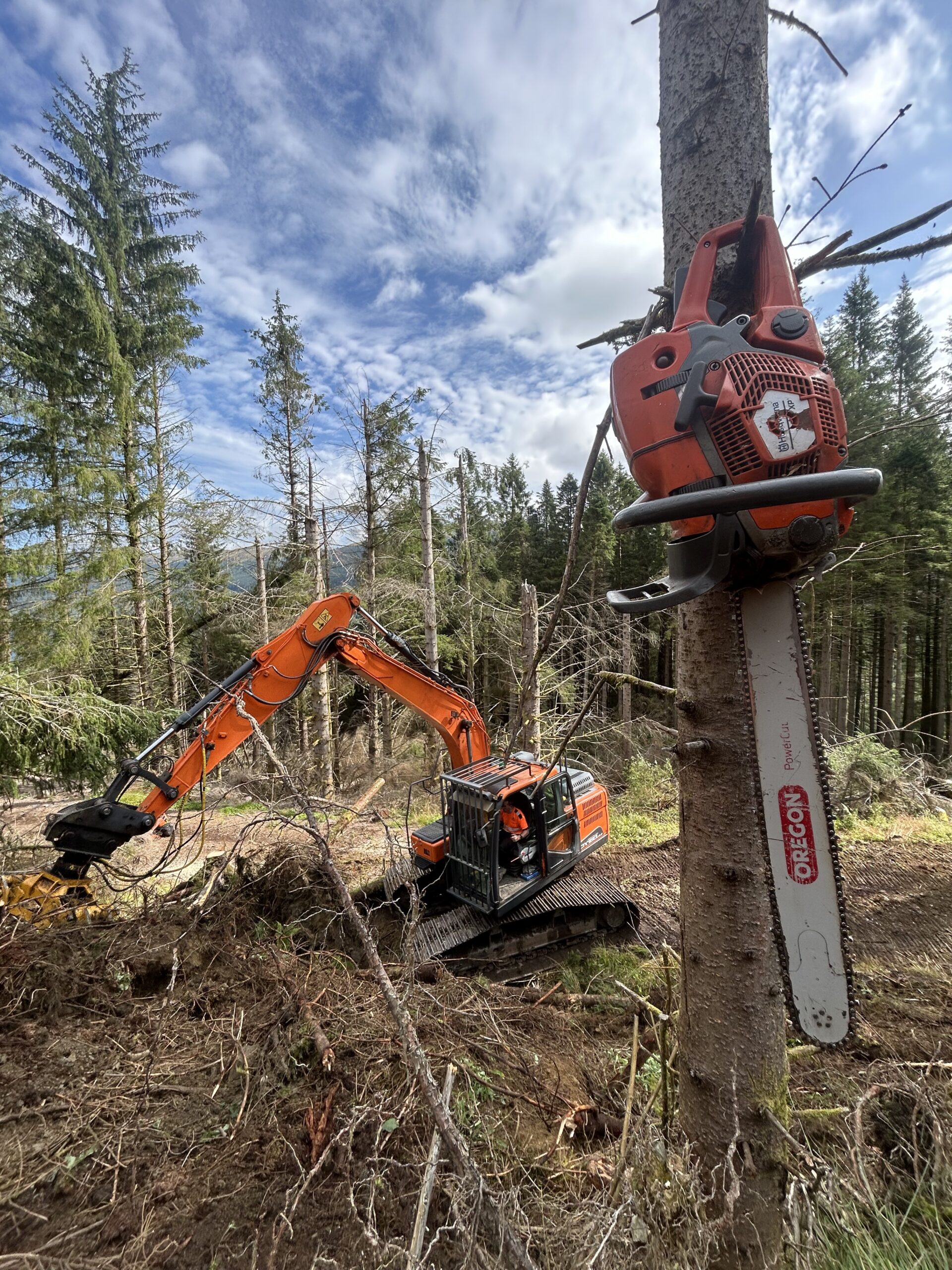
NPTC-qualified crew with our own stump grinder, 360 excavator, timber crane and forwarder trailer – free site visits, work to British Standard BS3998, and clearance scheduled around your build programme, not treated as a standalone job.
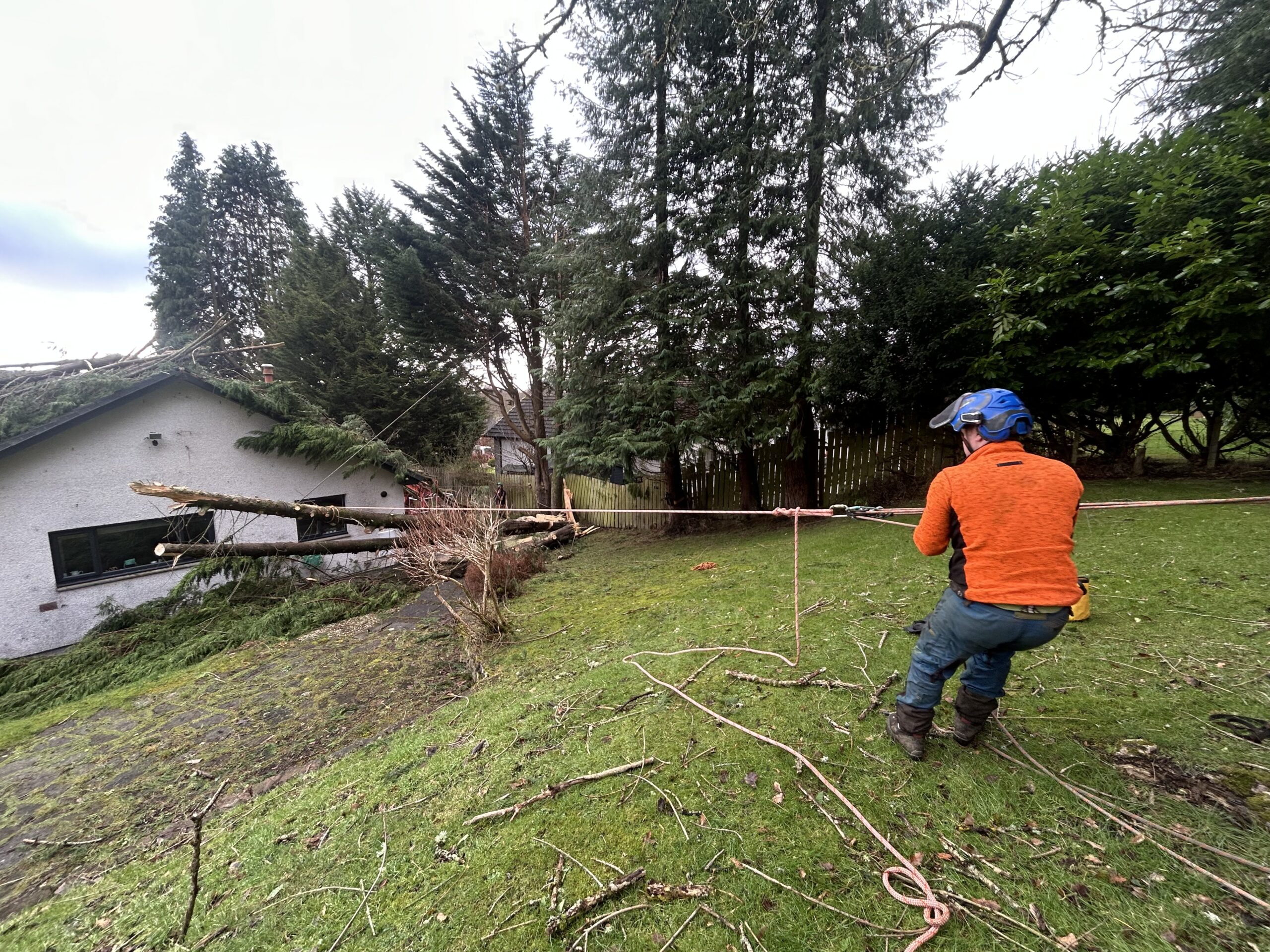
Before a contractor can break ground on a new build, extension or access road, whatever is growing on the site usually has to come out first, and that job is more involved than most build programmes allow for. Trees have to be felled and their stumps ground out below finished ground level, not just cut off at the base, or they resurface as a solid obstruction the moment someone tries to dig a foundation or lay a drainage run through them. Hedgerows, bramble and self-seeded scrub need clearing back to bare ground, and any usable timber has to be processed and removed rather than left in piles blocking access for the next trade on site.
Programmes rarely build in enough time for this stage, partly because clearance looks like a smaller job on paper than it turns out to be once the machinery is actually working through what's there. A lot of what looks like straightforward vegetation on a site plan turns out to be more complicated once machinery is on the ground. Overgrown boundary hedgerow often hides an old fence line, buried rubble or a shallow drain that changes how it needs to be cleared. A stand of self-seeded sycamore or ash on a brownfield plot can be dense enough that hand-clearing alone would take weeks, which is why the job usually needs a 360 excavator and a stump grinder working together rather than a crew with chainsaws working alone. On sloped or soft ground, getting heavy plant in without churning up the access route the groundworks contractor needs afterwards takes some thought before the first tree comes down.
Glasgow Trees has cleared sites for construction and development work since 2005, working to British Standard BS3998 with our own stump grinder, 360 excavator, timber crane and forwarder trailer rather than hiring plant in job by job. The team is NPTC qualified across felling, stump grinding and machinery operation, and every quote starts with a free site visit so the scope and programme are agreed before any machinery arrives.
Timing matters more on a construction site than it does anywhere else we work. Bird nesting season runs roughly March to August and can hold up clearance on a plot with hedgerow or mature trees if it isn't checked early, so we flag that risk at the survey stage rather than letting it surface once a start date is already fixed. Ground conditions shift with the seasons too -- a plot that's firm enough for a 360 excavator in a dry spell can turn soft enough by winter that tracked plant leaves ruts a groundworks contractor then has to deal with, which is one reason the site walk-over looks at drainage and ground bearing as much as it looks at the trees themselves.
At a Glance
- NPTC-qualified team operating our own stump grinder, 360 excavator and timber crane
- Free, no-obligation site visit before any quote is confirmed
- Work carried out to British Standard BS3998, fully insured throughout
Commercial Site Clearance Glasgow
0141-483-7485 Professional Land Clearing Services for Construction Projects
When your Glasgow construction project demands professional site clearance, Glasgow Trees delivers the expertise and equipment to prepare your land efficiently and safely. Our partnership with CNJ Tree Services combines 30+ years of local experience with enhanced commercial capabilities, ensuring your development project starts on schedule without costly delays.
Ready to clear your commercial site? Call 0141-483-7485 for your FREE consultation within 4 hours.
Professional Commercial Site Clearance Services in Glasgow
Glasgow’s commercial development sector demands reliable site clearance specialists who understand both the technical challenges and regulatory requirements of preparing land for construction. Our NPTC certified team delivers comprehensive clearance solutions from small urban developments to major infrastructure projects across Central Scotland.
Our commercial site clearance service removes all vegetation, debris, and obstacles whilst ensuring full environmental compliance and safety standards. Unlike general waste clearance companies, we specialise in the complex requirements of construction sites, including hazardous material identification, regulatory compliance, and coordination with development timelines.
Why Choose Professional Commercial Site Clearance?
Attempting DIY commercial clearance or using unqualified contractors exposes your project to significant risks and potential delays that can cost thousands in lost time and regulatory penalties.
- Construction timeline protection – Avoid costly project delays
- Full regulatory compliance and permit assistance included
- Heavy machinery access and specialist equipment deployment
- Hazardous material identification and safe disposal protocols
- Environmental impact assessment and mitigation strategies
- Complete debris removal and construction-ready site preparation
- Insurance protection covering contractor liability risks
- Professional documentation for planning and insurance requirements
Emergency clearance? Call 0141-483-7485 – 24/7 response available.
Our Commercial Site Clearance Services
Glasgow Trees provides comprehensive commercial site clearance across diverse project types, from small urban developments to major infrastructure construction. Our partnership with CNJ Tree Services ensures access to heavy-duty equipment and specialist capabilities for projects of any scale.
Construction Site Preparation
Professional land clearing forms the foundation of successful construction projects. Our experienced team removes all vegetation, including mature trees, dense undergrowth, and root systems that could compromise future foundations. We prepare sites to construction-ready standards whilst preserving designated areas and managing environmental constraints.
Services include:
- Complete vegetation clearance including trees, shrubs, and ground-level growth
- Root system removal and stump grinding to construction depth
- Debris processing and sustainable waste management
- Ground preparation and basic levelling services
- Utility corridor clearance around existing infrastructure
- Access route creation for construction vehicle deployment
Industrial & Commercial Property Clearance
Commercial properties requiring renovation or redevelopment often contain complex clearance challenges. Our team handles building demolition debris, contaminated materials, and sensitive clearance around operational facilities whilst maintaining safety standards and minimising business disruption.
Specialised capabilities:
- Soft strip clearance for renovation projects requiring careful dismantling
- Contaminated land assessment support and remediation coordination
- Brownfield site restoration and environmental remediation
- Asbestos identification and coordination with licensed removal specialists
- Hazardous waste assessment and compliant disposal management
Infrastructure & Development Projects
Large-scale infrastructure projects demand coordinated clearance solutions with tight timelines and regulatory oversight. Through our CNJ partnership, we deploy multiple teams and heavy machinery to meet ambitious project schedules whilst maintaining environmental compliance.
Major project experience:
- Housing development site preparation across Glasgow and surrounding areas
- Road construction vegetation clearance and embankment management
- Railway corridor maintenance and vegetation control programmes
- Utility infrastructure clearance and maintenance access creation
- Commercial estate preparation and landscaping groundwork
Need urgent site clearance? Call 0141-483-7485 for immediate consultation.
Glasgow Trees & CNJ Partnership: Enhanced Commercial Capabilities
Our unique partnership combines Glasgow Trees’ deep local knowledge with CNJ Tree Services’ commercial-grade equipment and specialist capabilities. This collaboration delivers the personal service of an independent Glasgow company with the resources to tackle major commercial projects.
Partnership advantages:
- Local expertise from Glasgow Trees’ 30+ years serving the region’s urban forest
- Enhanced equipment access through CNJ’s commercial machinery fleet
- Strategic coverage from CNJ’s Fintry base serving Glasgow to Stirling corridor
- Owner-operated quality with Callum’s hands-on project management approach
- Combined resources enabling simultaneous multi-site operations
- Cost-effective solutions avoiding large contractor premiums whilst maintaining professional standards
This partnership allows us to compete with major commercial contractors whilst providing the responsive, personal service that only a community-focused company can deliver. You receive Glasgow Trees’ trusted local expertise enhanced by CNJ’s commercial capabilities.
Competitive advantage for your project:
- Independent local company with major contractor capabilities
- Personal project management and direct communication
- Flexible scheduling and urgent response availability
- Cost-effective alternative to large commercial clearance firms
- Comprehensive service from initial consultation through final handover
Commercial Site Clearance Process & Timeline
Our systematic approach ensures efficient clearance whilst maintaining safety standards and regulatory compliance throughout your project. This proven process minimises delays and provides clear milestone tracking for project managers.
Initial Site Assessment & Planning
Every commercial clearance begins with comprehensive site evaluation to identify challenges, regulatory requirements, and optimal clearance strategies. Our certified team conducts thorough assessments within 24-48 hours of initial contact.
Assessment includes:
- Detailed site survey identifying vegetation types, densities, and clearance priorities
- Hazard identification including unstable trees, contaminated areas, and access constraints
- Regulatory compliance checking for Tree Preservation Orders and conservation designations
- Environmental impact evaluation and wildlife protection requirements
- Access assessment and machinery deployment strategy development
- Timeline planning aligned with construction schedules and critical path requirements
Permit & Legal Compliance Management
Commercial site clearance operates under strict regulatory oversight requiring multiple permits and compliance certificates. Our team manages all legal requirements, preventing costly delays and ensuring your project proceeds without regulatory complications.
Compliance management:
- Environmental permitting applications and liaison with regulatory authorities
- Tree Preservation Order checking and application processes where required
- Wildlife protection surveys and nesting season compliance protocols
- Waste disposal licensing verification and audit trail documentation
- Health & safety risk assessments and method statement preparation
- Insurance documentation and liability coverage verification for contractors
Professional Clearance Execution
Our NPTC certified operators deploy appropriate machinery and implement systematic clearance protocols. Each project follows detailed method statements ensuring safety, efficiency, and environmental responsibility throughout the process.
- Heavy machinery deployment including excavators, chippers, and waste removal vehicles
- Systematic vegetation removal preserving designated retention areas
- Progressive debris processing maximising on-site recycling and waste reduction
- Coordinated operations minimising disruption to adjacent properties and operations
- Environmental monitoring ensuring compliance with impact assessments and permit conditions
- Quality checkpoints and progress reporting aligned with project management requirements
Project timeline expectations:
- Small commercial sites (under 1 acre): 1-3 days depending on vegetation density
- Medium developments (1-3 acres): 1-2 weeks with weather dependency
- Large-scale projects (3+ acres): 2-4 weeks with phased completion available
- Emergency response: Same-day mobilisation for genuine urgent requirements
Track your project progress – call 0141-483-7485 for regular updates.
Commercial Site Clearance Costs & Pricing Transparency
Glasgow commercial site clearance costs vary significantly based on project complexity, vegetation density, and timeline requirements. We provide transparent pricing with detailed quotations explaining all cost factors, ensuring accurate budgeting for your development project.
What Affects Your Commercial Clearance Quote?
Understanding cost factors helps you plan effectively and evaluate competitive quotations. Our transparent approach explains how site characteristics influence pricing, enabling informed decision-making for your project budget.
Primary cost factors:
- Site size and complexity – Acreage, terrain challenges, and access limitations significantly impact machinery requirements and project duration
- Vegetation density and species – Mature tree quantities, species difficulty, and root system complexity affect removal time and disposal costs
- Access constraints – Urban locations, narrow access routes, and proximity to buildings influence machinery selection and operational efficiency
- Disposal requirements – Waste volumes, recycling opportunities, and hazardous material presence determine disposal costs and regulatory compliance needs
- Timeline urgency – Standard scheduling versus emergency response requirements with associated premium rates
- Regulatory complexity – Permit requirements, environmental assessments, and compliance monitoring add administrative and specialist consultation costs
Transparent Pricing Structure
Our competitive pricing reflects the true cost of professional commercial clearance whilst ensuring value for money. All quotations include comprehensive consultation, regulatory compliance, and complete site preparation to construction standards.
Indicative price ranges:
- Small commercial sites (under 1 acre): £5,000-£15,000 depending on vegetation density and access
- Medium developments (1-3 acres): £15,000-£45,000 with variable complexity factors
- Large-scale projects (3+ acres): £45,000+ requiring detailed project-specific assessment
- Emergency clearance premiums: 25-50% additional for urgent response and out-of-hours deployment
Value-added services included:
- FREE comprehensive site assessment and project consultation
- FREE regulatory compliance checking and permit application guidance
- Transparent quotations with itemised costs and no hidden charges
- Flexible payment terms available for larger commercial projects
- Insurance claim support and comprehensive documentation packages
- Progress reporting and project management coordination throughout clearance
Accurate quotation for your project? Call 0141-483-7485 for detailed assessment.
Regulatory Compliance & Environmental Responsibility
Commercial site clearance operates under comprehensive regulatory oversight requiring expert knowledge of environmental law, waste management regulations, and wildlife protection protocols. Our certified team ensures full compliance whilst maintaining project efficiency.
Legal Compliance Management
Navigating commercial clearance regulations requires specialist expertise to prevent costly delays and legal complications. Our team manages all regulatory requirements, providing complete compliance documentation for project records and regulatory oversight.
Regulatory framework compliance:
- Environmental Permitting Regulations 2016 compliance for waste management and disposal activities
- Tree Preservation Order checking, applications, and conservation area notification procedures
- Wildlife & Countryside Act protection protocols including nesting season restrictions and habitat surveys
- Waste disposal licensing verification and audit trail documentation for regulatory compliance
- Health & Safety Executive standards implementation including risk assessments and method statements
- Construction (Design and Management) Regulations coordination with principal contractors and site safety management
Environmental Leadership
Glasgow Trees supports the city’s environmental leadership whilst delivering efficient commercial clearance. Our sustainable practices align with Glasgow’s climate goals and urban forest enhancement initiatives, providing environmental benefits alongside project completion.
Environmental commitment:
- Glasgow’s urban forest protection supporting the city’s 15% tree canopy coverage goal above UK averages
- Waste recycling maximisation achieving 90%+ diversion from landfill through comprehensive material recovery
- Carbon impact consideration in project planning supporting Glasgow’s 13,000 tons annual carbon sequestration
- Native species preservation and habitat protection during clearance operations where environmentally appropriate
- Sustainable practice implementation aligned with Clyde Climate Forest initiatives and urban forest enhancement programmes
Professional environmental credentials:
- NPTC certified operators with environmental compliance training
- Licensed waste carrier status with Environment Agency registration
- Comprehensive method statement preparation demonstrating environmental consideration
- Risk assessment expertise covering environmental impact and mitigation strategies
- Partnership with environmental consultants for complex contaminated land projects
Emergency Commercial Site Clearance Glasgow
Construction projects face unpredictable challenges requiring immediate response to maintain critical timelines. Our 24/7 emergency commercial site clearance service protects your project investment when urgent situations arise.
24/7 Emergency Response Services
Emergency site clearance situations can jeopardise entire project schedules and create significant safety risks. Our rapid response capability ensures immediate professional intervention when your commercial project faces unexpected clearance challenges.
Emergency clearance situations:
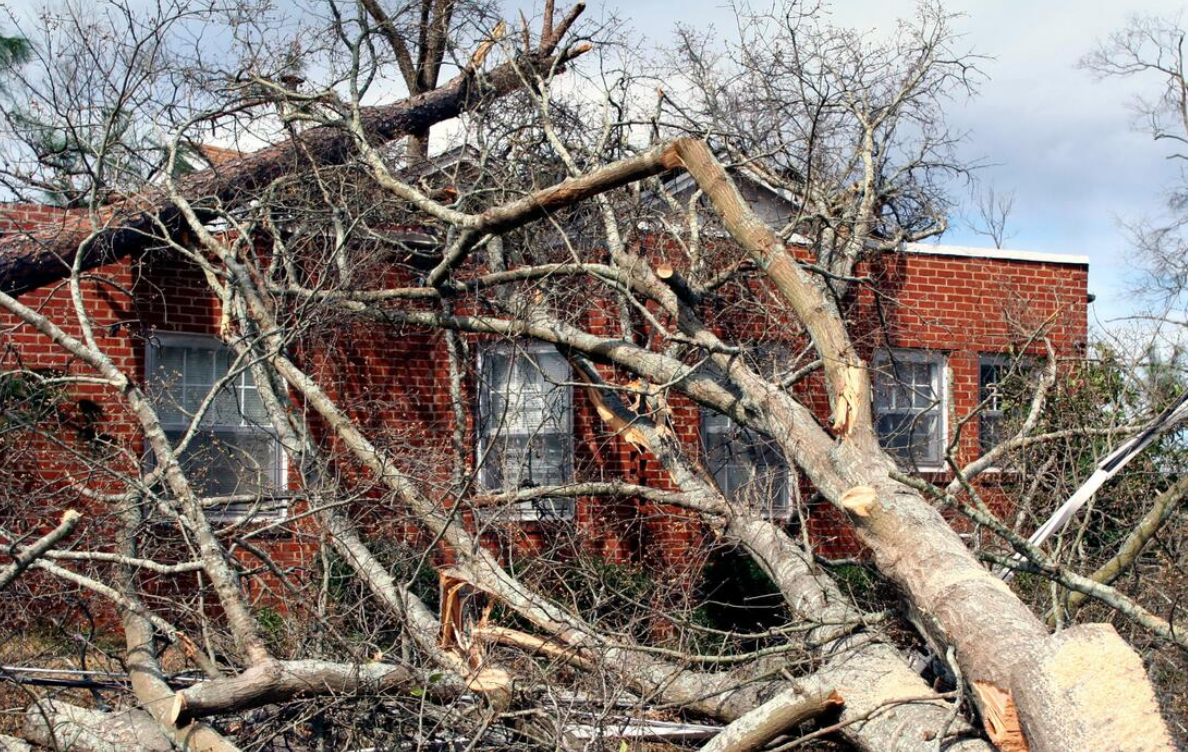
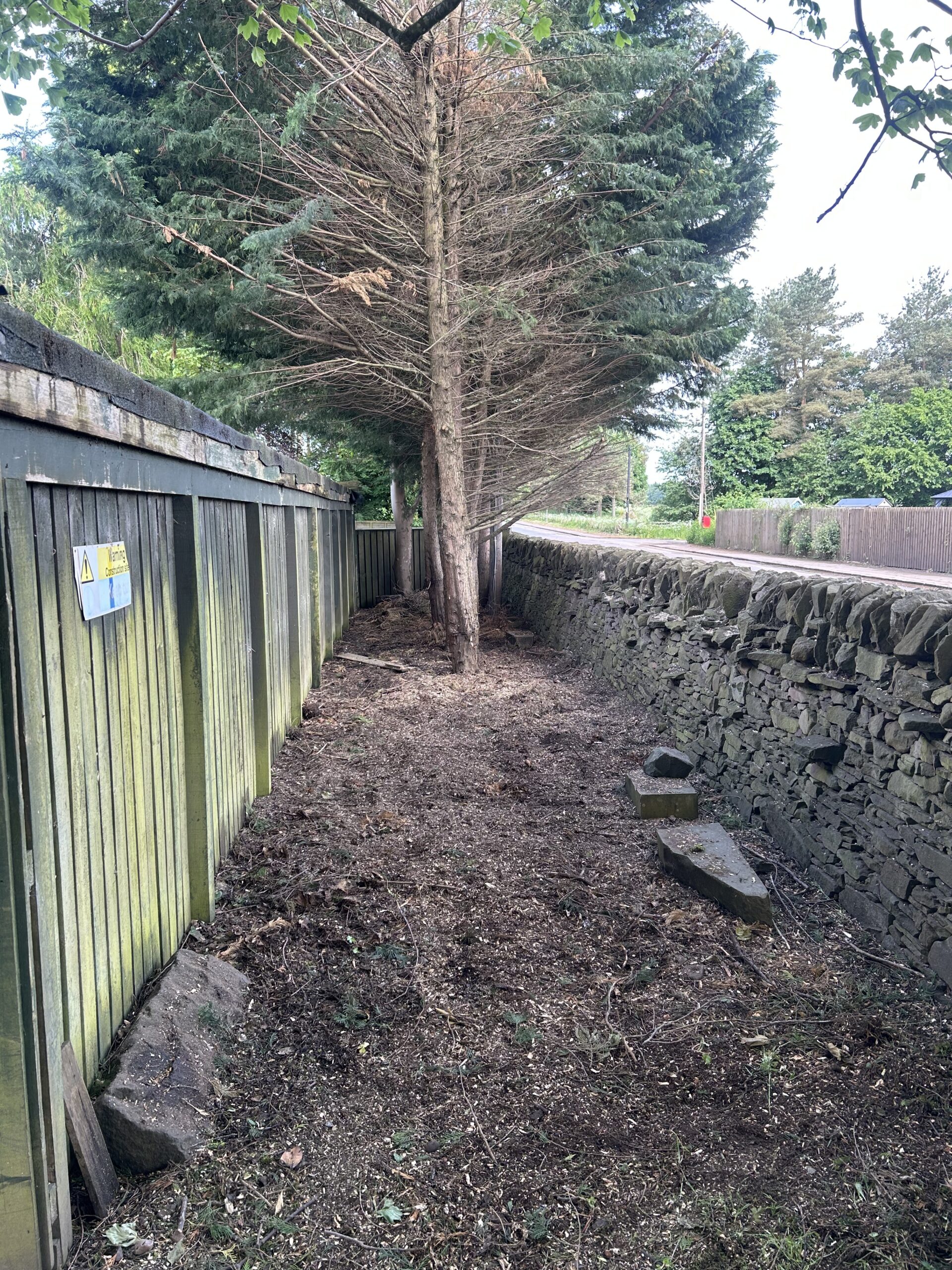
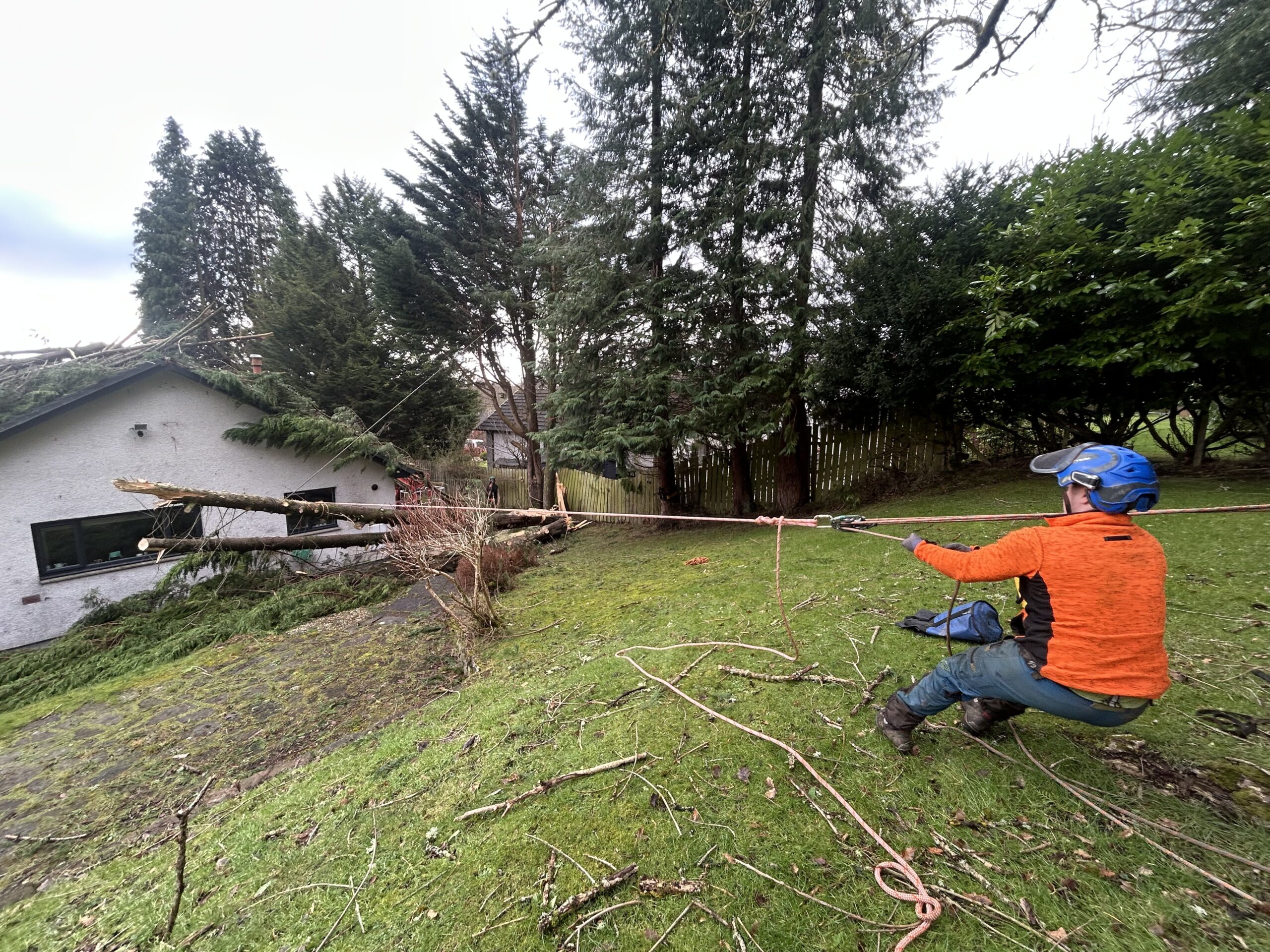
- Storm damage response removing fallen trees and debris blocking construction site access
- Safety hazard elimination addressing dangerous vegetation threatening worker safety and project operations
- Urgent deadline clearance providing last-minute site preparation when project timelines compress
- Access restoration clearing blocked routes essential for construction vehicle deployment and material delivery
- Insurance incident support providing rapid response and comprehensive documentation for claim processing
Rapid Mobilisation Capabilities
Our partnership with CNJ Tree Services enables immediate deployment of appropriate equipment and certified operators. This enhanced capability ensures professional response regardless of emergency scale or complexity.
Emergency response capabilities:
- Same-day mobilisation for genuine emergencies with immediate safety implications
- 24-hour site attendance when access permits and safety protocols allow safe working
- Multi-team deployment through CNJ partnership for large-scale emergency clearance requirements
- Emergency equipment access including heavy machinery typically unavailable for immediate deployment
- Direct contractor coordination minimising communication delays and expediting resolution
Recent emergency success: When winter storms brought down mature trees across a Merchant City development site, our team mobilised within 4 hours and cleared all debris within 6 hours, preventing a 2-day construction delay valued at £50,000 in project costs.
Emergency situation? Call 0141-483-7485 immediately – 24/7 response available.
Areas We Cover
Glasgow Trees provides comprehensive commercial site clearance across Glasgow and the wider Central Scotland region. Our strategic partnership with CNJ Tree Services, based in Fintry between Glasgow and Stirling, extends our coverage whilst maintaining rapid response capabilities throughout the service area.
Primary Glasgow areas:
- Glasgow City Centre including Merchant City, Financial District, and Clyde Waterfront development zones
- East End covering Parkhead, Bridgeton, Calton, and major regeneration areas
- South Side including Gorbals, Pollokshields, Mount Florida, and residential development sites
- West End covering Partick, Hillhead, Kelvingrove, and university expansion projects
- North Glasgow including Maryhill, Springburn, and industrial estate developments
Greater Glasgow coverage:
- East Kilbride and surrounding South Lanarkshire commercial developments
- Paisley and Renfrewshire including airport corridor and business park projects
- Hamilton and Motherwell covering North Lanarkshire industrial and residential developments
- Clydebank and West Dunbartonshire including waterfront regeneration projects
Extended Central Scotland reach:
- Stirling and surrounding areas through CNJ Tree Services partnership
- Falkirk and Central Belt corridor including major infrastructure projects
- Rural Central Scotland for large-scale development and infrastructure clearance
Coverage areas extending beyond our standard region considered for substantial commercial projects.
Confirm coverage for your project location – call 0141-483-7485.
Glasgow Trees Arborist Services
Commercial site clearance often requires specialised arboricultural expertise beyond standard vegetation removal. Complex development projects benefit from professional arboricultural consultation ensuring regulatory compliance and optimised tree management strategies.
Comprehensive Arboricultural Solutions
Glasgow Trees’ certified Arborist Services complement commercial site clearance by providing the professional consultation necessary for projects involving significant tree assets or complex planning requirements.
Pre-clearance arboricultural consultation:
- BS5837 Tree Surveys providing comprehensive tree assessments required for planning applications and construction method statements
- Tree Preservation Order applications and management ensuring legal compliance when protected trees require removal or modification
- Arboricultural Impact Assessments evaluating development impact on retained trees and recommending protective measures
- Root Protection Area planning and construction method statement development minimising damage to valuable retained specimens
- Veteran tree identification and preservation strategy development protecting irreplaceable mature specimens where possible
Post-clearance planning and implementation:
- Replacement tree planning ensuring planning condition compliance and environmental offset requirements
- Landscape restoration design integrating new tree planting with cleared site preparation and future maintenance requirements
- Long-term tree management planning for completed developments including maintenance schedules and growth management protocols
Professional service integration: Our commercial site clearance services integrate seamlessly with our comprehensive Arborist Services category, providing complete project solutions from initial tree assessment through clearance execution to final landscape implementation and ongoing management.
This integrated approach ensures your commercial development receives expert arboricultural guidance throughout the project lifecycle, optimising both immediate clearance requirements and long-term landscape success.
For Free Quotation and Expert Advice
Click to Call Now!
Frequently Asked Questions
What permits are required for commercial site clearance in Glasgow?
Most commercial site clearance projects require Environmental Permits under the 2016 Regulations, particularly for waste disposal and potential contaminated land management. Tree Preservation Orders (TPOs) must be checked and applications submitted where protected trees require removal. Conservation area notifications may be necessary depending on location. Wildlife surveys are often required during nesting seasons (March-August) to ensure compliance with the Wildlife & Countryside Act. Our experienced team handles all permit applications, conducts necessary assessments, and ensures full regulatory compliance throughout your project. We coordinate with Glasgow City Council, SEPA, and other regulatory bodies, providing comprehensive documentation and preventing costly delays. This thorough approach protects your project from legal complications whilst maintaining construction timelines.
How long does commercial site clearance take in Glasgow?
Commercial site clearance timelines depend on multiple factors including site size, vegetation density, access constraints, and regulatory requirements. Small commercial sites under 1 acre typically require 1-3 days, whilst medium developments spanning 1-3 acres need 1-2 weeks for completion. Large-scale projects exceeding 3 acres may require 2-4 weeks with potential for phased completion aligned with construction schedules. Weather conditions, particularly during winter months, can influence timelines. Complex regulatory requirements including wildlife surveys or contaminated land assessment may extend preparation phases. Our partnership with CNJ Tree Services enables multiple team deployment for urgent projects, significantly reducing timelines when required. Emergency clearance can commence same-day when access permits, with 24/7 response available for genuine emergencies affecting critical construction schedules.
What's included in your commercial site clearance service?
Our comprehensive commercial clearance service includes initial site assessment and hazard identification, regulatory compliance checking and permit application assistance, complete vegetation removal including trees, shrubs, and ground-level growth, professional stump grinding and root system removal, debris processing with 90%+ waste recycling, and construction-ready ground preparation. We provide method statements and risk assessments, conduct wildlife surveys when required, coordinate with environmental consultants for complex sites, and ensure licensed waste disposal with full audit trails. Heavy machinery deployment, comprehensive insurance coverage, and emergency response capabilities are standard. The service concludes with thorough site cleanup, final inspection, and handover documentation including compliance certificates. All waste disposal follows Environment Agency licensing requirements with complete documentation for regulatory oversight and project records.
How much does commercial site clearance cost in Glasgow?
Commercial site clearance costs vary significantly based on site characteristics and project requirements. Small commercial sites under 1 acre typically range £5,000-£15,000, medium developments spanning 1-3 acres cost £15,000-£45,000, whilst large projects exceeding 3 acres require detailed project-specific quotations starting from £45,000. Cost factors include vegetation density, access constraints, disposal requirements, regulatory complexity, and timeline urgency. Emergency response carries 25-50% premiums for urgent deployment and out-of-hours working. All quotations include comprehensive consultation, permit assistance, complete clearance, licensed waste disposal, and construction-ready site preparation. We provide transparent pricing with itemised costs, no hidden charges, and flexible payment terms for substantial projects. FREE initial consultation includes detailed site assessment and competitive quotation within 4 hours of contact.
Do you handle hazardous materials during site clearance?
Yes, our NPTC certified team is fully qualified to identify and coordinate safe management of hazardous materials encountered during commercial site clearance. We conduct comprehensive site assessments identifying potential hazards including asbestos-containing materials, contaminated soil, chemicals, and other dangerous substances requiring specialist handling. Our team coordinates with licensed hazardous waste contractors for safe removal and disposal, ensures full Environment Agency compliance throughout the process, and provides comprehensive documentation for regulatory requirements and insurance purposes. Our £5 million public liability insurance covers hazardous material identification and coordination activities. We work closely with environmental consultants and contaminated land specialists when remediation is required, ensuring all materials are handled according to strict regulatory protocols with complete audit trails and certification documentation.
Can you work around existing buildings and infrastructure?
Absolutely. Our experienced commercial team specialises in precision clearance around existing structures, operational utilities, and sensitive infrastructure. We conduct detailed pre-clearance surveys mapping underground services and identifying constraints, implement comprehensive protective measures for adjacent buildings and facilities, and coordinate with utility companies when working near gas, electric, or telecommunications infrastructure. Our partnership with CNJ Tree Services provides access to specialised compact machinery for confined spaces and challenging access situations. We maintain continuous liaison with property managers and facility operators, ensuring minimal disruption to ongoing operations. Comprehensive method statements address proximity working protocols, and our £5 million public liability insurance provides full coverage for property protection. Urban commercial clearances throughout Glasgow’s developed areas represent our core expertise and specialisation.
What environmental considerations apply to commercial clearance?
Commercial site clearance operates under extensive environmental legislation requiring careful planning and compliance monitoring. Key considerations include wildlife protection during nesting seasons (March-August) requiring surveys and timing restrictions, Environmental Permitting Regulations governing waste management and disposal activities, and potential contaminated land assessment where previous industrial use is suspected. We conduct environmental impact assessments identifying sensitive areas and mitigation requirements, maximise waste recycling achieving 90%+ diversion from landfill, and preserve important habitats and mature trees where project design permits. Our sustainable approach supports Glasgow’s 15% tree canopy coverage goals and contributes to the city’s 13,000 tons annual carbon sequestration targets. All environmental compliance follows Environment Agency standards with comprehensive documentation, licensing verification, and coordination with ecological consultants for complex sites requiring specialist environmental management.
Do you provide emergency commercial site clearance services?
Yes, we offer comprehensive 24/7 emergency commercial site clearance across Glasgow and Central Scotland with rapid response capabilities for urgent situations. Emergency services include immediate storm damage response removing fallen trees from construction sites, safety hazard elimination addressing dangerous vegetation threatening workers or operations, urgent site preparation for compressed project deadlines, and access restoration clearing blocked routes essential for construction activities. Our partnership with CNJ Tree Services enables same-day deployment of appropriate heavy machinery and certified operators when genuine emergencies arise. We provide comprehensive insurance claim support with detailed documentation, maintain direct contractor liaison minimising communication delays, and offer weekend and out-of-hours attendance when safety permits. Emergency response carries premium rates but prevents substantial construction delays and protects project investments when urgent professional intervention becomes essential.
Contact Glasgow Trees for Professional Commercial Site Clearance
When your Glasgow construction project demands reliable site clearance, choose the proven expertise of Glasgow Trees enhanced by our partnership with CNJ Tree Services. Our comprehensive approach combines local knowledge with commercial capabilities, ensuring your development starts on schedule without costly delays or regulatory complications.
📞 Call 0141-483-7485 now for your FREE commercial site clearance consultation – response within 4 hours guaranteed.
Why Glasgow Commercial Developers Choose Us
- FREE comprehensive site assessment and regulatory compliance checking
- NPTC certified expertise with 30+ years combined experience delivering results
- £5 million insurance protection covering all commercial clearance activities
- 24/7 emergency response across Glasgow and Central Scotland when urgent intervention required
- Complete permit management including TPO applications and environmental assessments handled FREE
- No damage guarantee on all clearance work with comprehensive property protection protocols
- Construction-ready completion with thorough cleanup and professional site handover documentation
- Partnership enhanced capabilities providing commercial equipment access through CNJ collaboration
- Environmental responsibility achieving 90%+ waste recycling and supporting Glasgow’s urban forest goals
- Transparent pricing with detailed quotations, flexible payment terms, and no hidden costs for major projects
Ready to move your commercial project forward? Call 0141-483-7485 for immediate professional consultation and competitive quotation.
Our proven track record across Glasgow’s construction and development sector demonstrates consistent delivery of professional site clearance services that protect project timelines, ensure regulatory compliance, and provide the foundation for successful construction completion.
What Falls Outside a Standard Site Clearance Quote
- Felling and removal of trees, hedgerows and dense scrub across the full development footprint, including boundary trees that oversail neighbouring land and need care in the direction they're dropped
- Stump grinding well below finished ground level, not just flush with the surface, so foundations, drainage runs or hardstanding can go in without a stump resurfacing once the topsoil settles
- Flailing and chipping of bramble, brash and self-seeded growth, with arisings chipped on site or taken away by forwarder trailer rather than left in windrows across the plot
- A site walk-over ahead of clearance to flag protected trees, Tree Preservation Orders, active bird nests or other wildlife constraints before machinery starts work
- Coordination with the principal contractor or site manager on access, sequencing and timing alongside groundworks, fencing and other trades already booked into the programme
- Removal and licensed disposal of green waste and timber, with usable timber chipped or taken for processing rather than left on site for someone else to deal with
- Clearance of fast-spreading species such as Himalayan balsam or self-seeded buddleia where they're growing on site, cut and removed in a way that avoids re-rooting elsewhere on the plot
- Basic levelling of the cleared ground once stumps and roots are out, so the site is left in a state a groundworks contractor can survey and set out from
- Marking and temporary protection of retained trees or hedgerow within the working area, so anything the client or planning condition requires to stay put isn't accidentally damaged by plant moving around it
- Felling licence checks where volume or location require one, so felling doesn't start on the wrong side of forestry regulations on larger or more heavily wooded plots
Not Included / Costed Separately
- Asbestos removal itself -- the team identifies asbestos-containing material, such as old fence panels, outbuilding roofing or buried pipe lagging turning up mid-clearance, and coordinates with a licensed asbestos removal specialist, but stripping out and disposing of ACMs is done by that separately licensed contractor, priced and scheduled apart from the clearance.
- Contaminated land remediation -- site assessment and coordination with environmental consultants is part of the service, particularly on former industrial plots where old fuel tanks, buried drums or fly-tipped material can turn up under scrub, but the actual remediation of contaminated soil or groundwater is a separate specialist job with its own quote and its own timescale.
- Structural demolition -- vegetation clearance and processing of demolition debris mixed in with it is covered, but breaking down standing buildings, foundations, retaining walls or hardstanding is a demolition contractor's work, not a tree and land clearance crew's, and needs its own method statement.
- Detailed groundworks -- ground preparation covers basic levelling only; cut-and-fill earthworks, drainage runs, piling and foundation excavation need a groundworks or civil engineering contractor, brought in once the site is clear and the cleared ground has been handed over.
- Utility disconnection or diversion -- clearance is carried out around gas, electric and telecoms infrastructure, working to the marked-up service positions supplied by the site manager or utility search, but disconnecting, capping or diverting live services stays with the utility company or its approved contractor.
How a Site Clearance Fits Into the Build Programme
- Enquiry and scope call: We talk through the development plans, site access and where clearance sits in the build programme, so we have a rough idea what's needed and what plant is likely to be involved before anyone visits.
- Site walk-over survey: We walk the site to gauge tree stock, ground conditions and access for plant such as the 360 excavator or telehandler, and check for Tree Preservation Orders, boundary constraints or protected species that affect timing.
- Written quote and programme slot: A written quote sets out the scope, the machinery involved, waste routes and a start-finish window that fits around the rest of the build programme rather than being treated as a standalone job.
- Clearance and processing: Felling, stump grinding, flailing and chipping happen in a set sequence, usually working from the access point inward so plant isn't boxed in by its own arisings, and keeping site access open for other trades where possible rather than blocking the whole plot at once.
- Waste removal: Green waste and timber are taken off site or chipped down as the clearance progresses rather than left to deal with at the end, with usable timber sold on or processed rather than sent to landfill, and waste transfer paperwork kept for the contractor's records.
- Handover walk: We walk the cleared site with the site manager to confirm ground level and scope match what was agreed, flag anything that needs the groundworks contractor's attention -- a soft patch, an unexpected root ball, a boundary marker moved by the machinery -- and sign the job off before the next trade moves in.
What a Construction Site Clearance Costs
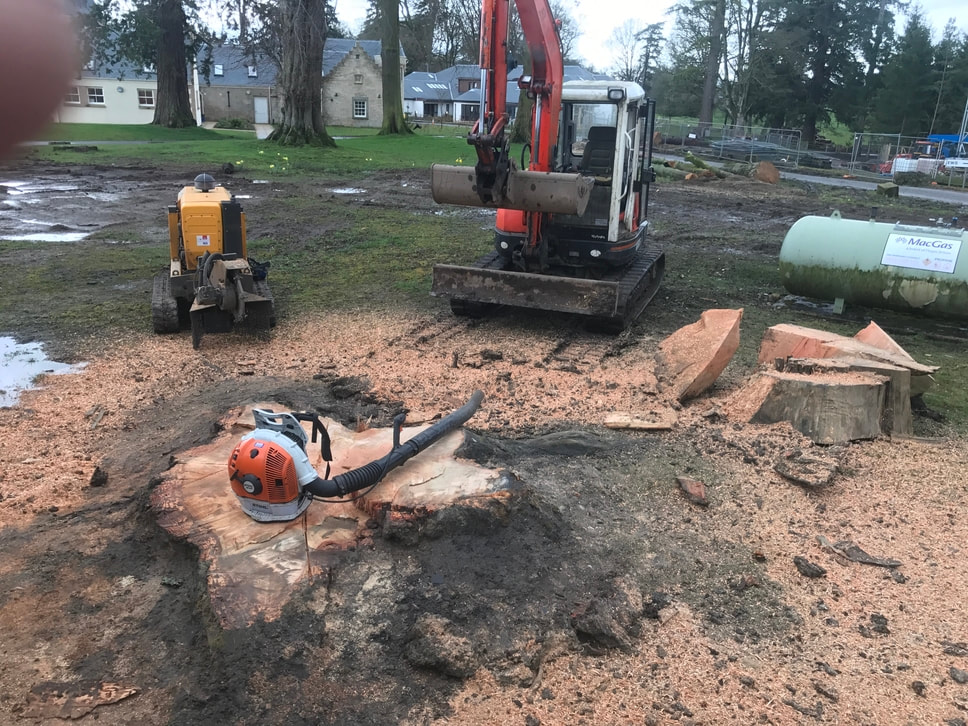
Cost depends mainly on how much has to come out and how it gets off site, rather than the size of the plot alone. A handful of garden trees and light scrub on a small infill plot might run to a few hundred pounds. A mid-sized plot with a mixed hedgerow boundary and a handful of established trees to fell and grind typically sits in the low thousands once felling, grinding, chipping and waste removal are all counted. A larger development site with mature trees across the footprint, dense hedgerow along more than one boundary and stump grinding needed everywhere a building or access road is going in can run well into the mid-thousands, particularly where felled timber has to be processed and hauled off rather than chipped and left on site for the client. Access matters as much as volume: a site that lets a 360 excavator and forwarder trailer work freely costs less to clear than one where everything has to be carried out by hand because machinery can't get past a gate, a retaining wall or overhead cables. Every job gets a free site visit before a figure is confirmed, since a quote given without seeing the ground, the vegetation and the access is only ever a guess, and guessed figures tend to move once the machinery is actually on site.
A few other things move the number more than clients expect. Felling licence applications, where a plot's tree volume needs one, add time rather than cost but push the earliest possible start date out, so it's worth flagging at enquiry stage rather than after a programme is fixed. Disposal distance matters too -- a site close to a chip processing or timber merchant yard costs less to clear than one where waste has to travel further, and any hazardous material found mid-job (asbestos fragments, contaminated soil) is priced separately by the specialist who deals with it, not folded into the clearance figure. None of that is unusual on a construction site, but it's exactly the sort of detail a site visit catches that a phone estimate can't.
Where stump grinding is the bulk of the work -- a site with the tree stock already felled by someone else, or a plot where only the stumps are holding up groundworks -- pricing is usually driven by the number and diameter of stumps rather than by area, since a handful of large mature stumps can take longer than a much bigger number of small ones. That's another reason a phone or email quote for a stripped-back job like this tends to be less reliable than for a fuller clearance, where the site visit has more to go on.
Construction Clearance vs a General Waste or Skip Hire Firm
| What matters on a construction site | Glasgow Trees / CNJ partnership | General waste clearance or skip hire firm |
|---|---|---|
| Certified operators | NPTC certified team for felling, stump grinding and machinery operation | Not typically NPTC certified for tree or vegetation work |
| Insurance level | £5 million public liability cover for commercial clearance activities | Cover levels vary and often exclude tree or vegetation work |
| Regulatory paperwork | Checks and applies for Tree Preservation Orders, environmental permits and wildlife survey compliance | Rarely handles planning, TPO or environmental permit applications |
| Hazardous material handling | Identifies asbestos and contaminated material, coordinates licensed disposal | Usually outside scope -- loads can be refused at the tip if hazardous material turns up |
| Waste diversion from landfill | 90%+ of material recycled or recovered rather than landfilled | Landfill-heavy; diversion rates aren't usually published |
| Programme integration | Works to the principal contractor's programme, clearing in stages so access stays open for other trades | One-off collection days rather than phased work timed to the build |
| Emergency response | 24/7 availability with same-day mobilisation for genuine emergencies | Standard business-hours booking only |
| Site knowledge | Local team familiar with Glasgow-area ground conditions, brownfield history and terrain across the M8/M74/M77/M80/A82 corridors | Often subcontracted crews unfamiliar with the specific area |
Why Contractors Use Us Ahead of Groundworks
Glasgow Trees has traded as Glasgow's tree surgery specialist since 2005, and site clearance for construction has grown out of that core tree work rather than being bolted on as an afterthought. The team holds NPTC and Lantra certificates covering felling, stump grinding, and operation of the stump grinder, 360 excavator, timber crane, forwarder trailer and other plant used on a clearance job, and all work is carried out to British Standard BS3998 by a fully insured crew.

That construction-specific experience shows up in details that matter to a programme rather than a garden: knowing which boundary trees need a felling licence check before they come down, which stumps have to be ground to full depth because a drainage run is going straight over them, and which bits of scrub can be flailed flat in an afternoon versus which need hand-clearing because the ground underneath is uneven or holding services. Our ongoing clearance partnership with CNJ, the demolition and groundworks contractor we're most often booked alongside, means a lot of jobs run without the usual handover friction between a tree crew finishing up and the next trade starting -- access stays open, waste routes are agreed in advance, and the site is left the way the groundworks team needs it, not just tidy.
Owning the plant rather than hiring it in also changes what we can commit to on a programme. A hired-in stump grinder or excavator has to be booked around whoever else needs it that week, which is how a one-day clearance job quietly becomes a three-week wait on some sites. Because the stump grinder, 360 excavator, timber crane and forwarder trailer are ours, a programme slot agreed at quote stage is one we control, not one that depends on a plant hire firm's availability -- which matters more on a build programme with other trades booked in behind the clearance than it does on most jobs. It also means the same operators who did the site survey are usually the ones running the machinery on the day, rather than a subcontracted crew meeting the site for the first time on the morning clearance starts.
Site Clearance Across Glasgow and the West of Scotland
Most of our clearance work is in and around Glasgow, but the same team covers construction sites right along the M8, M74, M77, M80 and A82 corridors, including East Dunbartonshire, West Dunbartonshire, Renfrewshire, East Renfrewshire, Inverclyde, parts of South Lanarkshire, Stirling and Falkirk as far as Bo'ness. A good share of development sites we clear are former industrial or brownfield plots along the M8 corridor and around the Clyde, where scrub has often grown up over old hardstanding or buried foundations that only show themselves once the 360 excavator starts digging out stumps. Narrower infill plots in the West End and Southside tend to need more careful directional felling and a smaller footprint for the machinery, since there's less room to manoeuvre a forwarder trailer than on a green-field site. Further out, sites in East Dunbartonshire and Stirling are more often on sloped or heavier ground, where a tracked machine sometimes has to go in ahead of the 360 excavator to open up access before the main clearance can start. Glasgow's tree canopy cover runs to around 15%, higher than the UK urban average of 10%, so development sites here more often come with mature trees or established hedgerow to deal with rather than bare scrub, which is one reason a site survey before quoting matters as much as it does. Coastal and estuary-adjacent sites down towards Inverclyde bring their own access considerations, with exposed ground that can be wetter for longer after rain than inland plots, while sites tight against the M74 or M80 corridors are more often working within a narrow strip between the road boundary and the build line, which limits where the forwarder trailer can turn and stage material. Sites near the Forth and Clyde Canal corridor through the north of the city and out towards Falkirk sometimes carry mature waterside trees and soft, often peaty ground close to the towpath, which changes how close plant can safely work to the bank without a temporary trackway laid first.
Get the Site Cleared Before It Holds Up the Build
Site clearance sitting on the critical path of a build programme is one of the more common reasons a start date slips, and it's usually avoidable with an early site visit and a clear scope agreed up front. Once ground conditions, access and any protected trees or wildlife constraints are known, the clearance itself can often be scheduled tightly around the rest of the programme rather than left as an open-ended first job, and phased where the programme needs part of the site handed over before the rest. Get in touch for a free, no-obligation quote and we'll walk the site with you before anything is confirmed.
“Very friendly and professional. They delivered my job on time and at a good price.”
Glasgow Trees — that is what we aim to hear from our customers all the time.
Get a Free Quote
🔒 Your details are safe with us. No spam, ever.