Glasgow's Tree Specialists Since 2005
Commercial Stump Grinding Glasgow
Heavy-duty commercial stump grinding for construction sites, retail units and business grounds across Glasgow – NPTC-certified operators working to British Standard BS3998, £5 million insurance cover, and free, no-obligation site quotes.
At a Glance
- NPTC-certified operators, working to British Standard BS3998
- Fully insured for commercial sites, including public and employer liability cover
- Free, no-obligation site quotes
Commercial Stump Grinding Glasgow
0141-483-7485
Professional Commercial Stump Grinding Services for Glasgow Businesses
Glasgow’s commercial properties require efficient stump grinding solutions that minimise business disruption whilst ensuring complete site clearance. From property development projects to routine facilities management, professional stump grinding protects your business investment, eliminates liability risks, and maintains operational efficiency.
Glasgow Trees, in partnership with CNJ Tree Services, delivers comprehensive commercial stump grinding throughout Glasgow and Central Scotland. Our NPTC certified team combines 30+ years expertise with commercial-grade equipment, ensuring rapid project completion whilst maintaining the highest safety standards.
Why risk amateur attempts at commercial stump grinding? Professional service prevents costly project delays, ensures regulatory compliance, and protects your business from liability exposure.
📞 Call 0141-483-7485 now for your FREE commercial stump grinding consultation
Why Commercial Properties Need Professional Stump Grinding
Business Site Safety and Liability
Commercial stumps create significant liability exposure for business property owners. Public safety risks include trip hazards for employees, customers, and visitors, potentially resulting in serious injury claims and insurance complications. Professional stump grinding eliminates these hazards whilst ensuring compliance with commercial health & safety obligations.
Insurance implications extend beyond immediate accident claims. Property insurers increasingly scrutinise commercial site safety, with visible hazards potentially affecting coverage terms and premium costs. Maintaining safe commercial premises through professional stump grinding demonstrates responsible property management and due diligence.
Legal compliance requirements under the Occupiers’ Liability Act place responsibility on commercial property owners to maintain safe premises. Professional stump grinding ensures accessibility compliance, removes obvious hazards, and supports your legal duty of care obligations.
Commercial Development Requirements
Construction site preparation demands complete stump removal for foundation work, utilities installation, and building development. Professional commercial stump grinding ensures sites meet construction standards whilst coordinating with project timelines and contractor requirements.
Car park extensions and access improvements require level surfaces for vehicle safety and operational efficiency. Our commercial stump grinding creates smooth, development-ready surfaces suitable for immediate paving or further construction work.
Landscape development for professional business premises requires obstacle-free grounds enabling comprehensive maintenance programmes. Commercial stump grinding facilitates planned landscaping whilst eliminating ongoing maintenance complications around remaining stumps.
Property value protection through professional site management maintains commercial property aesthetics and functionality. Removing unsightly stumps enhances business premises appearance whilst enabling flexible site utilisation for future development opportunities.
Operational Efficiency Considerations
Maintenance complications from remaining stumps obstruct efficient grounds keeping, increase maintenance costs, and create ongoing operational frustrations. Professional stump grinding eliminates these obstacles whilst enabling streamlined commercial maintenance programmes.
Space optimisation recovers valuable commercial land for productive business use. Every square metre of commercial property represents significant investment – professional stump grinding maximises site utilisation whilst enabling strategic development planning.
Professional image maintenance requires commercial premises to meet appropriate aesthetic standards. Removing unsightly stumps supports corporate reputation whilst demonstrating environmental responsibility and professional property management standards.
Future planning flexibility enables long-term site development without stump-related constraints. Professional commercial stump grinding creates development-ready sites supporting strategic business expansion and adaptation plans.
Commercial benefits: Professional stump grinding prevents costly delays and liability issues
Investment protection: Maintaining commercial property value through proper site management
📞 Assess your commercial stump grinding needs – 0141-483-7485
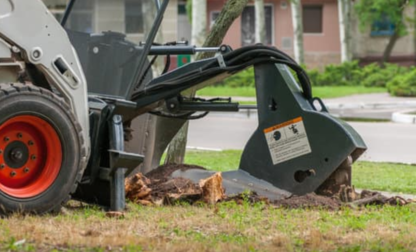
Our Commercial Stump Grinding Services
Large-Scale Site Clearance
Our commercial team specialises in comprehensive site clearance for major development projects. Development preparation includes complete stump grinding across extensive sites, coordinated with construction schedules and environmental consultants to ensure smooth project progression whilst meeting tight development timelines.
Multi-stump operations utilise commercial-grade equipment capable of processing numerous stumps efficiently. Our systematic approach coordinates equipment deployment, waste management, and site restoration to minimise disruption whilst maintaining productivity throughout large commercial clearance projects.
Access planning addresses complex commercial site constraints including building proximity, utility lines, and operational requirements. Professional route planning ensures equipment access whilst protecting existing infrastructure and maintaining business operational capability throughout project execution.
Deadline management integrates stump grinding with commercial development schedules, ensuring project milestones receive appropriate priority. Our commercial experience includes coordination with construction teams, planning authorities, and project managers throughout demanding commercial development projects.
Specialist Commercial Equipment
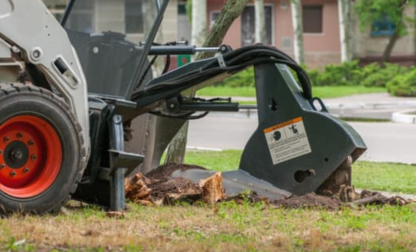
Heavy-duty commercial grinders process large stumps efficiently using specialist machinery designed for commercial applications. Track-mounted systems provide all-terrain capability whilst high-power equipment ensures rapid processing minimising commercial project timelines and associated costs.
Narrow-access specialist machines handle confined commercial spaces through 700mm-width equipment capable of accessing tight commercial areas. Lightweight design enables operation on delicate commercial surfaces whilst maintaining professional results throughout challenging commercial environments.
Remote operation capability enhances safety and precision for complex commercial operations near buildings and infrastructure. Advanced control systems enable accurate grinding whilst maintaining safe working distances from commercial buildings, utilities, and operational areas.
Productivity features include efficient debris processing and integrated waste management reducing project duration. Professional equipment specifications ensure consistent commercial standards whilst minimising site impact and operational disruption throughout demanding commercial projects.
Professional Site Restoration
Ground levelling creates smooth surfaces suitable for immediate commercial development. Professional finishing ensures sites meet construction standards whilst providing appropriate preparation for turfing, paving, or further development according to commercial client requirements.
Waste processing includes comprehensive wood chip recycling and responsible disposal supporting corporate environmental objectives. Professional waste management minimises landfill impact whilst providing recycled materials suitable for landscaping or biomass applications.
Surface preparation delivers development-ready sites meeting commercial construction standards. Professional restoration includes soil conditioning, level verification, and quality assurance ensuring sites exceed client expectations whilst supporting subsequent development phases.
Quality assurance maintains professional standards through systematic inspection and client verification throughout commercial projects. Our commitment to excellence ensures complete client satisfaction whilst establishing long-term commercial relationships based on reliable service delivery.
Ongoing Maintenance Contracts
Planned programmes integrate stump grinding with comprehensive grounds maintenance contracts providing predictable annual costs whilst ensuring priority response for emergency situations affecting commercial operations.
Priority response includes emergency stump grinding for storm-damaged trees creating safety hazards or operational disruption. Commercial contracts guarantee rapid attendance minimising business impact whilst maintaining appropriate safety protocols throughout emergency situations.
Budget management through annual maintenance agreements provides cost certainty whilst ensuring professional service standards. Planned maintenance prevents problems whilst supporting long-term commercial property investment through professional grounds management.
Relationship management includes dedicated account coordination ensuring consistent service standards and responsive communication. Commercial contracts receive priority scheduling and professional project management throughout ongoing business relationships.
Service advantages:
- Rapid site clearance minimising business disruption
- Professional equipment ensuring efficient completion
- Complete waste management and site restoration
📞 Discuss commercial requirements – 0141-483-7485
Commercial Stump Grinding vs Alternative Methods
Stump Grinding vs Complete Removal
Grinding advantages include cost-effective solutions, faster project completion, and minimal site disruption making it ideal for most commercial applications. Professional grinding eliminates visible stumps whilst preserving surrounding landscape and infrastructure.
Complete removal benefits include total stump and root system elimination providing clear sites for construction projects requiring deep excavation. However, complete removal involves extensive excavation, higher costs, and significant site disruption affecting commercial operations.
Commercial considerations determine optimal approach based on future site use, development requirements, and budget constraints. Professional assessment evaluates specific commercial needs ensuring appropriate method selection whilst optimising project outcomes and costs.
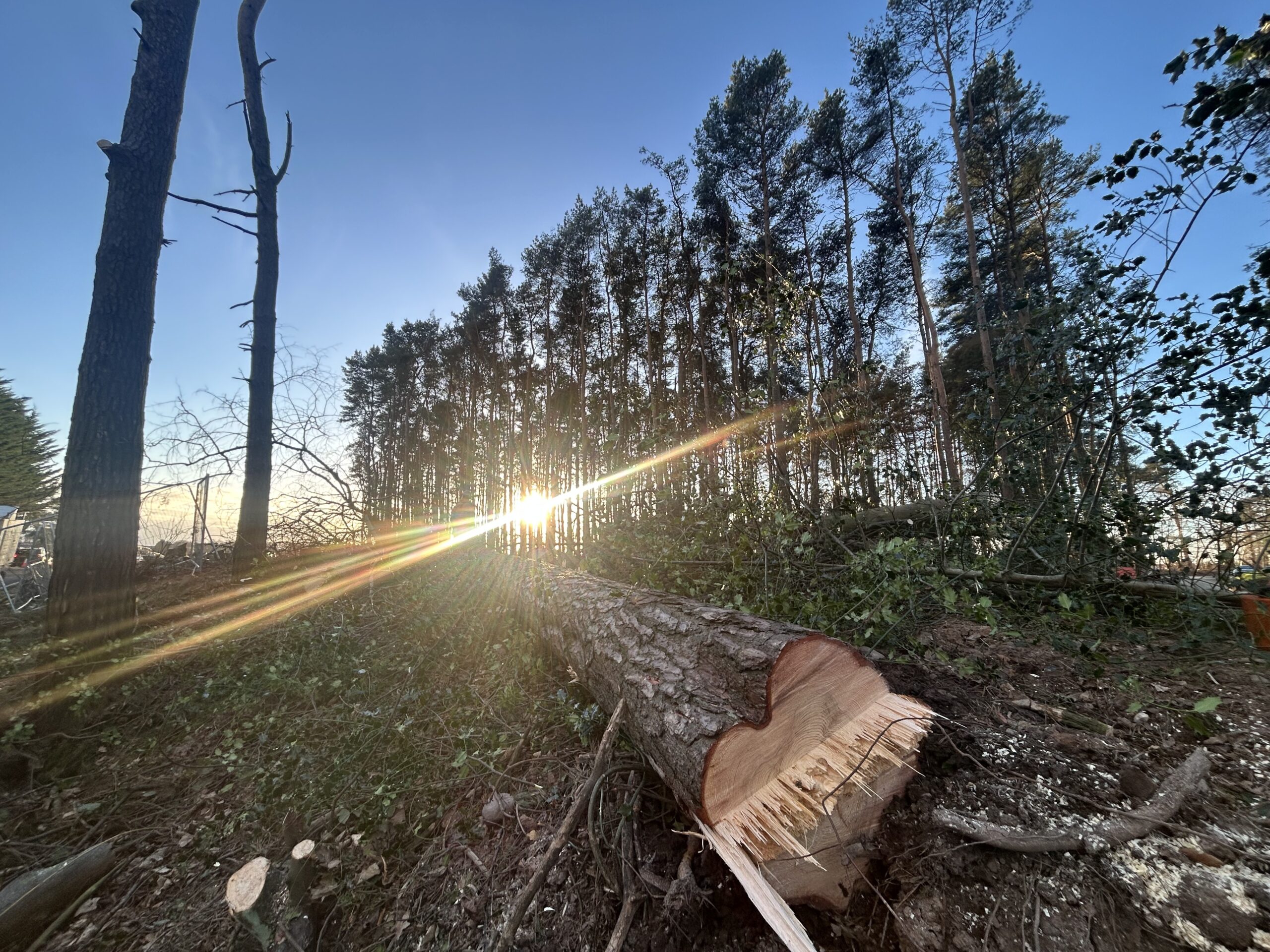
Cost implications favour grinding for most commercial applications providing efficient solutions whilst complete removal suits major redevelopment projects requiring total site clearance. Professional consultation ensures informed decision-making supporting commercial objectives.
Chemical Treatment and Eco-Plugs
Limited commercial application restricts chemical methods to specific small-scale situations unsuitable for major commercial projects. Eco-plugs provide gradual stump decomposition over extended periods incompatible with commercial development timelines.
Time considerations make chemical treatment unsuitable for commercial development requiring immediate site preparation. Professional grinding provides rapid results meeting commercial deadlines whilst chemical methods require months or years for complete effectiveness.
Environmental factors limit chemical applications in commercial and public areas where environmental sensitivity and public safety considerations restrict chemical usage. Professional assessment determines appropriate treatment whilst ensuring regulatory compliance.
Professional assessment evaluates site-specific requirements ensuring optimal method selection. Our commercial expertise guides clients towards efficient solutions whilst avoiding inappropriate treatments that delay commercial project progression.
Access and Equipment Considerations
Site constraints including building proximity, utility lines, and operational requirements influence equipment selection and operational approach. Professional planning addresses complex commercial site challenges whilst maintaining safety standards throughout demanding operations.
Equipment selection matches machinery capability to site conditions ensuring efficient completion whilst protecting commercial infrastructure. Professional assessment determines appropriate equipment whilst considering access limitations and operational constraints.
Safety protocols implement commercial-grade safety measures appropriate to business environments. Professional procedures ensure regulatory compliance whilst protecting personnel, property, and ongoing commercial operations throughout challenging projects.
Coordination requirements integrate stump grinding with other trades and contractors on commercial sites. Professional project management ensures seamless coordination whilst maintaining quality standards and deadline adherence throughout complex commercial projects.
Method selection: Professional assessment ensures optimal approach for commercial requirements
Efficiency focus: Grinding typically provides fastest commercial site clearance
📞 Professional method consultation – 0141-483-7485
The Glasgow Trees + CNJ Partnership for Commercial Grinding
Enhanced Commercial Capabilities
Our strategic partnership with CNJ Tree Services creates unmatched commercial capability throughout Glasgow and Central Scotland. Specialist equipment access provides commercial-grade stump grinders through professional collaboration, enabling complex projects requiring advanced machinery and extensive team resources.
Extended service range spans Glasgow city centre to rural Central Scotland, enabling comprehensive service delivery for multi-site commercial clients requiring consistent standards across diverse locations whilst maintaining responsive local service.
Project scale flexibility accommodates small commercial removals through to major site clearances. Professional resource allocation matches project requirements whilst ensuring appropriate equipment and team deployment throughout diverse commercial applications.
Professional project management ensures coordinated delivery meeting commercial standards. Combined expertise maintains quality whilst scaling capability for major commercial contracts requiring extensive coordination and professional oversight.
Commercial Experience and Expertise
Business sector knowledge encompasses property developers, facilities managers, construction companies, and public sector clients. Our professional understanding of commercial requirements ensures appropriate service delivery whilst supporting diverse business objectives.
Regulatory understanding includes commercial compliance requirements and comprehensive documentation supporting client obligations. Professional knowledge navigates complex regulations whilst ensuring appropriate approvals and certifications throughout commercial projects.
Timeline management coordinates stump grinding with business operational constraints, minimising disruption whilst maintaining productivity and cost-effectiveness throughout demanding commercial schedules and operational requirements.
Quality standards maintain consistent professional delivery across commercial projects. Established procedures ensure reliable results whilst building long-term commercial relationships based on professional competence and service excellence.
Local Knowledge with Commercial Scale
Glasgow business community relationships include established commercial clients throughout Glasgow’s diverse business sectors. Professional reputation supports repeat business relationships and referral networks throughout Glasgow’s commercial property community.
Council coordination streamlines permissions, notifications, and regulatory compliance through established relationships with Glasgow City Council and surrounding authorities. Professional liaison expedites approvals whilst ensuring appropriate consultation throughout commercial projects.
Access solutions utilise creative approaches addressing challenging commercial sites. Professional problem-solving enables successful completion of complex projects whilst maintaining safety standards and protecting commercial infrastructure throughout demanding operations.
Environmental compliance supports corporate sustainability objectives through responsible waste management and environmental stewardship. Professional practices contribute to client environmental commitments whilst ensuring regulatory compliance throughout commercial operations.
Partnership benefits:
- Commercial capabilities with local service and accountability
- Flexible equipment options matching specific site requirements
- Established commercial relationships and proven track record
📞 Experience partnership advantages – 0141-483-7485
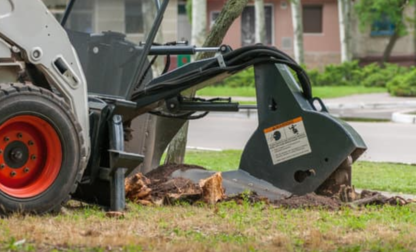
Commercial Stump Grinding Process and Planning
Initial Site Assessment
Comprehensive evaluation examines stump quantity, size distribution, access constraints, and site conditions determining optimal approach whilst identifying potential challenges requiring specialist solutions. Professional assessment ensures appropriate resource allocation and timeline development.
Utility investigation includes comprehensive underground services identification through professional consultation with utility companies and site surveys. Safety planning protects essential services whilst ensuring appropriate precautions throughout commercial operations.
Access planning develops equipment routes, surface protection strategies, and operational area designation. Professional route assessment ensures efficient equipment deployment whilst protecting commercial infrastructure and maintaining operational access throughout project execution.
Timeline development integrates project scheduling with business operational requirements, construction deadlines, and regulatory constraints. Professional planning ensures appropriate coordination whilst maintaining flexibility for commercial operational needs.
Commercial Project Coordination
Stakeholder liaison coordinates with building managers, contractors, council officers, and utility companies ensuring comprehensive communication throughout complex commercial projects. Professional coordination maintains project momentum whilst addressing diverse stakeholder requirements.
Operational planning minimises disruption to business activities through careful scheduling, phased operations, and alternative access arrangements. Professional consideration maintains business continuity whilst ensuring efficient project completion and quality standards.
Safety management implements comprehensive risk assessment and method statement development meeting commercial health & safety standards. Professional safety planning ensures regulatory compliance whilst protecting personnel and property throughout commercial operations.
Communication protocols establish regular update schedules, progress reporting, and issue escalation procedures. Professional communication maintains client confidence whilst enabling proactive problem resolution throughout complex commercial projects.
Professional Execution and Completion
Qualified operation utilises NPTC certified operators with extensive commercial equipment experience. Professional competence ensures safety compliance whilst maintaining quality standards throughout demanding commercial operations and challenging site conditions.
Safety compliance implements full adherence to commercial health & safety requirements including risk assessment, method statements, and emergency procedures. Professional safety management protects personnel whilst ensuring regulatory compliance throughout commercial projects.
Quality delivery maintains professional standards ensuring client satisfaction and regulatory compliance. Systematic quality control prevents issues whilst ensuring professional results meeting commercial client expectations and industry standards.
Site restoration includes complete cleanup and professional finishing leaving sites ready for immediate development or operational use. Professional restoration demonstrates attention to detail whilst supporting client satisfaction and future business relationships.
Process efficiency: Streamlined approach minimising commercial project delays
Professional standards: Consistent delivery meeting commercial client expectations
📞 Start commercial project planning – 0141-483-7485
Health & Safety and Insurance for Commercial Stump Grinding
Commercial Safety Requirements
Risk assessment protocols implement comprehensive evaluation meeting commercial health & safety standards. Professional risk management identifies potential hazards whilst developing appropriate control measures ensuring safe operations throughout challenging commercial environments.
Method statement documentation provides detailed safety procedures supporting commercial compliance obligations. Professional documentation demonstrates due diligence whilst ensuring appropriate safety measures throughout complex commercial operations and regulatory requirements.
Equipment safety standards utilise commercial-grade machinery with comprehensive safety features meeting industry requirements. Professional equipment maintenance and inspection schedules ensure operational safety whilst maintaining productivity throughout demanding commercial applications.
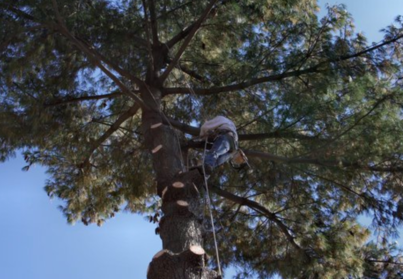
Emergency procedures include comprehensive incident response planning and first aid coverage. Professional emergency management ensures appropriate response capability whilst maintaining safety standards throughout commercial operations.
Insurance and Professional Protection
£5 million public liability insurance provides comprehensive coverage for commercial operations protecting against property damage, personal injury claims, and business disruption costs. Professional insurance coverage ensures complete client protection throughout commercial stump grinding operations.
Professional indemnity insurance protects clients against advice and recommendation liability. Professional coverage includes technical consultation, method selection, and project planning ensuring complete protection throughout commercial decision-making processes.
Equipment insurance provides full coverage for specialist commercial machinery protecting against operational failures and damage during commercial projects. Professional insurance ensures continuity whilst protecting client interests throughout equipment-dependent operations.
Employer liability insurance ensures comprehensive team protection during commercial operations. Professional coverage includes medical treatment, compensation, and rehabilitation support ensuring appropriate protection throughout high-risk commercial stump grinding operations.
Regulatory Compliance
CDM regulations compliance applies to construction-related commercial projects requiring coordination with principal contractors and design teams. Professional understanding ensures seamless integration whilst maintaining independent professional standards throughout construction projects.
Environmental responsibilities include waste disposal compliance and site protection requirements. Professional environmental management ensures regulatory adherence whilst supporting corporate sustainability objectives throughout commercial operations.
Professional certification maintains NPTC qualified operators meeting industry standards for commercial operations. Professional competence ensures regulatory compliance whilst providing client confidence throughout demanding commercial projects.
Documentation provision includes complete records supporting client compliance obligations. Professional record-keeping provides audit trails whilst ensuring appropriate documentation for health & safety requirements and insurance compliance.
Safety priority: Zero-incident approach protecting commercial clients and operations
Professional protection: Comprehensive insurance coverage providing complete peace of mind
📞 Verify safety credentials – 0141-483-7485
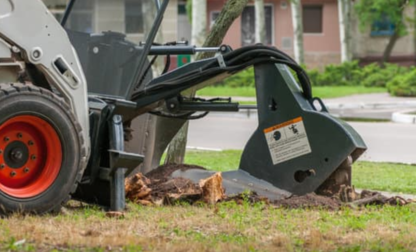
Arborist Service Costs in Glasgow: Transparent Pricing Guide
Heavy-Duty Commercial Grinders
High-power capability processes large stumps efficiently using specialist commercial-grade machinery designed for demanding business applications. Advanced grinding technology ensures rapid processing whilst maintaining safety standards throughout challenging commercial operations.
Track-mounted systems provide all-terrain access capability essential for challenging commercial sites. Professional mobility enables operation across diverse surface conditions whilst maintaining productivity and safety throughout complex commercial environments.
Remote operation systems enhance safety and precision for complex commercial operations near buildings and essential infrastructure. Advanced control technology enables accurate grinding whilst maintaining safe working distances throughout sensitive commercial environments.
Productivity features include efficient debris processing and integrated waste management systems. Professional equipment specifications reduce project duration whilst maintaining quality standards throughout demanding commercial applications.
Narrow-Access Specialist Equipment
Compact design enables 700mm-width access through standard commercial gateways and confined spaces. Professional engineering ensures capability whilst maintaining manoeuvrability throughout restricted commercial environments and challenging access situations.
Lightweight mobility protects delicate commercial surfaces including car parks, pathways, and landscaped areas. Professional consideration prevents damage whilst enabling necessary access throughout sensitive commercial environments.
Precision control enables accurate operation near buildings, utilities, and commercial infrastructure. Advanced control systems ensure safety whilst maintaining productivity throughout complex commercial operations requiring careful navigation.
Versatile application handles small to medium commercial stumps efficiently whilst maintaining professional standards. Equipment flexibility ensures appropriate capability throughout diverse commercial requirements and varying operational conditions.
Professional Support Equipment
Ground protection systems utilise mats, boards, and protective coverings preserving commercial surfaces throughout equipment operations. Professional surface protection prevents damage whilst enabling necessary access throughout sensitive commercial environments.
Debris processing equipment includes wood chippers and comprehensive waste management systems. Professional waste handling ensures efficient cleanup whilst supporting environmental objectives throughout commercial operations.
Access equipment includes tracked carriers and specialist transport for challenging commercial terrain. Professional logistics ensure equipment deployment whilst maintaining operational efficiency throughout demanding commercial sites.
Safety equipment provides comprehensive protection appropriate to commercial environment operations. Professional safety provision ensures regulatory compliance whilst protecting personnel throughout challenging commercial stump grinding operations.
Equipment advantages:
- Commercial-grade machinery ensuring professional results
- Flexible equipment selection matching specific site requirements
- Professional operation minimising commercial site impact
📞 Discuss equipment options – 0141-483-7485
Commercial Client Types and Case Studies
Property Development and Construction
Site preparation services include comprehensive development ground clearance for major construction projects. Professional stump grinding coordinates with construction schedules whilst ensuring sites meet development standards and regulatory requirements.
Access improvement projects encompass car park extensions and commercial access enhancement enabling improved business operations. Professional site clearance creates smooth surfaces suitable for immediate paving whilst supporting operational efficiency improvements.
Landscape preparation facilitates professional grounds development and comprehensive enhancement projects. Strategic stump removal enables planned landscaping whilst supporting long-term property investment and aesthetic improvement programmes.
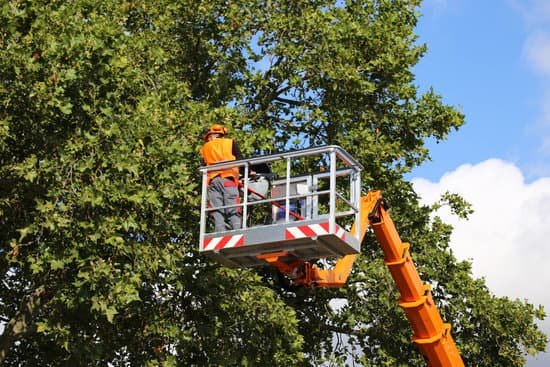
Timeline integration coordinates with construction schedules and project management requirements. Professional scheduling ensures appropriate coordination whilst maintaining deadline adherence and quality standards throughout complex development projects.
Facilities Management and Maintenance
Business premises maintenance includes office complexes, retail centres, and industrial sites requiring professional grounds management. Comprehensive stump grinding supports property presentation whilst ensuring safety compliance throughout diverse commercial environments.
Planned maintenance integrates scheduled stump removal with comprehensive grounds contracts providing predictable costs whilst ensuring professional standards. Annual programmes prevent problems whilst supporting long-term property investment through strategic maintenance planning.
Emergency response includes storm damage clearance and safety hazard elimination. Professional rapid response minimises business disruption whilst ensuring appropriate safety measures throughout critical commercial situations.
Budget management through annual contracts provides cost certainty whilst ensuring priority response. Professional maintenance agreements support financial planning whilst guaranteeing service availability throughout ongoing commercial requirements.
Public Sector and Institutional Clients
Educational institutions including schools and universities receive professional grounds maintenance supporting safe learning environments. Comprehensive stump grinding ensures safety compliance whilst maintaining aesthetic standards throughout educational facilities.
Healthcare facilities including hospitals and care homes benefit from professional environmental management. Strategic stump removal supports safety requirements whilst ensuring appropriate aesthetic standards throughout sensitive healthcare environments.
Local authority projects include council property and public space management. Professional stump grinding supports community safety whilst ensuring appropriate standards throughout public facilities and community areas.
Housing associations receive comprehensive grounds maintenance and development support. Professional stump grinding enables social housing improvements whilst supporting community development and resident safety throughout housing projects.
Commercial success examples: Recent major site clearance for Glasgow business park development
Client satisfaction: 100% completion record with comprehensive cleanup and restoration
📞 Join our commercial client base – 0141-483-7485
Environmental Responsibility in Commercial Stump Grinding
Sustainable Commercial Practices
Waste minimisation implements 100% wood chip recycling supporting circular economy principles throughout commercial operations. Professional waste management eliminates landfill disposal whilst providing valuable recycled materials supporting environmental objectives.
Environmental compliance ensures responsible disposal meeting commercial sustainability objectives whilst supporting corporate environmental commitments. Professional environmental management demonstrates stewardship whilst ensuring regulatory compliance throughout commercial operations.
Carbon consideration utilises efficient operations minimising environmental impact throughout commercial projects. Professional practices reduce fuel consumption whilst optimising productivity supporting climate change mitigation objectives.
Native habitat protection implements careful planning preserving valuable ecosystems throughout commercial operations. Professional environmental awareness supports biodiversity whilst ensuring appropriate commercial development progression.
Supporting Glasgow’s Urban Forest
Strategic removal supports healthy tree population management through professional assessment and selective stump grinding. Environmental planning contributes to Glasgow’s impressive 15% urban tree canopy coverage exceeding UK average standards.
Replanting facilitation includes site preparation enabling new tree establishment throughout commercial developments. Professional site management supports tree planting programmes whilst enabling commercial development objectives.
Corporate sustainability supports business environmental responsibility commitments through professional environmental practices. Commercial stump grinding contributes to corporate environmental reporting whilst demonstrating environmental stewardship.
Community benefit includes contributing to Glasgow’s annual 13,000 tons carbon sequestration and 450+ tons pollution removal through responsible urban forest management supporting community environmental health.
Commercial Environmental Benefits
Site enhancement improves commercial property environmental performance through professional landscape management. Strategic stump removal enables environmental improvements whilst supporting property investment objectives.
Sustainability reporting supports corporate environmental commitments through documented environmental practices. Professional services contribute to environmental audit requirements whilst demonstrating corporate responsibility.
Waste reduction implements professional processing minimising landfill impact whilst supporting circular economy principles. Environmental responsibility demonstrates corporate commitment whilst ensuring regulatory compliance throughout commercial operations.
Future planning enables sustainable commercial development practices through professional environmental planning. Strategic environmental management supports long-term business objectives whilst ensuring appropriate environmental stewardship.
Environmental leadership: Professional practices supporting corporate sustainability objectives
Community contribution: Responsible commercial tree management benefiting Glasgow’s environment
📞 Discuss environmental commitments – 0141-483-7485
Areas We Cover
Greater Glasgow Commercial Coverage
Glasgow City Centre receives comprehensive commercial stump grinding supporting business districts, retail developments, and mixed-use projects. Our central location enables rapid response throughout Glasgow’s commercial heart, ensuring efficient service delivery for prestigious business addresses.
East End Glasgow including Dennistoun, Parkhead, and Bridgeton benefits from professional commercial services supporting regeneration projects and ongoing business development throughout these evolving commercial areas. We serve emerging business districts with specialist commercial stump grinding capabilities.
South Side Glasgow encompassing Govanhill, Mount Florida, and Shawlands receives expert commercial stump grinding supporting diverse business communities throughout these vibrant commercial districts. Professional service delivery maintains commercial property standards across established business areas.
West End Glasgow including Partick, Hillhead, and Kelvinside benefits from specialist services supporting academic institutions, healthcare facilities, and professional businesses throughout Glasgow’s prestigious western areas. Our commercial expertise serves high-profile developments and institutional requirements.
Central Scotland Commercial Operations
Paisley and Renfrewshire receive comprehensive commercial stump grinding supporting manufacturing, retail, and service industries throughout Scotland’s largest town and surrounding business communities. Professional service delivery supports diverse commercial sectors across Renfrewshire’s business landscape.
East Kilbride and Hamilton benefit from specialist commercial services supporting new town developments, business parks, and industrial complexes throughout South Lanarkshire’s major commercial centres. Our expertise serves modern business developments and established industrial areas.
Stirling and Falkirk receive professional stump grinding services supporting historic business districts, modern commercial developments, and industrial facilities throughout Central Scotland’s key commercial areas. Professional capability serves heritage sites and contemporary business developments.
Clydebank and Dumbarton benefit from expert commercial stump grinding supporting regenerated business areas, modern developments, and mixed commercial facilities throughout West Dunbartonshire. Professional services support waterfront developments and business regeneration projects.
Extended Commercial Service Areas
Lanarkshire Coverage extends throughout North and South Lanarkshire supporting diverse commercial clients from industrial sites to modern business parks across Scotland’s most populous region outside Glasgow. Comprehensive coverage ensures consistent service standards across extensive commercial territories.
Dunbartonshire Operations cover East and West Dunbartonshire providing commercial stump grinding to businesses throughout these important commercial and industrial areas adjacent to Glasgow. Professional service delivery supports established industrial heritage and modern commercial developments.
Inverclyde Services extend to Greenock, Port Glasgow, and surrounding areas supporting maritime industries, commercial developments, and business facilities throughout this important western region. Specialist capability serves port facilities and coastal commercial developments.
Ayrshire Extensions provide commercial stump grinding throughout North Ayrshire supporting coastal businesses, industrial developments, and commercial facilities requiring professional tree management services. Professional expertise serves diverse commercial sectors across Ayrshire’s business landscape.
Commercial coverage guarantee: Professional stump grinding throughout Glasgow and Central Scotland
Response commitment: Emergency attendance within 2-4 hours across all commercial service areas
📞 Confirm commercial coverage – 0141-483-7485
Frequently Asked Questions
What's the difference between residential and commercial stump grinding?
Commercial stump grinding involves significantly larger scale operations with multiple stumps, stricter safety requirements, and complex coordination with business operations. Commercial projects require specialist heavy-duty equipment, comprehensive insurance coverage, and professional project management to minimise business disruption whilst ensuring regulatory compliance.
Commercial stump grinding typically includes complete site restoration, professional cleanup, and coordination with building managers, contractors, and council authorities. Documentation requirements are extensive including risk assessments, method statements, and completion certificates. Our commercial teams receive specific training in business environment protocols and regulatory compliance that residential work doesn’t typically require. Professional commercial services ensure appropriate standards whilst protecting business operations throughout demanding commercial projects.
How quickly can you complete commercial stump grinding projects?
Project completion timeframes depend on scope, access conditions, and site complexity. Single commercial stumps typically complete within a few hours, while major site clearances may require 1-3 days depending on quantity and size. We prioritise efficient completion to minimise business disruption whilst maintaining professional standards throughout commercial operations.
Our professional equipment and experienced teams significantly reduce project duration compared to smaller operators. We coordinate scheduling with your operational requirements, often working outside business hours or during quieter periods to maintain business continuity. Emergency response capability means dangerous stumps receive immediate attention, preventing extended business disruption and potential liability issues affecting commercial operations whilst ensuring appropriate safety protocols.
What commercial equipment do you use for large stump grinding?
We utilise specialist commercial-grade stump grinders capable of handling large stumps up to several metres in diameter. Our equipment includes track-mounted systems for all-terrain access, narrow-access machines for confined commercial spaces, and heavy-duty grinders for major site clearance projects requiring professional capability.
Our partnership with CNJ Tree Services provides access to the latest commercial equipment including remote-operated systems for enhanced safety and precision throughout challenging commercial operations. Ground protection equipment prevents damage to commercial surfaces, while debris processing systems ensure complete site cleanup. Equipment selection matches specific site requirements and access constraints, ensuring optimal efficiency for commercial projects whilst maintaining professional standards.
Do you handle waste disposal and site restoration?
Yes, comprehensive waste management and site restoration are standard for all commercial projects. We process wood chips on-site where possible, removing all debris and leaving sites clean and level. Professional restoration includes ground preparation suitable for immediate development, turfing, or construction according to commercial requirements.
Our environmental responsibility includes 100% recycling of wood waste, supporting corporate sustainability objectives whilst ensuring responsible disposal practices. We coordinate waste removal timing with your operational requirements and provide disposal documentation for environmental audit purposes. Sites are left professionally finished, ready for immediate use or further development according to your commercial requirements whilst maintaining environmental compliance.
What insurance coverage do you provide for commercial work?
We carry £5 million public liability insurance specifically covering commercial stump grinding operations. This comprehensive coverage protects against property damage, personal injury claims, and business disruption costs arising from our work. Professional indemnity insurance covers advice and recommendation liability throughout commercial projects.
Our insurance specifically covers commercial environments including public access areas, business premises, and construction sites. Equipment insurance ensures protection against machinery failure or damage during operations. All insurance documentation is readily available for client verification, supporting your risk management and compliance requirements throughout commercial projects whilst providing complete peace of mind.
Can you work around active business operations?
Absolutely – minimising business disruption is a priority for all commercial projects. We develop detailed schedules in consultation with facilities managers, often working outside business hours, during quieter periods, or in coordinated phases to maintain operational continuity whilst ensuring professional service delivery.
Our professional approach includes noise management, dust control, pedestrian safety measures, and coordinated access arrangements. We maintain communication with building occupants and provide advance notification of all activities. Emergency response capability ensures dangerous situations receive immediate attention while maintaining appropriate safety protocols for active business environments throughout commercial operations.
Do you provide ongoing maintenance contracts for commercial properties?
Yes, we offer comprehensive maintenance contracts including planned stump grinding as part of regular grounds maintenance programmes. Annual contracts provide budget certainty with priority emergency response for storm damage or safety situations affecting commercial properties whilst ensuring professional service standards.
Maintenance contracts include scheduled site inspections, proactive stump identification, and coordinated removal timing to suit business requirements. We provide dedicated account management for commercial clients, ensuring consistent service standards and responsive communication throughout ongoing business relationships. Contract arrangements offer competitive pricing and guaranteed availability for commercial stump grinding requirements whilst supporting long-term property investment.
How much does commercial stump grinding cost?
Commercial stump grinding costs vary based on scope, complexity, access requirements, and site conditions. Typical ranges include single commercial stumps £150-£500, site clearance projects £200-£800 per stump depending on size and quantity, and ongoing maintenance contracts from £1,500-£4,000 annually depending on property requirements.
Factors affecting cost include stump size and hardness, access constraints, site restoration requirements, and waste disposal needs. We provide detailed quotations within 4 hours including all equipment, labour, cleanup, and documentation. Our transparent pricing includes no hidden costs, and maintenance contracts offer budget certainty with priority emergency response included throughout annual agreements.
Choose Glasgow Trees for Professional Commercial Stump Grinding
Glasgow’s commercial properties deserve professional stump grinding that protects your business operations, meets regulatory requirements, and maintains property values whilst supporting environmental responsibility. Our partnership with CNJ Tree Services delivers unmatched capabilities for commercial stump grinding projects while maintaining the personal service and community focus of your trusted local team.
Professional commercial stump grinding prevents costly project delays, ensures site safety compliance, and maintains professional business environments. Don’t risk amateur attempts at commercial stump removal – protect your business with Glasgow’s premier commercial stump grinding specialists.
Contact Glasgow Trees today for your FREE commercial consultation:
📞 0141-483-7485
Professional Commercial Stump Grinding Benefits:
- FREE site assessment and quotation within 4 hours
- NPTC certified operators with commercial equipment expertise
- £5 million insurance protection guaranteed
- Specialist commercial equipment for all site conditions
- Complete site restoration and professional cleanup
- Business disruption minimisation through efficient planning
- Partnership capabilities for enhanced commercial service
- Environmental responsibility with 100% waste recycling
- Maintenance contracts with predictable annual budgets
- Emergency response available 24/7 across Central Scotland
For comprehensive tree condition assessments and BS5837 surveys supporting your commercial site development, explore our Professional Arborist Services including detailed tree surveys and planning support that complement our commercial stump grinding capabilities.
Glasgow’s commercial sites deserve professional care. Call 0141-483-7485 now.
What's Covered on a Commercial Stump Grinding Job, and What Isn't
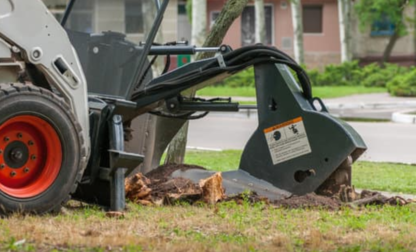
- Grinding of single stumps or multiple stumps across a site, from small ornamental trees up to large stumps several metres across, using track-mounted grinders on open ground and 700mm narrow-access machines through tighter yards, loading bays or gateways
- Grinding down below ground level rather than just levelling the visible stump, so the area is ready to be turfed, paved or built on afterwards
- On-site processing of the wood chip arisings, with debris and chippings cleared as standard rather than left for someone else to deal with
- Ground protection - mats or boards laid down first on car parks, paving and landscaped areas so tracked machinery doesn't mark or crack the surface
- Scheduling around live business operations - out of hours, in phases, or during quieter periods, with advance notice to building occupants where needed
- Risk assessments and method statements produced for the job, plus liaison with facilities managers, principal contractors or council officers on larger or regulated sites
- Priority attendance for storm-damaged or hazardous stumps for clients on a maintenance contract
Not Included / Costed Separately
- Full root-ball excavation for deep foundations - a heavier, separately quoted job involving more plant and more site disruption than grinding, needed only where a development requires the entire root system removed
- Felling of standing or live trees - stump grinding assumes the tree is already down; taking down a live tree, especially one under a Tree Preservation Order, is a different job with its own permissions
- Chemical stump treatment or eco-plugs - rarely practical for commercial timescales since decomposition takes months to years, so this isn't offered as an alternative to grinding on business sites
- Turfing, paving, tarmac or construction work itself - the site is left level and development-ready, but reinstatement trades are a separate job for your landscaper or contractor
- Planning consent or Tree Preservation Order applications - if a standing tree near the stump needs attention, this gets flagged, but making the application sits with the client or their agent
How a Commercial Stump Grinding Job Runs, Start to Finish
- Enquiry and free consultation: Call in with the stump count, rough sizes and any access constraints such as gates, loading bays or slopes. A free, no-obligation site visit follows, with detailed quotations typically issued within a few hours.
- Site assessment: An assessor checks stump size and number, confirms access for grinding equipment, and where relevant contacts utility companies to identify anything buried close to the stump before work is scheduled.
- Planning and scheduling: A risk assessment and method statement are drawn up, and the job is timed around your operating hours - often out of hours or in phases - with contractors or council contacts looped in on larger sites.
- Access and ground protection: Equipment is routed in - track-mounted grinders on open ground, narrower 700mm machines through tight gateways - with protection mats or boards laid on car parks and paving first.
- Grinding and waste processing: The stump is ground down below ground level, with chippings processed and cleared as the job goes rather than left in a pile for later collection.
- Site restoration and sign-off: The ground is levelled, the site is cleaned up, and documentation - risk assessment, method statement and completion notes - is handed over so the area is ready for turfing, paving or the next phase of work.
Qualified Operators, the Right Machine for Commercial Sites
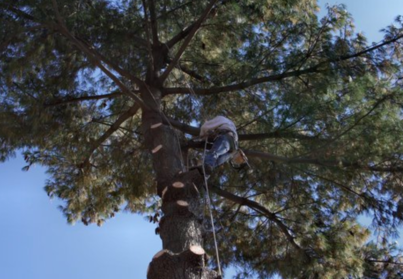
Glasgow Trees has been grinding stumps and clearing sites since 2005, and every operator sent to a commercial job holds NPTC/Lantra certification specifically for stump grinder operation, alongside separate tickets for wood chipper and 360 excavator work for the heavier jobs where full root-ball excavation is needed rather than a standard grind. All work follows British Standard BS3998, and the team is fully insured for commercial sites, including public and employer liability cover, so facilities managers and principal contractors have the paperwork to show their own compliance checks without chasing it up afterwards. Quotes are free and no-obligation, and because the same crews carry NPTC Professional Tree Inspection qualifications, a stump job that turns up a live tree nearby needing attention gets flagged accurately during the site visit rather than guessed at.
Commercial Coverage Beyond the City Centre
Most of our commercial stump grinding call-outs are within Glasgow itself, but the same crews and grinders travel out across the region on the same working day, with access being the main thing that changes the job rather than distance. Business parks and industrial units around Rutherglen and Cambuslang, or out toward Baillieston on the M8 corridor, generally have the open tarmac or hardstanding a track-mounted grinder needs, so those sites tend to book in as a straightforward day job. Established suburbs further south - Giffnock, Clarkston, Newton Mearns and Barrhead - more often mean a narrow driveway or a garden gate rather than a yard, which is where the 700mm narrow-access machine earns its keep instead of the bigger tracked unit. On the South Side, Pollokshaws sits beside Pollok Country Park, where Glasgow Trees has taken part in restoration work on the estate's champion tree collection - grinding out stumps left after storm-damaged specimens came down so bare root plates don't sit exposed across parkland that gets walked daily, the same care that goes into a smaller commercial car park or yard. North of the river, Bishopbriggs, Bearsden, Milngavie and Kirkintilloch fall within East Dunbartonshire and follow the same scheduling as city jobs, but ground gets more rural moving out toward Strathblane, Killearn, Balfron and Fintry on the edge of the Campsie Fells, where a longer private drive or unmade access track is common and worth mentioning when you book. Bothwell and Blantyre, along the M74 towards our South Lanarkshire coverage, and the outer edge of our radius at Kippen, Stirling and Bo'ness in the Falkirk council area, are covered on the same basis - the access assessment during booking matters more for these jobs than the miles travelled.
“Very friendly and professional. They delivered my job on time and at a good price.”
Glasgow Trees — that is what we aim to hear from our customers all the time.
Get a Free Quote
🔒 Your details are safe with us. No spam, ever.