COMMERCIAL TIMBER WINCHING SPECIALISTS
Commercial Tractor Based Timber Winching Glasgow | Glasgow Trees
✓ Trading since 2005✓ BS3998 standard✓ Fully insured✓ Free quotes
Trading Since 2005
BS3998 Standard
Fully Insured
Free, No-Obligation Quotes
Introduction
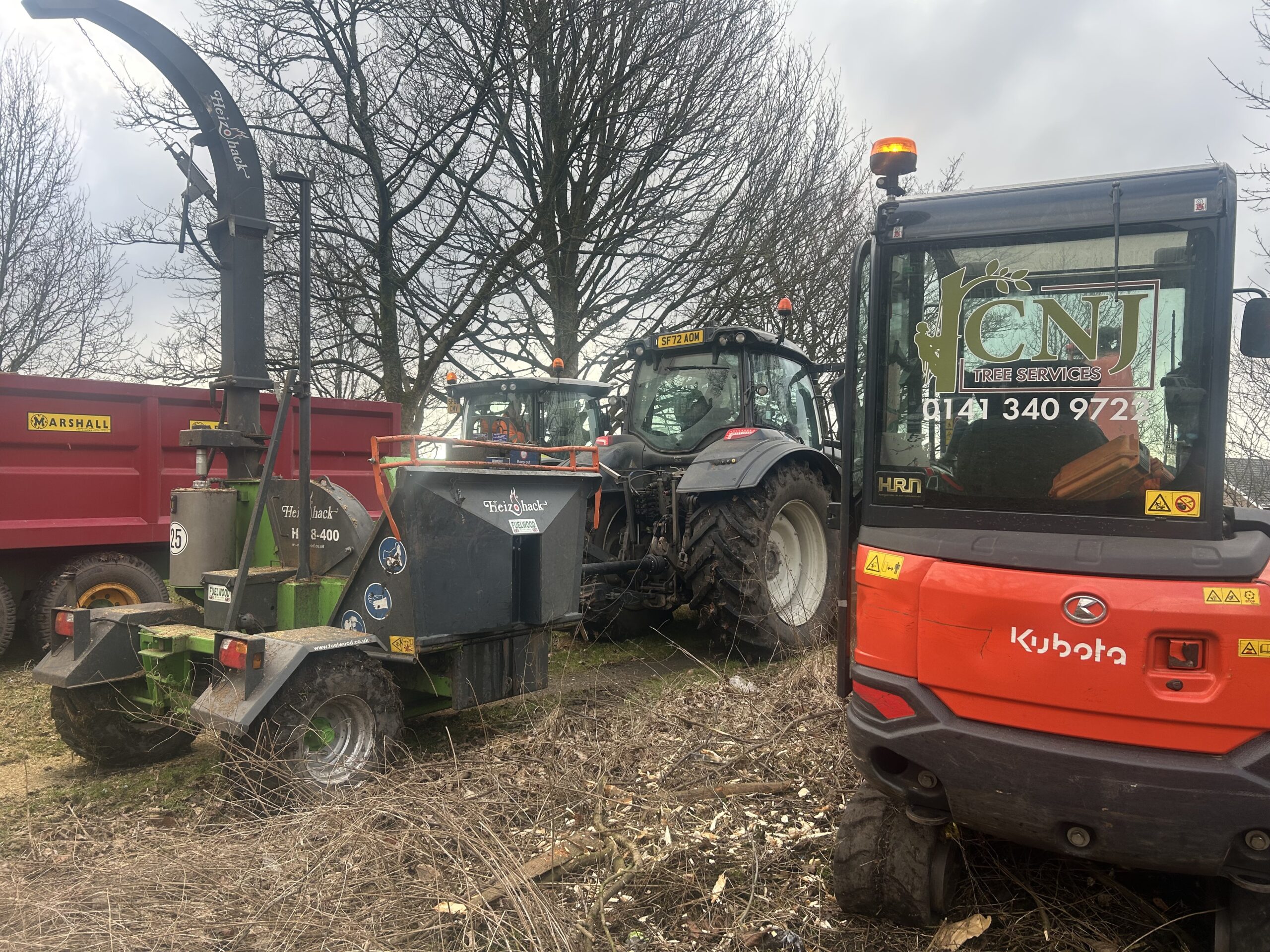
Tractor-based timber winching is the extraction stage of a large-scale tree or forestry job: once timber is down, a cable winch and tractor drag it clear of the site to a stacking or loading point, without needing a crane or heavy forwarder to cross soft or narrow ground. For commercial sites around Glasgow that means development plots, estate woodland and utility corridors get cleared to a working programme rather than waiting on access that standard machinery can't manage.
Key Selling Points
- NPTC and Lantra certified tractor and winch operators
- £5 million public liability cover on every commercial job
- Free, no-obligation site assessment before any quote
What's Included in a Commercial Timber Winching Job
- Site survey and method statement before work starts
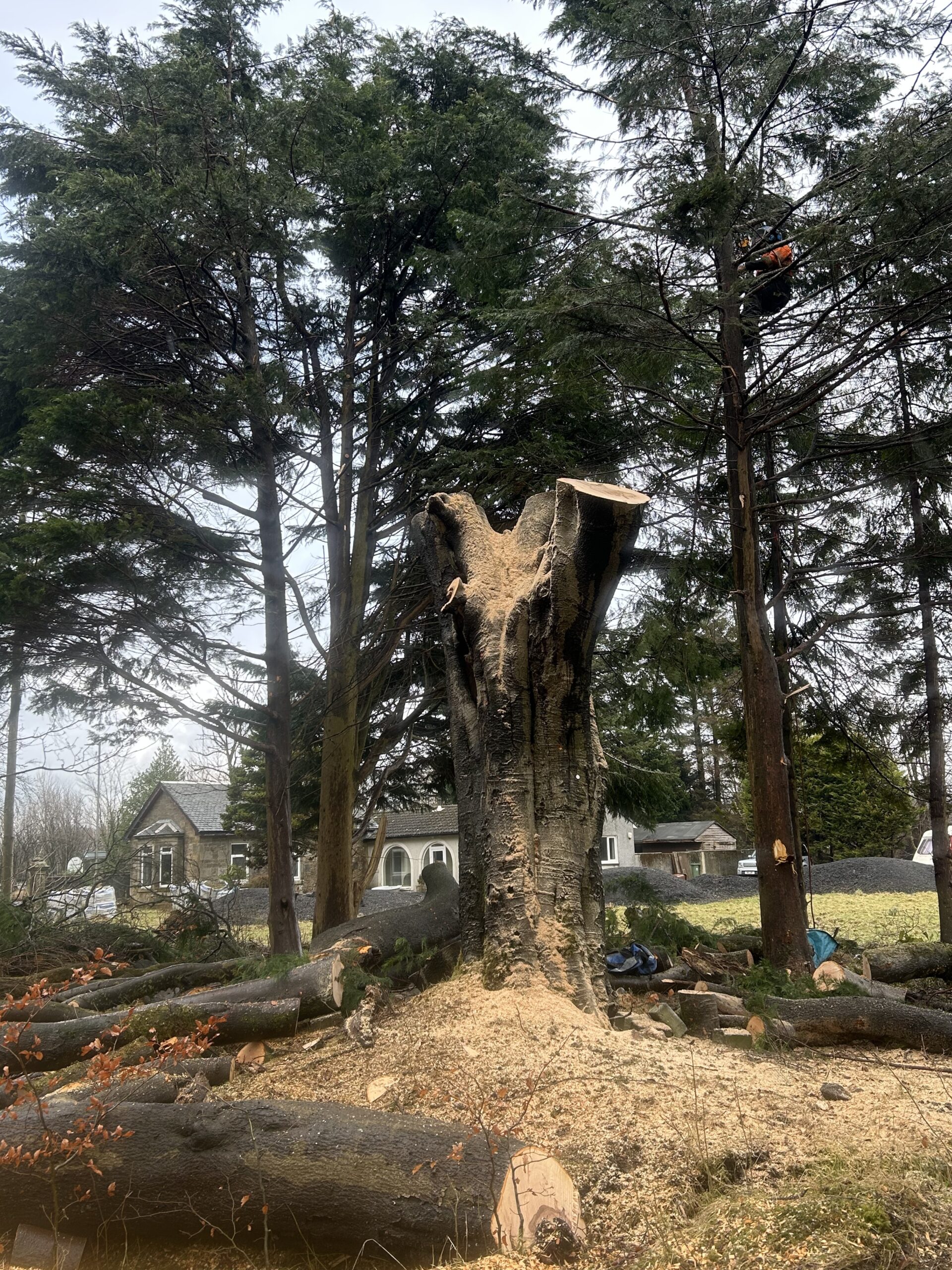
- Tractor-mounted cable winching (Goldoni Euro 45 tractor with Farmi 3.5t skidding winch, 50m cable) to drag felled or windblown timber clear of the site
- Nokka 1.5t timber trailer with 4.2m crane for stacking and loading extracted timber
- Access route and safety zone setup for the extraction operation
- Risk assessment and compliance documentation for the job file
- Basic site clean-up once timber is cleared
- Extra CNJ Tree Services machinery and crews brought in for larger volumes
Not Included / Costed Separately
- Felling standing trees is a separate stage of the job (the crew hold the felling certificates to do it, but it's quoted alongside winching, not folded into the hourly winching rate)
- Stump removal isn't part of a winching job - it's priced as a separate stump grinding visit
- Full timber processing into chip, mulch or biomass, and off-site disposal, are add-ons beyond basic extraction unless agreed at quote stage
- Landscaping, turf or hard surface reinstatement beyond a basic clean-up isn't included
- Any TPO or felling licence application needed before work can start is a separate advisory step, not part of the winching quote
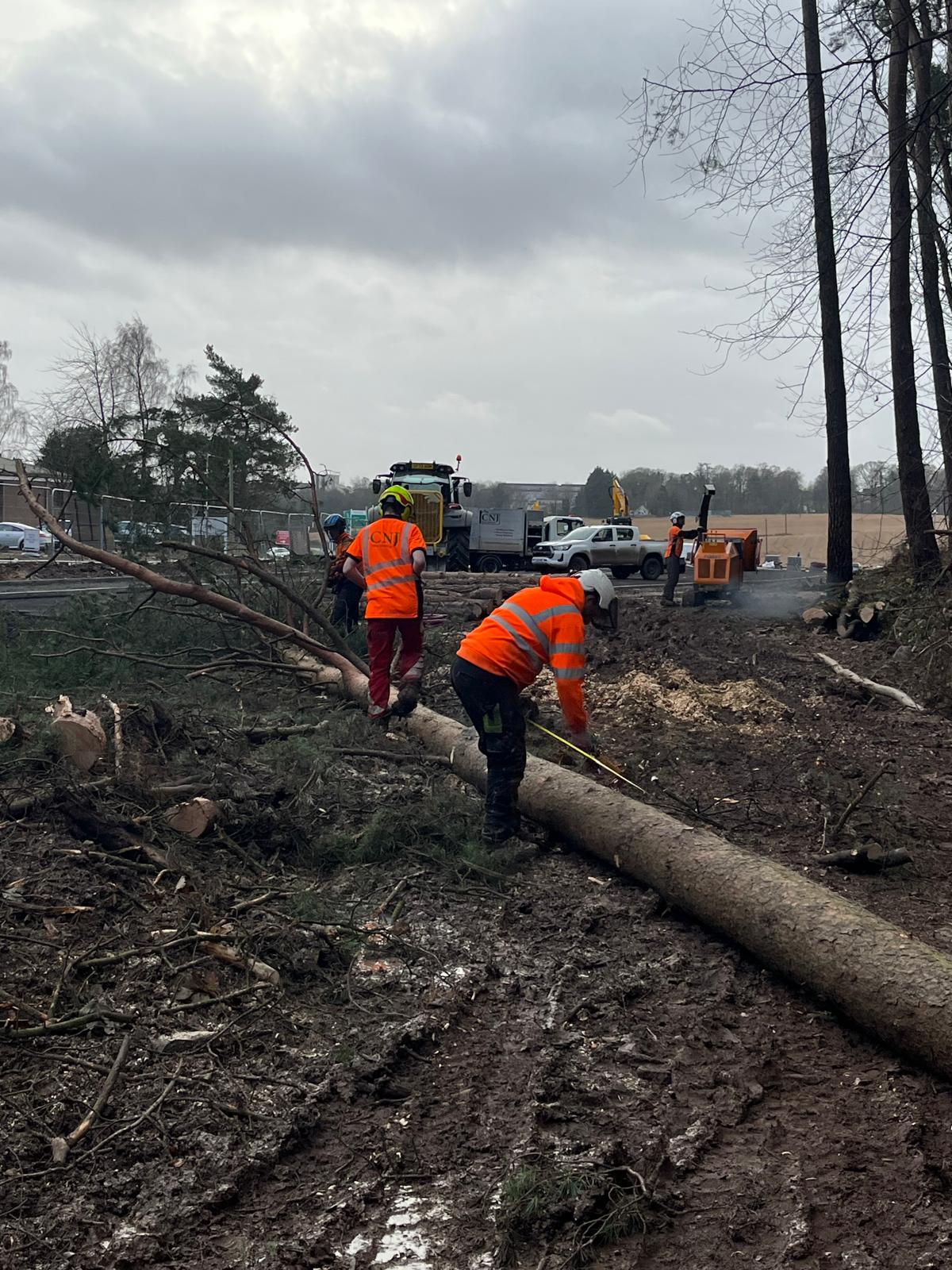
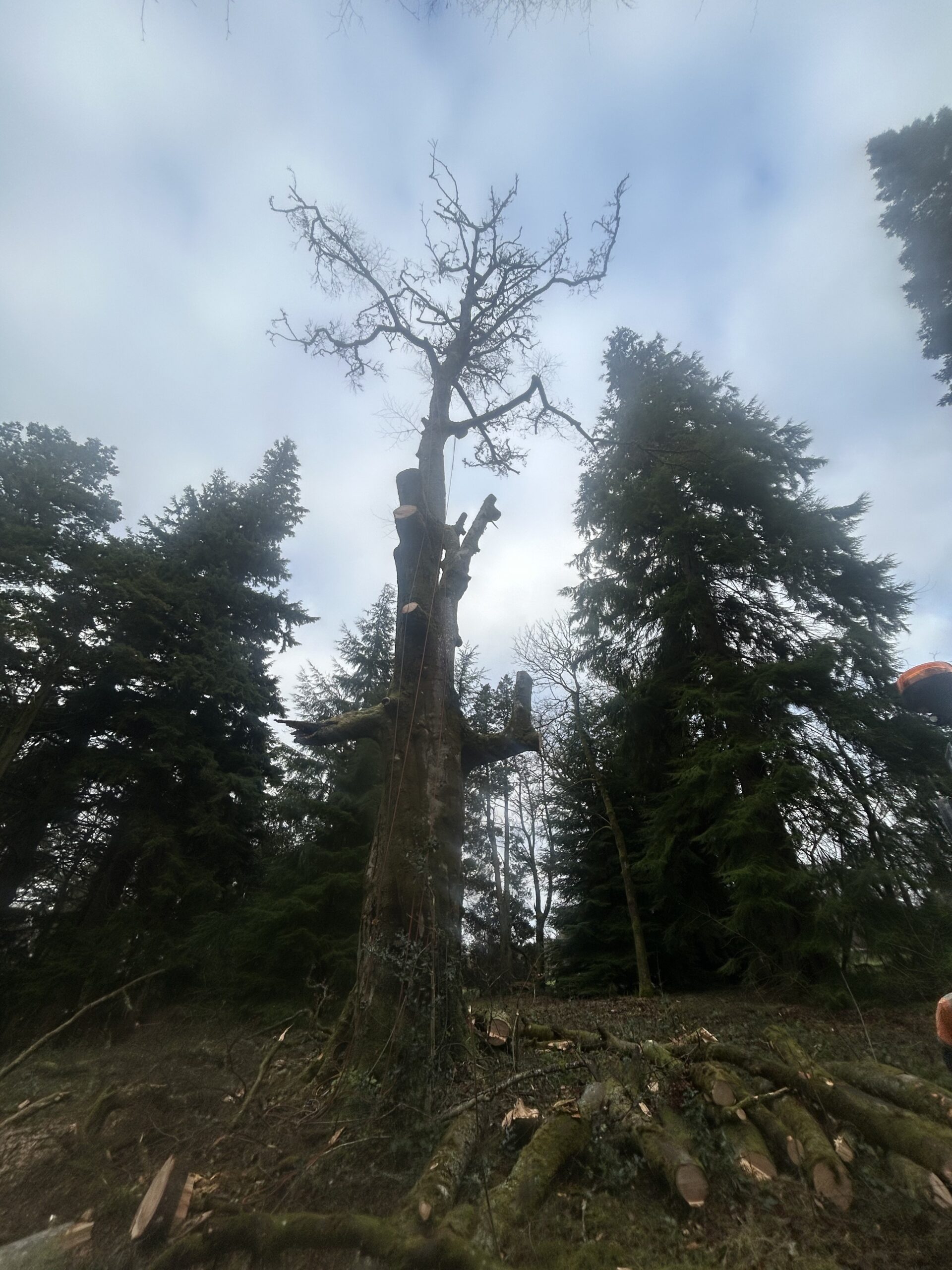
How a Commercial Winching Job Runs From Enquiry to Clear Site
- Initial enquiry and scope check: Details of the site, timber volume and access constraints are taken up front so the right plant and crew size can be pencilled in before anyone visits.
- Site survey and method statement: An operator walks the ground to check gateway widths, ground bearing, overhead cables and TPO status, then writes the method statement the job will run to.
- Quote and scheduling: A free, no-obligation quote is issued covering felling (if needed), winching and any agreed timber processing, with a start date fitted around the client's programme.
- Felling and rigging, where required: Standing timber is felled or dismantled by certificated operators before extraction starts, using the same crew that will carry out the winching.
- Tractor winching and trailer extraction: The Goldoni and Farmi winch drag timber clear of the site to a stacking point, where the Nokka trailer and crane load or restack it for onward handling.
- Site clean-up and sign-off: A basic clean-up follows, and the job file - risk assessment, method statement and any TPO correspondence - is handed over for the client's records.
What Commercial Timber Winching Costs
Winching is usually priced by day rate for the tractor, winch and operator, with felling, trailer extraction and any timber processing quoted as separate line items alongside it - so a job with standing trees to fell first costs more than pure extraction of timber that's already down.
Volume, ground condition and how far timber has to travel to the stacking point all move the price, and a site with tight gateways or long drag distances takes longer than one where the winch can work close to the stack. None of that can be priced accurately from a phone call - a full quote needs a site visit to check access, ground and timber volume before a firm figure is given, and that visit is free.
Tractor Winching Compared With Other Extraction Methods
| Method | Best suited to | Site access needed | Ground impact |
|---|---|---|---|
| Tractor & cable winch (Goldoni Euro 45 + Farmi 3.5t) | Dragging felled or windblown timber clear of a site a lorry can't reach | Narrow gateways or soft ground - tractor is 1.4m wide with floatation tyres | Low - floatation tyres spread the load |
| Timber trailer & crane (Nokka 1.5t) | Stacking and loading timber once it's been winched clear | Needs firm standing close to the stack | Low - stays on cleared ground |
| 360 excavator | Site clearance where stumps and root plates need to come out with the timber | Wider working area and vehicle access | Higher - tracked machine disturbs more ground |
| Line skidder | High-volume extraction across larger woodland blocks | Established forest tracks | Moderate - repeated passes compact ground over time |
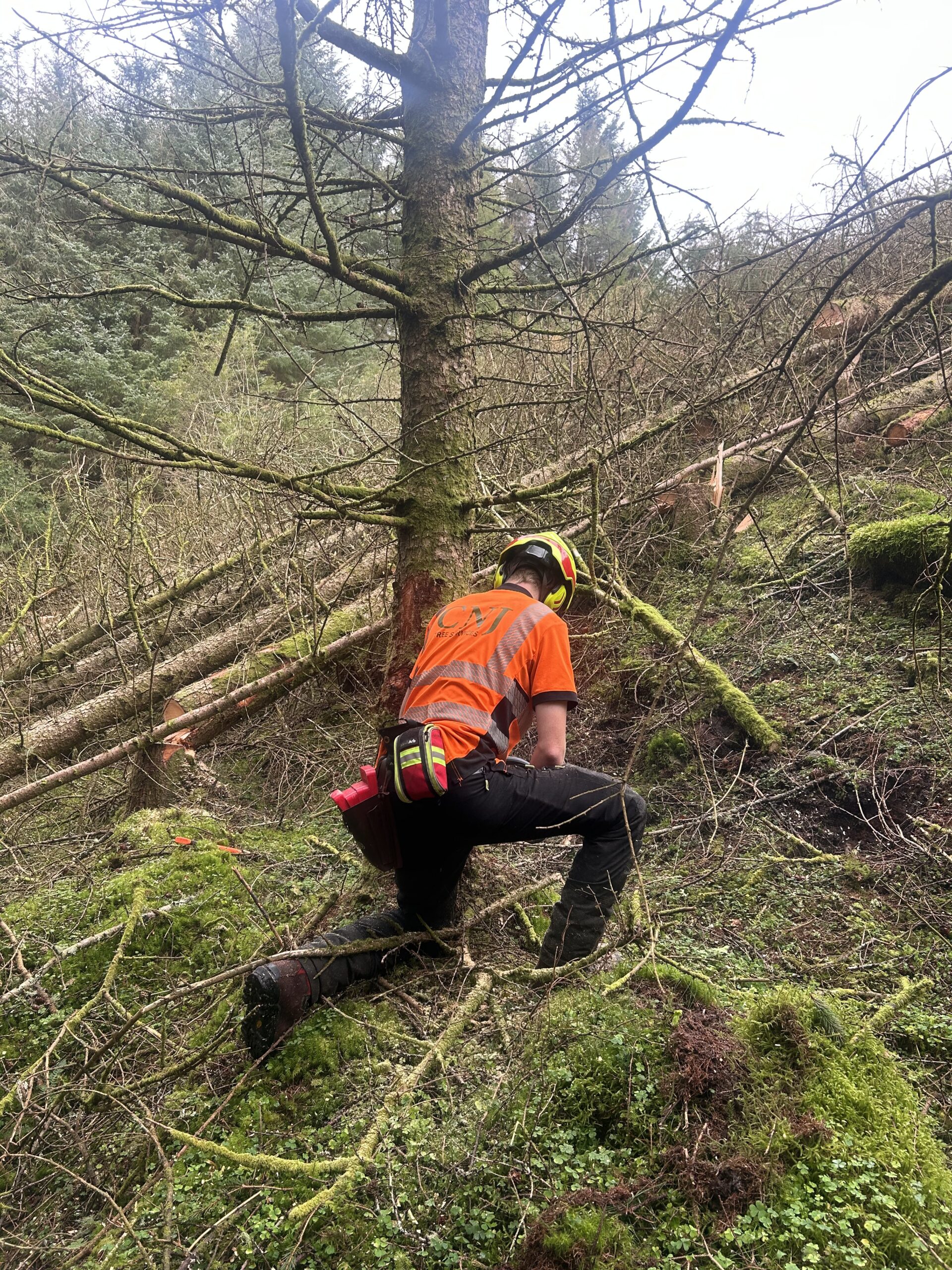
Certified for the Machinery This Job Actually Needs
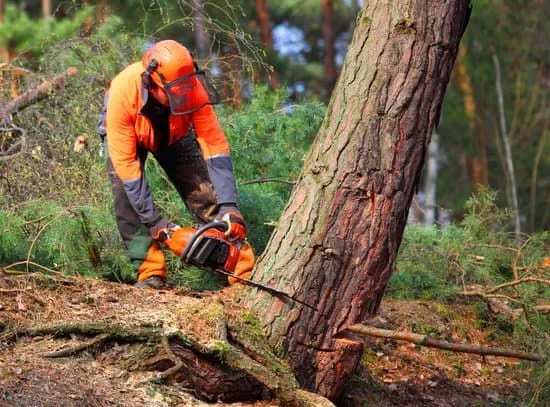
Winching work stands or falls on the operator holding a ticket for the specific plant involved, not just general tree work experience. The crew's certificates cover FMO tractor, FMO forwarder trailer and FMO line skidder operation alongside the timber crane used to load the Nokka trailer, so the machinery combination quoted for a job is the machinery the operator is actually certificated to run.
The same team holds the windblown-trees certificate, which matters because a fair share of winching call-outs are storm-felled or storm-damaged timber rather than a planned felling programme, plus rigging and dismantling tickets for the awkward, part-hung timber that a straightforward drag-out won't shift cleanly. Every commercial job carries £5 million public liability cover, and the site survey that checks access and ground condition is free before any of that plant goes near the site.
Where We Carry Out Commercial Timber Winching
Glasgow is the base for commercial timber winching work, with routine coverage running along the M8, M74 and A82 into Renfrewshire, Lanarkshire and the Dunbartonshire authorities. The call-outs that specifically need a tractor and winch rather than a forwarder or crane tend to follow a pattern: estate woodland and policy grounds around Stirlingshire villages such as Strathblane and Killearn, where old driveways and parkland gateways are too narrow for standard forestry plant, and storm-felled timber on steep or waterlogged ground that a wheeled forwarder would cut up.
Bo'ness, on the Forth in Falkirk council's area, sees the same pattern on estate access roads that were never widened for modern machinery.
Frequently Asked Questions
Will tractor winching damage lawns, driveways or landscaped areas on site?
The Goldoni tractor's floatation tyres spread its weight to keep ground pressure low, and the winch does most of the pulling from a distance rather than the tractor driving over delicate ground. That said, very soft, waterlogged or newly landscaped ground can still mark under any vehicle, so ground conditions are looked at during the site visit and protection boards or an alternative access route are used where it matters.
Can the same crew fell the trees and then winch the timber out, or do we need two contractors?
One crew can generally do both stages. The team holds certificates covering small and large tree felling, windblown trees and rigging/dismantling as well as the tractor and winch operation itself, so felling and extraction are usually run as a single job rather than handed between separate contractors.
What happens to the timber once it's winched clear of the site?
That depends on what's agreed at the quote stage. Some clients want the timber left stacked on site for firewood or milling, others want it chipped, mulched or removed for biomass as part of a full clearance. Either way it's confirmed before work starts rather than decided on the day.
Do you check for Tree Preservation Orders before starting a winching job?
Yes - TPO status and any conservation area restrictions are checked during the initial survey. If a felling licence or council consent is needed before timber can come down, that's flagged and sorted before the winching itself goes ahead, not discovered part-way through the job.
How tight an access route can the tractor and winch get through?
The Goldoni Euro 45 is only 1.4 metres wide, so it fits through gateways and side access that ordinary forestry machinery can't use, and the winch cable extends the working range a further 50 metres beyond that. Exact clearance still gets confirmed on site, since gate width, overhead cables and turning space all vary.
Can winching work be scheduled outside normal hours to fit a construction programme?
It can usually be arranged where a project deadline needs it, and emergency callouts run 24/7 as standard. For planned commercial work outside normal daytime hours, it's worth flagging the deadline when booking so the crew and equipment can be scheduled around it.
Is a tractor winching operation noisy for neighbouring properties or site occupiers?
There's engine and mechanical noise while the tractor and winch are actively working, so it isn't a quiet operation - closer to construction plant than hand tools. On live commercial sites the working window is planned and shared with site management in advance so it can be communicated to anyone nearby.
Book a Free Site Survey Before Timber Sits Any Longer
Timber left lying on a live site gets in the way of programme deadlines, blocks access for other trades and, if it's storm-damaged, keeps degrading the longer it's left. A free site survey gets access, ground condition and volume checked so a firm quote can follow quickly rather than the job sitting in a queue.
0141-483-7485
“Professional tractor winching for major sites, done right the first time.”
Glasgow Trees — commercial timber extraction across Glasgow and Central Scotland.
Get a Free Quote
🔒 Your details are safe with us. No spam, ever.