Glasgow's Tree Specialists Since 2005
Commercial Tree Shearing Glasgow
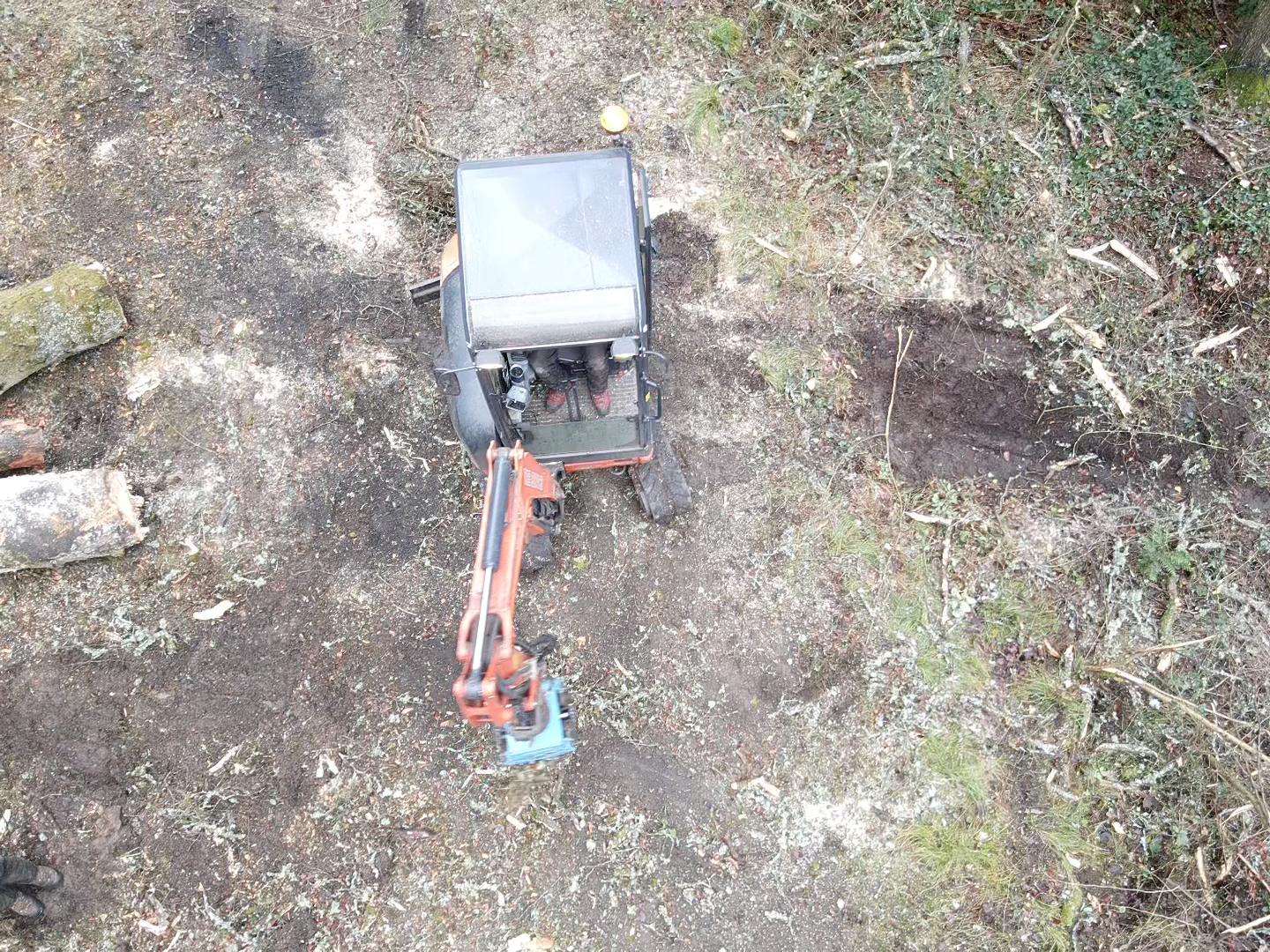
A tracked excavator fitted with a hydraulic shear head grips and cuts a tree trunk in one movement, setting it down exactly where it’s needed – changing the arithmetic on any site with a dozen or more trees to clear. 9-tonne and 15-tonne excavators, shears rated up to 400mm cutting capacity, all work carried out to British Standard BS3998, trading as Glasgow's tree specialists since 2005.
Commercial tree shearing uses a tracked excavator fitted with a hydraulic shear head instead of a chainsaw, gripping and cutting a tree trunk in one movement and setting it down exactly where it's needed. For a business site with a dozen or more trees to clear - a development plot, a utility corridor, a storm-hit yard - that changes the arithmetic compared with a climbing team working tree by tree. Glasgow Trees runs 9-tonne and 15-tonne excavators fitted with hydraulic shears rated up to 400mm cutting capacity, sized to suit confined urban plots or open development ground.
Shearing isn't the right tool for every job - a single specimen tree beside a building still needs a climber and a chainsaw rather than a shear head - so every enquiry starts with a site assessment to work out whether shearing, traditional felling, or a mix of both clears your site fastest and most cost-effectively.
At a Glance
- 9-tonne and 15-tonne hydraulic shear excavators handling trunks up to 400mm diameter
- Free, no-obligation site assessment before any quote is given
- All work carried out to British Standard BS3998 for tree work
Commercial Tree Shearing Glasgow
0141-483-7485
When your commercial property requires rapid, large-scale tree removal, traditional tree surgery methods simply aren’t efficient enough. Glasgow Trees, in partnership with CNJ Tree Services, delivers specialist commercial tree shearing Glasgow solutions using hydraulic excavator-mounted equipment that transforms how businesses approach extensive vegetation clearance.
Our tree shearing services utilise cutting-edge machinery including 9-ton and 15-ton excavators with hydraulic tree shears, capable of handling trees up to 400mm diameter. This revolutionary approach delivers site clearance projects 5-10 times faster than conventional methods, making it the preferred choice for developers, utilities, and commercial property managers across Central Scotland.
Call 0141-483-7485 for your FREE commercial tree shearing consultation today.
What is Commercial Tree Shearing? Professional Tree Removal for Large-Scale Projects
Commercial tree shearing represents a quantum leap in efficiency for large-scale tree removal projects. Unlike traditional tree surgery that requires skilled climbers to dismantle trees section by section, tree shearing employs hydraulic excavator-mounted equipment that cuts through tree trunks whilst holding them securely, allowing controlled placement exactly where needed.
This specialist technique excels in situations requiring rapid clearance of multiple trees across extensive areas. Tree shearing Glasgow operations typically involve forestry-specification excavators equipped with hydraulic tree shears ranging from 200mm to 400mm cutting capacity, delivering unmatched speed and precision for commercial applications.
The fundamental difference lies in scale and efficiency. Where traditional tree surgery might remove 3-5 trees per day, our commercial tree shearing equipment can clear 20-30 trees daily, dramatically reducing project timelines and labour costs. This makes tree shearing indispensable for development sites, utility corridors, and emergency response situations.
Key Commercial Applications:
- Construction site clearance – Prepare development sites rapidly
- Utility corridor maintenance – Power line and infrastructure clearance
- Emergency windfall removal – Storm-damaged commercial properties
- Woodland management – Selective harvesting and habitat creation
- Access road creation – Forest and remote site accessibility
Our partnership with CNJ Tree Services provides Glasgow businesses with access to specialist equipment typically unavailable to domestic tree surgery companies. Callum, CNJ’s owner-operator, personally oversees major commercial projects, ensuring the highest professional standards whilst maintaining the personal service Glasgow Trees is renowned for.
Emergency situations demand immediate response. When dangerous trees threaten business operations or public safety, our 24/7 emergency tree shearing service mobilises within hours, not days. This capability has proven invaluable for Glasgow businesses facing storm damage, structural threats, and urgent clearance requirements.
Don’t let extensive tree removal projects delay your business operations. Call 0141-483-7485 for rapid commercial tree shearing solutions.
Why Choose Glasgow Trees for Commercial Tree Shearing Services?
Glasgow’s most trusted commercial tree surgeons combine nearly 20 years of local expertise with cutting-edge tree shearing technology through our strategic partnership with CNJ Tree Services. This unique collaboration delivers capabilities that individual contractors simply cannot match.
Partnership Excellence Delivers Enhanced Capabilities:
Our alliance with CNJ Tree Services transforms what’s possible for commercial tree removal Glasgow projects. Based strategically in Fintry between Glasgow and Stirling, CNJ brings specialist forestry equipment including tracked excavators, hydraulic tree shears, and low ground pressure machinery designed specifically for challenging commercial environments.
NPTC Certified Expertise: Every operator controlling our tree shearing equipment holds National Proficiency Tests Council certification, ensuring professional competency in all aspects of mechanised tree removal. Combined with our 30+ years of team experience, this delivers unmatched safety and efficiency for your commercial project.
£5 Million Commercial Insurance Protection: Our comprehensive public liability coverage specifically addresses the enhanced risks associated with commercial tree shearing operations. This protection extends to your property, employees, and third parties, providing complete peace of mind during extensive clearance projects.
Commercial Sectors We Serve:
- Construction and development companies requiring rapid site preparation
- Utility providers needing corridor clearance and infrastructure protection
- Local authorities managing public land and highway maintenance
- Housing associations clearing extensive residential developments
- Golf courses requiring selective tree management and habitat creation
- Industrial facilities maintaining safe operational environments
What Sets Us Apart from Standard Tree Surgery Companies:
Traditional tree surgery companies lack the specialist equipment for large-scale commercial clearance. Our hydraulic tree shearing capability handles projects that would take weeks using conventional methods, completing them in days. This efficiency translates directly into cost savings and reduced business disruption.
Owner-Operated Quality Control: Callum’s hands-on involvement in major projects ensures every aspect meets the exacting standards commercial clients demand. This personal accountability distinguishes our service from larger contractors where you become just another job number.
Local Knowledge Meets Commercial Capability: Nearly two decades serving Glasgow’s commercial sector provides intimate understanding of local regulations, environmental considerations, and business requirements. Combined with CNJ’s specialist equipment, this creates an unbeatable combination for your commercial tree management needs.
Emergency Response When Seconds Count: When storms strike or dangerous trees threaten operations, our emergency commercial tree shearing team responds immediately. Equipment mobilisation within 24 hours ensures minimal business disruption and rapid hazard elimination.
Call 0141-483-7485 now to discover how our commercial tree shearing expertise can accelerate your project timeline.
Commercial Tree Shearing Services We Provide
Our comprehensive tree shearing services cover every aspect of commercial vegetation management, from routine clearance to complex emergency response. Each service utilises specialist equipment matched precisely to your project requirements and site conditions.
Large-Scale Site Clearance
Development site preparation represents our core expertise, transforming overgrown commercial properties into ready-to-build assets. Our tracked excavators with hydraulic tree shears clear extensive areas systematically, creating clean, accessible sites for immediate development.
Construction projects demand tight schedules. Our commercial site clearance service eliminates vegetation clearance as a project bottleneck. Where traditional methods might require 2-3 weeks, our tree shearing equipment completes comparable clearance in 3-5 days, keeping your project on schedule and within budget.
Utility corridor maintenance requires precision and efficiency. Power companies, telecommunications providers, and pipeline operators rely on our tree shearing Glasgow expertise to maintain clear corridors whilst minimising service disruption. Our low ground pressure machinery protects sensitive terrain whilst delivering essential infrastructure protection.
Access road creation through forested commercial properties becomes straightforward with hydraulic tree shearing. Our equipment creates clean, straight corridors for vehicle access, utility installation, or fire prevention, leaving surrounding vegetation undisturbed.
Selective Tree Removal
Commercial woodland management often requires removing specific trees whilst preserving the surrounding forest. Our hydraulic tree shears excel at this selective approach, extracting diseased, damaged, or unwanted specimens with surgical precision.
Disease control in commercial timber stands demands rapid response. When ash dieback, Dutch elm disease, or other pathogens threaten valuable woodland assets, our tree shearing equipment removes infected trees quickly, preventing spread whilst preserving healthy stock.
Dangerous tree elimination protects commercial properties from structural hazards. Storm-damaged trees, those with compromised root systems, or specimens threatening buildings require immediate professional removal. Our emergency tree shearing service addresses these situations rapidly and safely.
Thinning operations improve forest health and timber quality. Our selective shearing capability removes competing trees, allowing superior specimens to flourish whilst maintaining forest cover and wildlife habitat.
Emergency Commercial Response
Storm damage clearance demands immediate professional intervention. When severe weather leaves your commercial property littered with fallen trees, blocked access routes, and structural threats, our emergency tree shearing Glasgow service mobilises immediately.
Business continuity depends on rapid response. Our emergency team assesses situations within 2-4 hours and mobilises tree shearing equipment within 24 hours. This rapid intervention minimises operational disruption and reduces secondary damage from delayed clearance.
Insurance claim support forms an integral part of our emergency service. We provide comprehensive documentation, photographic evidence, and professional assessments that expedite insurance processing whilst ensuring you receive fair compensation for storm damage.
Specialist Equipment Available:
- 9-ton excavators with tree shears for confined commercial sites (£500-£750 daily)
- 15-ton tracked machines for open area clearance (£800-£1,200 daily)
- Low ground pressure equipment for sensitive terrain (£1,000-£1,500 daily)
- Mulching attachments for complete vegetation processing and waste reduction
Commercial project success depends on choosing the right equipment for your specific requirements. Our expert assessment ensures optimal machinery selection for maximum efficiency and cost-effectiveness.
Facing urgent commercial tree clearance requirements? Call 0141-483-7485 for immediate professional assessment and rapid response.
The Commercial Tree Shearing Process: Safe, Efficient, Professional
Professional project management ensures your commercial tree shearing project proceeds smoothly from initial consultation through final site restoration. Our systematic approach minimises risks whilst delivering exceptional results within agreed timescales.
1. Comprehensive Site Assessment and Planning (FREE)
Expert evaluation begins every commercial project. Our qualified team assesses site conditions, access requirements, environmental constraints, and regulatory considerations to develop an optimal clearance strategy tailored to your specific needs.
Commercial risk assessment identifies potential hazards including overhead power lines, buried utilities, adjacent structures, and protected species habitats. This thorough evaluation prevents costly delays and ensures complete safety throughout the project.
Equipment selection matches machinery capability to site requirements. Confined areas require 9-ton excavators with precision tree shears, whilst open sites accommodate larger 15-ton machines for maximum efficiency. Our assessment determines the optimal equipment combination for your project.
Method statement creation provides detailed planning documentation required for commercial projects. These comprehensive documents outline work sequences, safety protocols, and risk mitigation measures, ensuring full regulatory compliance and professional accountability.
2. Regulatory Clearance and Environmental Compliance
Navigation of Tree Preservation Orders requires specialist knowledge. Glasgow’s complex TPO regulations demand expert interpretation, and our experience ensures all necessary permissions are obtained efficiently without project delays.
Conservation area consultations protect environmentally sensitive locations. Our team liaises directly with Glasgow City Council and other authorities, handling all documentation and ensuring full compliance with environmental protection requirements.
Protected species surveys identify ecological constraints before work commences. Our environmental awareness prevents costly project interruptions whilst demonstrating responsible stewardship of Glasgow’s natural heritage.
Insurance documentation provides comprehensive liability coverage certificates for your commercial project. Our £5 million public liability protection covers all aspects of tree shearing operations, protecting your business from unforeseen liabilities.
3. Professional Tree Shearing Execution
Controlled hydraulic cutting ensures precise tree placement exactly where required. Our operators’ NPTC certification guarantees professional competency in all aspects of mechanised tree removal, delivering consistently safe and efficient results.
Sequential clearance methodology minimises site disruption whilst maintaining operational efficiency. Strategic work sequences ensure continued site access for other trades whilst progressively clearing designated areas according to your project timeline.
Continuous safety monitoring maintains the highest protection standards throughout operations. Real-time hazard assessment, proper equipment maintenance, and comprehensive safety protocols ensure zero accidents and complete project security.
Quality assurance oversight by CNJ’s owner-operator ensures every aspect meets commercial standards. This personal accountability distinguishes our service from larger contractors where quality control becomes diluted across multiple management layers.
4. Complete Site Restoration and Cleanup
Comprehensive waste removal leaves your commercial site completely clear and ready for immediate use. All timber, branches, and debris are removed using our own transport, eliminating additional cleanup costs and project delays.
Stump treatment options prevent regrowth and eliminate tripping hazards. Professional stump grinding creates smooth, level surfaces ready for construction, landscaping, or other development activities.
Ground preparation ensures optimal conditions for subsequent site use. Our equipment can level cleared areas, remove root systems, and prepare foundations for immediate construction or landscaping installation.
Environmental responsibility governs all waste management. Our zero-waste policy converts all organic material into useful products including woodchip, mulch, and biomass fuel, supporting Glasgow’s environmental leadership whilst eliminating disposal costs.
Project timelines are critical for commercial success. Our efficient processes ensure your tree clearance project completes on schedule, allowing other trades to proceed without delay.
Ready to start your commercial tree shearing project? Call 0141-483-7485 for immediate professional consultation.
Commercial Tree Shearing vs Traditional Tree Surgery: Understanding the Difference
Choosing the appropriate tree removal method dramatically affects project costs, timelines, and outcomes. Understanding when commercial tree shearing provides optimal results versus traditional tree surgery ensures you select the most efficient and cost-effective approach for your specific requirements.
When Tree Shearing Delivers Maximum Advantage:
Large quantity removals benefit enormously from hydraulic tree shearing efficiency. Projects requiring clearance of 15+ trees see dramatic cost savings compared to traditional sectional dismantling. Our equipment removes trees in minutes rather than hours, transforming project economics.
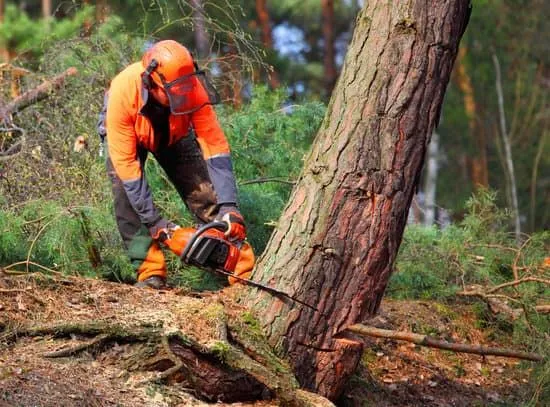
Difficult access situations favour mechanical tree shearing. Wind-blown trees, those in unstable positions, or specimens threatening structures can be removed safely without exposing operators to climbing risks. Hydraulic control provides precision placement whilst maintaining operator safety.
Time-critical commercial projects demand tree shearing efficiency. When development schedules are tight and delays cost thousands daily, our rapid clearance capability keeps projects on track. Traditional tree surgery simply cannot match this speed for extensive clearance requirements.
Budget-conscious developments benefit from tree shearing economics. Lower labour requirements, faster completion times, and reduced site management costs make hydraulic tree shearing the preferred choice for cost-effective commercial clearance.
When Traditional Tree Surgery Remains Optimal:
Precision urban environments require traditional tree surgery skills. Individual tree maintenance near buildings, utilities, or valuable landscaping demands the controlled approach that qualified tree surgeons provide through sectional dismantling techniques.
Aesthetic preservation projects benefit from traditional methods. Crown reduction, selective pruning, and formative work require the artistic eye and technical skill that experienced tree surgeons deliver through careful manual techniques.
Individual tree health improvement utilises traditional arboricultural expertise. Tree surgery focusing on long-term health, structural improvement, and aesthetic enhancement relies on understanding tree biology and growth patterns.
Heritage and specimen trees demand traditional conservation approaches. Valuable mature trees requiring careful preservation, restoration, or maintenance benefit from the precision and care that qualified arborists provide.
Related Commercial Arboricultural Services:
Our comprehensive commercial arborist services complement tree shearing with traditional expertise:
BS5837 Tree Surveys provide essential pre-development assessments required for planning applications. Our qualified arborists evaluate existing trees, assess retention potential, and provide mitigation recommendations that satisfy regulatory requirements.
Commercial Tree Risk Assessments identify potential hazards across business properties. Regular professional evaluation prevents accidents, reduces insurance liability, and ensures compliance with health and safety obligations.
Ongoing Commercial Tree Maintenance protects your investment in retained trees. Professional pruning, health monitoring, and preventive care ensure mature trees continue enhancing your commercial property for decades.
Emergency Tree Services provide 24/7 response for urgent situations. Whether storm damage, structural failure, or sudden hazards threaten operations, our rapid response team addresses emergencies immediately.
Professional consultation ensures optimal service selection for your specific commercial requirements. Our experienced team evaluates each situation individually, recommending the most appropriate and cost-effective solution.
Need guidance on the best approach for your commercial tree management requirements? Call 0141-483-7485 for expert professional advice.
Glasgow Trees Professional Tree Inspection Advantages
Enhanced Diagnostic Capabilities Through CNJ Partnership
Commercial-grade equipment access including advanced decay detection and structural analysis tools provides domestic clients with diagnostic capabilities typically reserved for major infrastructure projects. This unique partnership delivers superior assessment quality at competitive pricing.
Climbing inspection specialists provide detailed crown assessment when ground-level evaluation proves insufficient for complete health analysis.
Transparent Pricing for Commercial Tree Shearing Services
Commercial project budgeting demands clear, predictable pricing without hidden surprises. Our transparent commercial tree shearing costs enable accurate project planning whilst ensuring you receive exceptional value for professional services.
Professional Equipment Daily Rates
9-ton Excavator with Hydraulic Tree Shear: £500-£750 per day
- Ideal for confined commercial sites with limited access
- 200mm cutting capacity handles most commercial clearance requirements
- Tracked operation minimises ground disturbance and site damage
- Includes NPTC certified operator and all safety equipment
15-ton Tracked Excavator with Tree Shear: £800-£1,200 per day
- Designed for open area commercial clearance projects
- 300-400mm cutting capacity handles larger commercial trees
- Maximum efficiency for extensive site clearance operations
- Low ground pressure protects sensitive commercial landscapes
Specialist Low Ground Pressure Equipment: £1,000-£1,500 per day
- Essential for sensitive terrain including car parks and landscaped areas
- Minimal surface disturbance whilst maintaining cutting capability
- Ideal for completed developments requiring selective tree removal
- Specialist tracks distribute weight preventing surface damage
Complete Commercial Clearance Teams: £1,500-£2,500 per day
- Multiple equipment units for large-scale commercial projects
- Coordinated operation maximises efficiency and minimises project duration
- Includes site management, safety coordination, and waste removal
- Project management ensures seamless integration with other trades
Factors Affecting Your Commercial Quote
Site accessibility significantly influences equipment requirements and pricing. Confined sites require smaller, more specialised machinery that may extend project duration. Our assessment identifies optimal equipment selection balancing efficiency with site constraints.
Tree density and complexity determine equipment size and project duration. Sparse vegetation allows rapid clearance with standard equipment, whilst dense woodland requires systematic approach with potential multiple equipment types.
Waste management preferences affect overall project costs. On-site chipping and mulching reduces disposal costs but requires additional equipment. Off-site removal increases transport costs but provides immediate site clearance.
Regulatory requirements may necessitate additional services including permit applications, environmental surveys, and specialist documentation. Our comprehensive service handles all regulatory aspects, ensuring full compliance without project delays.
Project urgency level influences pricing structure. Standard scheduling provides optimal rates, whilst emergency response commands premium pricing reflecting immediate mobilisation and priority service.
Comprehensive Value-Added Services Included
- FREE detailed site assessment and professional quotation
- Method statements and risk assessments for commercial compliance
- All equipment transport, setup, and operational costs included
- NPTC certified operators with full insurance coverage
- Complete waste removal and professional site restoration
- £5 million commercial liability insurance protection
- Regulatory liaison and permit application support
- Project management and coordination with other trades
Commercial Payment Arrangements: Flexible terms available for established businesses and major projects. Standard terms include staged payments for extensive projects and prompt payment discounts for immediate settlement.
Absolutely no hidden costs. Our detailed quotations itemise all charges clearly, ensuring complete transparency and enabling accurate budget planning for your commercial project.
Cost control is critical for commercial project success. Our competitive rates and transparent pricing ensure you receive maximum value whilst maintaining the highest professional standards.
Request your detailed commercial tree shearing quotation today. Call 0141-483-7485 for transparent pricing and professional consultation.
Environmental Leadership in Commercial Tree Shearing
Glasgow’s environmental leadership sets the standard for sustainable urban development across Scotland. Our commercial tree shearing services actively support the city’s green infrastructure whilst enabling responsible commercial development that enhances rather than degrades our urban forest.
Supporting Glasgow’s Urban Forest Excellence
Glasgow’s impressive 15% tree canopy coverage substantially exceeds the UK urban average of 10%, positioning our city as a leader in sustainable urban forestry. This achievement results from decades of thoughtful planning, professional tree management, and responsible development practices that our commercial services actively support.
Environmental Impact Statistics:
- 450+ tons annually: Air pollutant removal by Glasgow’s urban trees
- 13,000 tons yearly: Carbon dioxide sequestration supporting climate goals
- £2.8 million annually: Economic value of environmental services provided
- Biodiversity support: Habitat for over 50 species of urban wildlife
Our commercial tree shearing Glasgow operations contribute to these impressive statistics by ensuring removed timber becomes valuable resources rather than waste. Every tree cleared supports Glasgow’s circular economy through conversion into useful products including biomass fuel, landscaping mulch, and sustainable building materials.
Clyde Climate Forest Initiative: Our commercial services actively support this ambitious project aimed at expanding Glasgow’s urban canopy by 20% over the next decade. Strategic tree removal enables new planting in optimal locations, enhancing overall forest health and resilience.
Sustainable Commercial Practices
Zero-waste policy governs all our commercial tree shearing operations. Advanced on-site processing equipment converts felled trees into valuable products, eliminating waste whilst reducing disposal costs for your commercial project.
Native species protection guides our selective removal approach. Understanding which trees contribute most to Glasgow’s ecological health ensures our commercial clearance preserves specimens providing maximum environmental benefit whilst removing those that contribute less.
Habitat connectivity preservation considers wildlife corridors during commercial clearance planning. Strategic tree retention maintains essential connections between green spaces, supporting urban biodiversity whilst enabling necessary development.
Soil protection through specialised low ground pressure equipment prevents compaction and erosion. Our tracked machinery distributes weight effectively, preserving soil structure essential for future tree planting and landscape establishment.
Carbon footprint reduction through local sourcing and efficient project planning minimises transportation impacts whilst supporting the local economy. Our Glasgow-based operation reduces travel distances whilst our partnership with CNJ Tree Services provides equipment access without extensive transport requirements.
Environmental Compliance Excellence
BS5837 Arboricultural Standards guide all our commercial tree assessments and removal decisions. This British Standard ensures professional evaluation of trees’ contribution to local ecology and provides a framework for responsible development decisions.
Conservation area awareness protects Glasgow’s historic landscapes during commercial development. Our expertise in navigating conservation requirements ensures compliance whilst enabling necessary tree management for business operations.
Protected species consideration includes pre-work surveys identifying wildlife habitats that require special protection. Our environmental responsibility extends beyond trees to encompass the entire ecosystem they support.
Biodiversity enhancement opportunities emerge from thoughtful commercial tree management. Strategic clearance can improve habitat quality, create wildlife corridors, and enhance ecological connectivity across urban landscapes.
Environmental leadership distinguishes responsible businesses from those focused solely on short-term profits. Partner with Glasgow Trees for commercial tree services that support our city’s green future whilst meeting your business requirements.
Commit to environmental responsibility whilst achieving your commercial objectives. Call 0141-483-7485 for sustainable tree shearing solutions.
Comprehensive Coverage Areas for Commercial Tree Shearing
Rapid response across Central Scotland ensures your commercial tree shearing requirements receive immediate professional attention regardless of location. Our strategic positioning and CNJ partnership provide comprehensive coverage extending well beyond traditional Glasgow tree surgery service areas.
Primary Commercial Service Zones
Glasgow City Centre receives same-day emergency response for urgent commercial tree situations. Our intimate knowledge of urban challenges, traffic patterns, and access limitations ensures efficient service delivery to Scotland’s commercial heart.
East Kilbride (7.8 miles south) represents a major business hub requiring specialist commercial tree services. The town’s extensive business parks, industrial estates, and new developments regularly require our tree shearing expertise for site preparation and ongoing maintenance.
Hamilton (9.5 miles southeast) serves as a regional commercial centre where our services support major industrial developments. The area’s mix of established factories and new commercial construction creates consistent demand for professional tree clearance services.
Paisley (6.8 miles west) benefits from proximity to Glasgow Airport and extensive commercial developments. Our rapid response capability ensures minimal disruption to time-sensitive airport corridor business operations requiring tree management.
Clydebank (6.3 miles west-northwest) combines industrial heritage with modern commercial development. Our tree shearing services support both regeneration projects and ongoing maintenance of established business premises.
Stirling (22.4 miles northeast) receives enhanced service through our CNJ Tree Services partnership. This historic city’s commercial requirements benefit from combined local knowledge and specialist equipment capabilities.
Extended Coverage Through Strategic Partnership
Central Scotland Corridor: Our CNJ partnership enables comprehensive coverage from Glasgow through Falkirk to Stirling, creating Scotland’s most extensive commercial tree shearing service area.
South Lanarkshire: Business parks and industrial developments throughout the region receive professional tree management services supporting economic growth whilst protecting environmental assets.
Renfrewshire: Airport proximity demands rapid response for emergency tree situations. Our services ensure aviation safety whilst supporting the region’s logistics and business infrastructure.
West Dunbartonshire: Commercial developments and established businesses benefit from our comprehensive tree management expertise, supporting regional economic development.
Response Time Guarantees
Glasgow Metropolitan Area: Emergency situations receive assessment within 2-4 hours with equipment mobilisation within 24 hours for urgent commercial requirements.
Central Belt Locations: Non-emergency commercial projects receive site visits within 24-48 hours with flexible scheduling accommodating business operational requirements.
Remote Commercial Sites: Specialist equipment mobilisation within 48 hours ensures even distant locations receive professional service with appropriate machinery for challenging access conditions.
Weather-dependent modifications: Severe weather conditions may affect response times, but our emergency preparedness ensures maximum availability during storm seasons when commercial tree emergencies peak.
Commercial success depends on reliable service delivery regardless of location. Our comprehensive coverage ensures your business receives consistent professional support throughout Central Scotland.
Discover how our extensive coverage area serves your commercial tree shearing requirements. Call 0141-483-7485 for immediate consultation regardless of location.
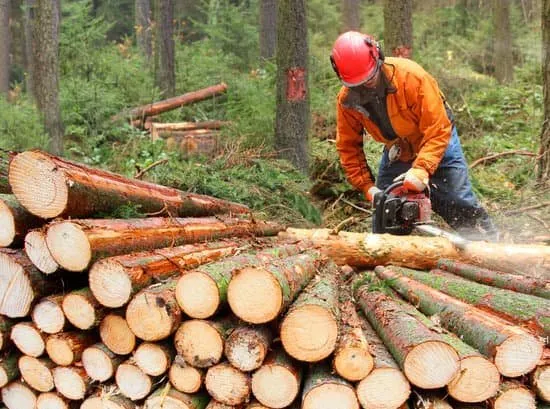
Emergency Commercial Tree Shearing Services
Business continuity protection demands immediate professional response when dangerous trees threaten commercial operations. Our emergency tree shearing Glasgow service mobilises rapidly to eliminate hazards, restore site safety, and minimise operational disruption during critical situations.
24/7 Emergency Response Capability
Immediate hazard assessment within 2-4 hours provides expert evaluation of dangerous tree situations threatening commercial properties. Our qualified team identifies immediate risks, implements temporary safety measures, and develops rapid elimination strategies.
Equipment mobilisation within 24 hours ensures our tree shearing machinery reaches your commercial site quickly. Emergency situations receive absolute priority, with our partnership ensuring specialist equipment availability even during high-demand periods.
Safety-first approach protects people and property whilst addressing emergency tree situations. Proper site security, hazard identification, and risk mitigation ensure emergency response operations proceed safely without creating additional dangers.
Business disruption minimisation guides our emergency response planning. Strategic work scheduling, site access management, and efficient clearance techniques ensure essential business operations continue during emergency tree removal activities.
Critical Emergency Situations We Handle
Storm damage clearance addresses the aftermath of severe weather events affecting commercial properties. Wind-blown trees blocking access routes, threatening structures, or creating safety hazards receive immediate professional attention using appropriate tree shearing equipment.
Structural threat elimination removes trees compromising building integrity or infrastructure safety. Emergency assessment identifies imminent collapse risks, implementing immediate removal using hydraulic tree shears for controlled elimination without additional structural damage.
Utility emergency support provides rapid clearance when trees threaten power lines, telecommunications, or other essential infrastructure. Our coordination with utility companies ensures safe, efficient clearance whilst minimising service disruption to surrounding areas.
Public safety protection addresses trees threatening pedestrians, vehicle traffic, or public spaces. Immediate hazard elimination using professional tree shearing equipment ensures public safety whilst protecting your business from liability exposure.
Access route restoration removes fallen trees blocking essential commercial access. Emergency clearance using appropriate equipment ensures emergency services access, employee safety, and continued business operations during critical situations.
Emergency Response Value Proposition
Insurance claim support includes comprehensive documentation, photographic evidence, and professional damage assessments that expedite insurance processing. Our expertise ensures you receive fair compensation whilst demonstrating due diligence in emergency response.
Legal liability protection through immediate professional response demonstrates responsible property management. Prompt hazard elimination reduces legal exposure whilst protecting employees, customers, and the general public from tree-related injuries.
Operational continuity preserves business revenue during emergency situations. Rapid tree clearance minimises downtime, enables continued operations, and prevents extended business disruption that could affect customer relationships and financial performance.
Secondary damage prevention through immediate professional intervention prevents minor tree problems becoming major structural issues. Prompt removal of damaged trees prevents progressive failure that could cause extensive property damage.
Professional documentation provides evidence of appropriate emergency response for insurance, legal, and regulatory purposes. Comprehensive records demonstrate proper safety management and professional handling of emergency situations.
Emergency preparedness distinguishes professional businesses from those leaving safety to chance. Partner with Glasgow Trees for guaranteed emergency response when dangerous trees threaten your commercial operations.
Emergency tree situation threatening your business? Call 0141-483-7485 immediately for rapid professional response and hazard elimination.
For Free Quotation and Expert Advice
Click to Call Now!
Frequently Asked Questions
What is the difference between tree shearing and traditional tree surgery?
Tree shearing employs hydraulic excavator-mounted equipment to cut and control trees in a single operation, making it ideal for large-scale commercial clearance projects requiring rapid completion.
Traditional tree surgery involves sectional dismantling by qualified climbers, offering greater precision for individual tree maintenance near buildings and infrastructure.
Tree shearing significantly outperforms traditional methods for extensive commercial projects. Where traditional tree surgery might remove 3-5 trees daily, our hydraulic tree shearing equipment clears 20-30 trees per day, dramatically reducing project timelines and labour costs. This efficiency makes tree shearing indispensable for development sites, utility corridors, and emergency response situations.
The choice depends on your specific requirements. Tree shearing excels for projects involving multiple trees across extensive areas, whilst traditional tree surgery provides superior control for precision work. Our expert assessment determines the most appropriate method for your commercial project, ensuring optimal results within budget and timeline constraints whilst maintaining the highest safety standards throughout operations.
How quickly can you mobilise tree shearing equipment for emergency commercial situations?
Emergency commercial situations in Glasgow and surrounding areas receive initial professional assessment within 2-4 hours of contact, with tree shearing equipment mobilisation within 24 hours for urgent requirements. Our partnership with CNJ Tree Services ensures immediate access to specialist machinery including 9-ton and 15-ton excavators with hydraulic tree shears.
Response times vary based on equipment availability, site access requirements, and weather conditions. However, our emergency preparedness includes standby arrangements during severe weather periods when commercial tree emergencies peak. Equipment positioning and maintenance schedules prioritise rapid deployment for business-critical situations requiring immediate professional intervention.
Emergency response commands premium pricing reflecting immediate mobilisation costs and priority scheduling. However, the cost of delayed response often exceeds emergency rates when considering business disruption, potential structural damage, and safety liabilities. Our rapid response protects your commercial interests whilst demonstrating responsible property management to insurers, regulators, and stakeholders requiring evidence of professional emergency preparedness.
What insurance coverage do you provide for commercial tree shearing projects?
Glasgow Trees maintains £5 million public liability insurance specifically covering commercial tree shearing operations and associated risks. This comprehensive coverage protects your business premises, employees, third parties, and adjoining properties during all tree removal activities, providing complete peace of mind for extensive commercial projects.
Our insurance protection includes coverage for property damage, personal injury, and consequential losses arising from professional tree shearing operations. We provide certificates of insurance with every commercial quotation and can add your business as an additional named insured when required by commercial contracts or lease agreements.
All operators controlling our tree shearing equipment hold NPTC certification ensuring professional competency in mechanised tree removal. Our CNJ partnership guarantees all work meets professional standards with full regulatory compliance. This combination of proper training, appropriate equipment, and comprehensive insurance provides maximum protection for your commercial tree shearing project whilst demonstrating due diligence to insurers and regulatory authorities.
Can tree shearing equipment access confined commercial sites?
Yes, our partnership with CNJ Tree Services provides access to 9-ton forestry specification excavators specifically designed for confined commercial sites where traditional larger equipment cannot operate effectively. These compact machines deliver sufficient power for effective tree shearing whilst navigating restricted access areas.
Tracked equipment with low ground pressure capability protects sensitive surfaces including car parks, landscaped areas, and completed developments. Site access assessment forms part of our FREE consultation, determining the most appropriate equipment combination for your specific commercial location and access constraints.
Alternative access solutions include crane-assisted operations for extremely confined sites and sequential equipment deployment for phased clearance projects. Our equipment inventory includes tracked carriers, compact excavators, and specialist attachments enabling tree shearing operations in virtually any commercial environment. Professional site assessment identifies optimal equipment selection balancing efficiency with access limitations whilst ensuring complete project success within your specific site constraints.
What happens to the waste timber from commercial tree shearing projects?
All timber and vegetation waste from commercial tree shearing projects is processed through our comprehensive zero-waste policy, converting organic material into valuable products including woodchip, mulch, biomass fuel, and sustainable building materials. This approach eliminates disposal costs whilst supporting Glasgow’s circular economy and environmental leadership.
On-site processing using specialist mulching equipment converts felled trees immediately into useful products. Material can remain on-site for landscaping purposes, removed for processing into premium products, or delivered to biomass facilities supporting renewable energy generation. Our flexible approach accommodates your specific project requirements and waste management preferences.
Valuable timber suitable for construction, furniture, or specialty applications receives assessment for retention and processing. We coordinate with specialist processors ensuring maximum value recovery whilst maintaining efficient site clearance timelines. This comprehensive approach maximises resource value whilst demonstrating environmental responsibility essential for modern commercial development projects requiring sustainability credentials and environmental impact minimisation.
Do you handle all planning permissions and regulatory requirements for commercial tree work?
Absolutely. Our experienced team manages all regulatory requirements including Tree Preservation Order applications, conservation area consultations, and local authority permissions required for commercial tree shearing projects. We provide BS5837 compliant tree surveys for development projects and liaise directly with Glasgow City Council and other authorities.
Method statements and risk assessments are provided for all commercial projects, ensuring full compliance with health and safety regulations and commercial insurance requirements. This comprehensive documentation satisfies regulatory authorities whilst protecting your business from legal liability and ensuring smooth project progression without administrative delays.
Environmental compliance includes protected species surveys, habitat assessments, and ecological impact evaluations when required. Our expertise in navigating complex regulatory frameworks removes administrative burden from your commercial project, allowing you to focus on core business activities whilst ensuring complete legal compliance and professional accountability throughout the tree shearing process.
How do you ensure minimal disruption to ongoing business operations?
We work closely with commercial clients developing detailed work schedules that minimise business disruption during tree shearing operations. Our efficient hydraulic equipment completes clearance significantly faster than traditional methods, reducing overall project duration and limiting operational impact on your business activities.
Flexible scheduling accommodates business requirements including weekend and evening operations when necessary. Safety barriers and professional site management ensure continued safe access for staff and customers during tree removal activities. Our experience managing complex commercial environments ensures business continuity throughout tree shearing projects.
Communication protocols keep you informed of progress, schedule changes, and completion timelines. Professional project management coordinates with other trades and business activities, ensuring seamless integration of tree shearing operations with ongoing commercial activities. This comprehensive approach maintains operational efficiency whilst delivering essential tree management services that protect and enhance your commercial property investment.
What size trees can your commercial tree shearing equipment handle?
Our tree shearing equipment handles trees up to 400mm (approximately 16 inches) diameter, covering the vast majority of commercial tree removal requirements across Central Scotland. The 9-ton excavators excel with trees up to 200mm diameter in confined spaces, whilst our 15-ton machines manage larger specimens up to full 400mm capacity.
For trees exceeding shearing equipment capacity, we seamlessly transition to traditional sectional dismantling using our qualified tree surgeons. This hybrid approach ensures safe, efficient removal regardless of tree size or complexity whilst maintaining project timelines and budget requirements.
Equipment selection depends on site conditions, tree species, and access limitations. Our expert assessment determines optimal machinery for your specific commercial requirements, ensuring maximum efficiency whilst maintaining safety standards. Multi-diameter projects benefit from coordinated equipment deployment, utilising appropriate machinery for each tree size category whilst maintaining overall project efficiency and cost-effectiveness throughout the commercial tree shearing operation.
Get Your FREE Commercial Tree Shearing Consultation
Ready to transform your commercial tree clearance project? Glasgow Trees and our CNJ Tree Services partnership deliver the specialist equipment, professional expertise, and proven experience needed for successful large-scale tree removal projects across Central Scotland’s most demanding commercial environments.
Don’t let extensive tree removal become your project bottleneck. Our commercial tree shearing Glasgow services eliminate vegetation clearance delays, reduce labour costs, and accelerate project timelines whilst maintaining the highest safety and environmental standards.
📞 Contact Glasgow Trees Today:
Phone: 0141-483-7485
Available: 24/7 for emergency commercial situations
Coverage: Glasgow and throughout Central Scotland
Response: Emergency assessment within 2-4 hours
Commercial Tree Shearing Excellence Guaranteed:
- FREE detailed quotations provided within 4 hours of contact
- NPTC certified operators with 30+ years combined experience
- £5 million commercial liability insurance protection guaranteed
- 24/7 emergency response across Glasgow and Central Scotland
- All regulatory permissions and method statements handled FREE
- No damage guarantee with complete cleanup and site restoration included
- CNJ partnership capabilities providing enhanced commercial equipment access
- Environmental responsibility with comprehensive zero-waste policy implementation
- Transparent pricing with absolutely no hidden costs or surprises
- Owner-operated quality control ensuring professional standards for major projects
Why Commercial Clients Choose Our Tree Shearing Services:
Proven Track Record: Nearly 20 years serving Glasgow’s commercial sector with consistent professional excellence and customer satisfaction across diverse industries and project scales.
Partnership Advantage: Unique CNJ Tree Services collaboration provides access to specialist forestry equipment and expertise typically unavailable to standard tree surgery companies.
Environmental Leadership: Supporting Glasgow’s impressive 15% urban canopy coverage whilst enabling responsible commercial development that enhances rather than degrades our city’s green infrastructure.
Emergency Preparedness: When dangerous trees threaten your business operations, our rapid response team mobilises immediately to ensure site safety and minimise operational disruption.
Commercial Expertise: Comprehensive understanding of business requirements, regulatory frameworks, and project pressures that distinguish successful commercial tree services from domestic operators.
Cost-Effective Solutions: Tree shearing efficiency delivers 5-10 times faster clearance than traditional methods, dramatically reducing project costs whilst maintaining superior safety and environmental standards.
Immediate Action Required?
Emergency Commercial Tree Situations: Storm damage, structural threats, or safety hazards demand immediate professional intervention. Our emergency response team provides rapid assessment and mobilisation when every hour counts for business continuity.
Project Planning Requirements: Development schedules, site preparation deadlines, and coordination with other trades require professional tree clearance planning. Our expert consultation ensures vegetation management supports rather than delays your commercial project timeline.
Regulatory Compliance Needs: Complex planning requirements, environmental assessments, and permit applications benefit from professional expertise. Our comprehensive regulatory support ensures full compliance whilst minimising administrative burden on your business operations.
Call 0141-483-7485 now for your FREE commercial tree shearing consultation and discover why Glasgow’s leading businesses trust our expertise for their critical tree management requirements.
What's Covered by Commercial Tree Shearing, and What Isn't
- Clearing development and construction sites of multiple trees ahead of groundworks
- Cutting access routes and corridors for utilities, pipelines, or new roads through wooded ground
- Selective removal of diseased, storm-damaged, or unwanted trees from woodland or shelterbelts while leaving the rest standing
- Emergency clearance of wind-blown or storm-damaged trees blocking access or threatening structures
- On-site processing of cut material into woodchip or mulch, cutting down what has to be hauled away
- Site assessment, method statement, and liaison over Tree Preservation Orders or conservation area consent before work starts
Not Included / Costed Separately
- Trees over roughly 400mm trunk diameter, which need a climbing team and traditional felling techniques rather than the shear head
- Close pruning, crown reduction, or formative work on retained trees near buildings - that stays with traditional tree surgery, not shearing
- Stump removal - grinding out stumps left behind is priced as a separate item, not bundled into the day rate
- Hauling arisings off-site for disposal, which costs more than chipping and retaining material on site
- Final sign-off on Tree Preservation Order or conservation area applications - we prepare and submit the paperwork, but the decision sits with the council
Tree Shearing Versus Traditional Felling: Choosing the Right Method
| Factor | Commercial Tree Shearing | Traditional Tree Surgery |
|---|---|---|
| Typical daily output | 20-30 trees cleared per day | 3-5 trees per day |
| Method | Hydraulic excavator shear cuts and places the tree in one motion | Climber dismantles the tree section by section with a chainsaw |
| Best suited to | Large-scale clearance - 15+ trees, development sites, corridors | Single or precision trees near buildings, cables, or valuable landscaping |
| Maximum trunk diameter | Around 400mm with current equipment | No fixed limit - rigging and sectional removal handle larger mature trees |
| Site access needed | An excavator access track for the machine to reach the trees | Works in tight gardens or plots with no vehicle access |
| Charged by | Machine and operator day rate | Quoted per tree or per job |
The Machinery Certifications Behind Every Shearing Job
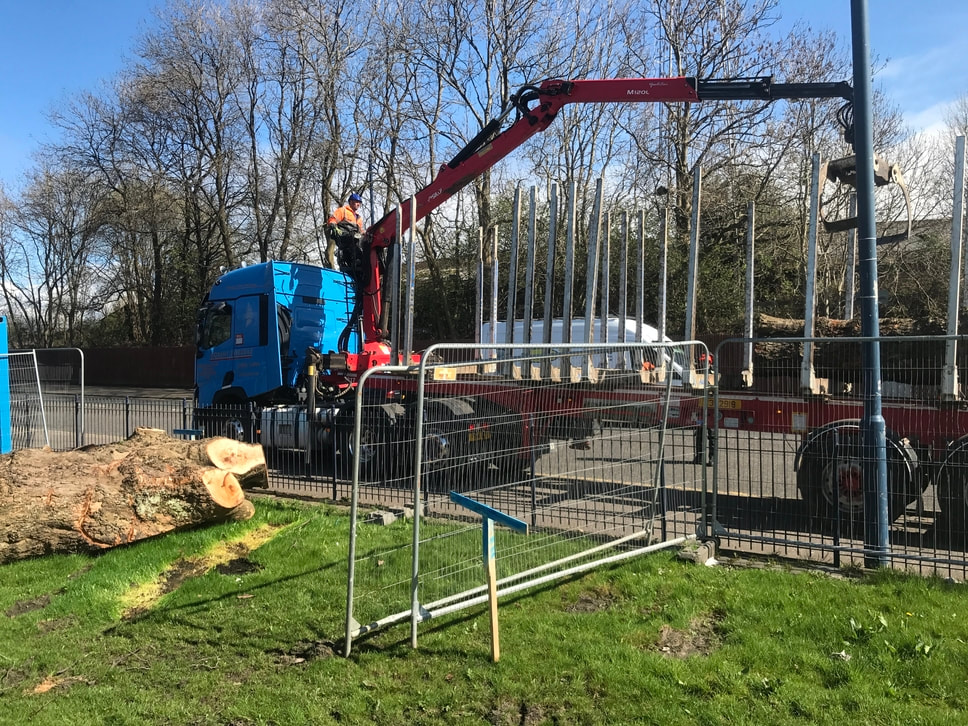
Running a 15-tonne excavator with a hydraulic shear head near other people, buildings, or overhead lines is a different risk profile from felling with a chainsaw, and the team's Lantra/NPTC machinery certificates - covering 360 excavators, telehandlers, and the FMO tractor, forwarder trailer, and line skidder used to move felled trunks off soft or wooded ground - are what let a job move at the 20-30 trees a day pace this method is chosen for, without the plant getting stuck or the job stalling on ground it can't cross. All work, including the tree-by-tree decision over what gets sheared and what needs a climber instead, is still carried out to British Standard BS3998, and the team is fully insured for both the tree work and the plant operation side of a clearance job. Quotes are free and no-obligation, and the registered office at Clyde Offices on West George Street gives a fixed business address for the paperwork and site correspondence a commercial clearance job generates, rather than just a mobile number.
Motorway Access for Excavator and Shear Work
Glasgow is where the excavators and shear heads are based, and from there they mobilise out along the motorway network that also carries most of the region's development traffic - useful, since shearing gets chosen mainly for construction sites, utility corridors, and storm clean-ups rather than back gardens. Southwest down the M8, that reaches business parks and dockside sites in Renfrewshire and Inverclyde towards Greenock; east along the M74 and M77 it covers development ground in South Lanarkshire and East Renfrewshire; north it takes in East and West Dunbartonshire, where an excavator can reach business parks around Bishopbriggs, Bearsden, and Milngavie as readily as a garden job; and the M80/A82 corridor extends cover up towards Stirling and Falkirk, including Bo'ness, with a shear-equipped excavator kept positioned near Fintry to cut mobilisation time for jobs at either end of that stretch. That's eight council areas in total, and any development site or corridor job gets confirmed against the actual access route and load-bearing ground during the free site assessment rather than assumed from a map.
“Very friendly and professional. They delivered my job on time and at a good price.”
Glasgow Trees — that is what we aim to hear from our customers all the time.
Get a Free Quote
🔒 Your details are safe with us. No spam, ever.