
Commercial Access & Track Specialists Since 2005
Commercial Track Creation & Path Management Glasgow
✓ Trading since 2005✓ BS3998 standard✓ Fully insured✓ Free quotes
Trading Since 2005
BS3998 Standard
Fully Insured
Free, No-Obligation Quotes
Introduction
A woodland site that's easy to reach in summer can turn into one lorries can't get near by the time winter rain sets in. Whether that means cutting a new route in from scratch for extraction vehicles and plant, or getting an existing path back into a state that survives another wet season, the work has to be specified for the heaviest vehicle it will actually carry and the ground it's built on - a route over firm upland ground needs a different build to one crossing a burn on low-lying ground near the Clyde.
Glasgow Trees has been building and maintaining commercial access routes across Greater Glasgow, Lanarkshire, Renfrewshire and West Dunbartonshire since 2005, working to British Standard BS3998 with a fully insured, NPTC-qualified team. Every job starts with a free, no-obligation site visit, because a track specification set from a phone call or a few photos usually needs reworking once someone's actually walked the ground.
Key Selling Points
- Trading as Glasgow's tree and woodland specialists since 2005
- Track and path work carried out to British Standard BS3998, by an NPTC-qualified team
- Free, no-obligation site assessment before any work or quote is agreed
New Routes, Existing Paths and Where the Line Is Drawn
- New access track creation: route planning, GPS-guided excavation and surface construction built for the vehicles that will actually use it, from vans to timber extraction lorries
- Drainage installation and grading, so tracks don't wash out after heavy rain
- Scheduled path maintenance, with spring and autumn inspections covering surface condition, drainage and erosion control
- Vegetation management to keep route widths, sightlines and load-bearing edges clear
- 24/7 emergency response for storm damage, fallen trees, washouts and blocked access
- Support through planning applications and environmental checks - protected species, archaeological considerations and tree preservation orders - before work starts
- Access to excavators, material handlers and GPS-guided machinery through the CNJ Tree Services partnership for larger commercial projects
- Annual maintenance contracts covering multiple scheduled visits a year
Not Included / Costed Separately
- Planning permission approval itself - support covers the application and compliance checks, but the decision sits with the local authority
- Emergency call-outs, which are charged as a separate call-out fee plus hourly rate rather than folded into a standard quote
- Domestic garden paths and driveways, which fall under Glasgow Trees' general residential tree and garden services rather than this commercial service
- Utility diversions or works on public roads and bridges beyond the woodland boundary, which need to be arranged with the relevant authority separately
Six Stages Between a Phone Call and a Track That Holds Up in Winter
- Call and free site visit: Describe the access problem or new-track requirement by phone; a free site assessment is arranged, generally within 24 hours for commercial enquiries.
- Survey and route planning: Ground conditions, drainage, load-bearing requirements and any tree preservation orders or protected species are checked before a route or repair specification is set.
- Written quotation: A detailed quote covering materials, equipment, labour and clean-up is issued before any work is booked in.
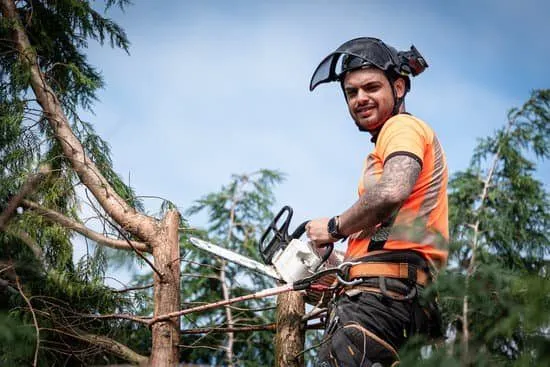
- Track construction or path repair: GPS-guided excavation, drainage installation and surface work is carried out, drawing on CNJ Tree Services' machinery for larger or heavier-duty jobs.
- Handover and documentation: Method statements, risk assessments and compliance paperwork are handed over for insurance and regulatory records.
- Ongoing maintenance, where agreed: An annual contract can be set up for spring and autumn inspections, catching problems before they turn into an expensive repair.
Priced by the Metre and the Ground, Not a Flat Rate
Track creation is generally priced per 100 metres, with the figure driven by ground conditions and specification - a route over firm, level ground costs less to build than one needing heavy drainage work or a reinforced crossing. Scheduled path maintenance is priced per 100 metres annually, or as a fixed annual contract rate covering the agreed number of visits. Emergency access response is charged as a call-out fee plus an hourly rate, reflecting the fact that it's unscheduled and often needs plant mobilised at short notice.
None of these figures can be firmed up without seeing the site - a full, accurate quote needs a site visit to check gradient, drainage, existing surface and any crossings, and that visit is free and no-obligation.
Track Creation, Maintenance and Emergency Response Side by Side
| Service | Typical use | Timescale | How it's priced |
|---|---|---|---|
| Track creation | New routes for extraction vehicles, plant or maintenance traffic | Days to a few weeks, depending on length and terrain | Per 100 metres, based on ground conditions and specification |
| Scheduled path maintenance | Existing routes needing drainage, erosion or vegetation control | Twice-yearly visits, or as agreed in a contract | Per 100 metres annually, or an annual contract rate |
| Emergency access response | Storm damage, fallen trees or washouts blocking a route | Initial assessment typically within 2-4 hours | Call-out fee plus hourly rate |
The Difference Between a Quote and a Crew That Can Actually Do the Digging
Track creation and heavy path repair live or die on who's actually operating the machinery on the day, not whose name is on the quote. Glasgow Trees' own crew holds NPTC/Lantra certificates across the plant used on commercial access projects - stump grinder, wood chipper, timber crane, FMO tractor, FMO forwarder trailer, FMO line skidder, 360 excavator, flail and telehandler - alongside NPTC Professional Tree Inspection qualification, which matters on a working access route because a hazardous tree leaning over the line needs to be spotted and dealt with before excavation starts, not discovered halfway through. Where a project's terrain or scale calls for more plant than the in-house fleet covers, the CNJ Tree Services partnership brings in extra excavators, material handlers and GPS-guided machinery, rather than the job being scaled back or handed to a subcontractor with no visibility of the route's history. All track and path work is carried out to British Standard BS3998, and has been since Glasgow Trees started trading in 2005.
Why the Ground Under a Route Matters More Than the Postcode
Ground conditions dictate a track or path specification more than raw distance from Glasgow does. Sites out toward Stirling and Falkirk, closer to the Campsie Fells and the Kilpatrick Hills, generally need a heavier stone base and extra drainage capacity to handle gradient and runoff, while low-lying ground nearer the Clyde in Renfrewshire, Inverclyde and East Renfrewshire is more likely to need a culvert or reinforced crossing where a route meets a burn or watercourse. Glasgow City, East Dunbartonshire and West Dunbartonshire sit at the centre of that split, with South Lanarkshire and Bo'ness in Falkirk marking the outer edge of where the service reaches. The CNJ Tree Services partnership's base in Fintry, roughly midway between Glasgow and Stirling, extends that reach further into Central Scotland for the larger, machinery-led jobs this page covers.
Frequently Asked Questions
Do you need to see a site in person before pricing track creation or path repair work?
Yes - a full, firm quote for track or path work needs a site visit, since ground conditions, gradient and drainage vary enough between properties that photos or a phone description aren't reliable enough to price from. The site visit is free and no-obligation, and gives an accurate figure rather than a rough estimate that might change once work starts.
Can a new track be built to carry timber extraction vehicles, not just general maintenance traffic?
Yes - track specification is set for the heaviest vehicle expected to use it, whether that's a routine maintenance van or a loaded forwarder or extraction lorry under a felling licence. This is decided at the site survey stage, since a track built only for light traffic will fail quickly under sustained heavy loads.
Does an access track crossing a burn or watercourse need anything extra?
Usually, yes. Watercourse crossings typically need a culvert or reinforced crossing point rather than a standard surface, and depending on the watercourse, SEPA (Scottish Environment Protection Agency) consent may apply before work can start. This is checked at the planning stage rather than assumed either way, since getting it wrong can mean redoing the crossing later.
Will an access track project affect trees covered by a Tree Preservation Order?
Routes are planned to avoid TPO trees where possible. Where a protected tree genuinely can't be avoided, a separate application to the council is needed before any work near it proceeds. This isn't guaranteed to be approved, and it's factored into project timescales rather than treated as a formality.
Can you set up a maintenance contract covering more than one site under the same business?
Yes - contracts can cover several sites or parcels under one business or estate, with inspection visits scheduled together rather than booked separately for each one. This tends to suit businesses managing more than one woodland access route, keeping spring and autumn inspection dates aligned across sites and simplifying invoicing.
Do access routes need to allow for public right of way alongside commercial traffic?
Sometimes - some commercial woodland includes stretches with public right of way status alongside private operational use, which changes the signage, surface safety and maintenance standard the route needs. Where this applies, it's identified during the site survey so the route is built and maintained to a standard that works for both uses rather than just the commercial side.
Get a Free Site Assessment Before Your Next Wet-Weather Season
A track or path that already struggles in heavy rain generally gets worse before it gets better, and drainage or crossing work is easier to plan and price outside of storm season than during an emergency. Call for a free, no-obligation site visit and a written quote covering materials, equipment and labour before anything is booked in.
0141-483-7485
Free, No-Obligation Site Visits
Book a site visit and get a written quote from an NPTC-qualified team before any track or path work is agreed.
Get a Free Quote
🔒 Your details are safe with us. No spam, ever.