Glasgow's Tree Specialists Since 2005
Domestic Tree Surveys Glasgow | BS5837 & Mortgage Reports
NPTC-certified BS5837 planning, mortgage/homebuyer, and safety tree surveys for Glasgow homeowners – site visits within 24-48 hours, reports in 48-72 hours, and £5 million public liability cover on every job.
If a solicitor, lender, or planning department has asked for a tree report before a house sale or extension can go ahead, a domestic tree survey is usually a quick problem to sort out rather than a drawn-out one. A qualified surveyor visits the property, checks each tree against the standard the request actually needs -- BS5837 for planning, a more general health check for a mortgage query -- and writes it up as a report that a lender or planning officer will accept without sending it back for revisions.
Most requests fall into one of four categories: a homebuyer or mortgage report because a lender has flagged a tree close to the property, a BS5837 survey to support a planning application for an extension or outbuilding, a condition survey because a tree looks unwell or you want a record for insurance and duty-of-care purposes, or support with a Tree Preservation Order application. Whichever applies, the survey is carried out by an NPTC-qualified tree inspector and delivered as a written report with clear retention or removal recommendations, not a verbal opinion given on site.
At a Glance
- NPTC Professional Tree Inspection qualified
- All survey work follows British Standard BS3998
- Free, no-obligation quotes
0141-483-7485 Professional Tree Assessments for Glasgow Homeowners
Expert Domestic Tree Survey Services for Glasgow Homeowners
Tree-related property complications cost Glasgow homeowners thousands of pounds annually through unexpected legal penalties, insurance claims, and emergency removals. Glasgow Trees’ partnership with CNJ Tree Services delivers enhanced domestic tree survey capabilities that protect your property investment while ensuring complete legal compliance.
Our NPTC and Lantra certified tree specialists provide comprehensive domestic tree surveys specifically designed for Glasgow homeowners. With over 30 years combined experience, we understand the unique challenges facing residential properties across Glasgow, from Victorian terraces in the West End to modern developments in East Kilbride and Hamilton.
Risk Prevention is Critical: Amateur tree assessments miss dangerous conditions and legal protections, leading to £20,000+ fines for unauthorised work on protected trees. Our professional surveys identify Tree Preservation Orders (TPOs), assess structural risks, and provide legal documentation protecting you from costly complications.
Glasgow leads Scotland with 15% tree canopy coverage, supporting our city’s environmental leadership and climate goals. Professional tree care ensures your property contributes to this success while maintaining insurance compliance and property values.
📞 Call 0141-483-7485 for your FREE domestic tree survey consultation
Through our partnership with CNJ Tree Services, Glasgow homeowners access commercial-grade expertise at residential prices, ensuring thorough assessments with emergency response capabilities when dangerous conditions are identified.
When Do Glasgow Homeowners Need Professional Tree Surveys?
Mortgage and Insurance Requirements
Glasgow mortgage lenders increasingly request tree surveys when trees are present within influencing distance of properties. Building societies require professional assessment to evaluate subsidence risks, structural damage potential, and insurance implications before finalising loan approvals.
Pre-purchase tree surveys address lender concerns about root damage, foundation stability, and future complications during the mortgage term. Our BS5837 compliant reports meet British Standard specifications, providing rapid turnaround service recognising tight completion deadlines.
Insurance companies often require similar assessments, making our surveys valuable for both mortgage approval and ongoing coverage. Early commissioning prevents last-minute delays and provides negotiating leverage during property purchases.

Planning Permission and Home Extensions
Glasgow City Council requires BS5837 tree surveys for most home extensions where trees exist within 15 metres of proposed development. This includes conservatories, single/double-storey extensions, outbuildings, and garden structures.
Legal Risk Emphasis: The survey becomes a planning validation requirement, meaning applications cannot be processed without it. Unauthorised work near protected trees results in £20,000+ fines plus mandatory replacement tree costs.
Our NPTC certified tree surveyors ensure reports meet Glasgow City Council’s specific requirements, preventing application delays or rejections. We assess tree constraints, provide arboricultural impact assessments, and recommend protection measures for retained trees.
Partnership Advantage: Through CNJ Tree Services collaboration, we handle any necessary tree removal or protection work identified during surveys, providing complete solutions for home extension projects with 24/7 emergency response capabilities.
Tree Health and Safety Concerns
Dangerous trees threatening property or neighbours require immediate professional tree inspection to assess risks and recommend appropriate action. Our surveys identify structural defects, disease symptoms, and stability issues affecting tree safety.
Storm damage assessment becomes critical following severe weather, with our emergency response team available 24/7 for urgent evaluations. Regular monitoring ensures duty of care compliance, protecting against liability claims from tree-related accidents.
Emergency Positioning: Partnership with CNJ Tree Services provides immediate access to commercial-grade equipment for complex emergency removals, ensuring rapid response when safety demands urgent action.
Our Comprehensive Domestic Tree Survey Process
Professional Site Assessment
NPTC certified arborists conduct detailed site visits within 24-48 hours of initial contact, ensuring minimal disruption to household routines. All surveys comply with BS5837 British Standards, providing legally defensible documentation for planning and insurance purposes.
Digital mapping technology precisely plots tree locations relative to property boundaries and structures. GPS referencing ensures accurate positioning data for future reference and legal documentation requirements.
Species identification includes detailed analysis of tree health, condition assessment, and growth potential evaluation. Our tree experts document structural defects, disease symptoms, and environmental stresses affecting tree stability and longevity.
Detailed Reporting and Documentation
Tree condition surveys include comprehensive schedules with risk categorisation using BS5837 standards (A, B, C, U ratings). Each tree receives individual assessment covering species, dimensions, health status, and recommended management actions.
Root Protection Area (RPA) mapping identifies underground constraints for development planning. Photographic evidence provides visual documentation of conditions, supporting written assessments with clear imagery.
Legal Compliance: TPO checks and conservation area requirements ensure full regulatory compliance. Our reports satisfy Glasgow City Council validation requirements and mortgage lender assessment criteria.
Expert Recommendations and Solutions
Professional recommendations outline retention versus removal options with detailed cost implications and priority rankings. Management schedules recommend future monitoring intervals and maintenance requirements for retained trees.
Partnership Benefit: CNJ Tree Services partnership provides immediate access to commercial equipment for complex removals identified during surveys. This unique capability ensures comprehensive solutions from assessment through implementation.
Insurance documentation supports claims discussions with providers, while legal compliance information prevents regulatory complications during tree management decisions.
Types of Domestic Tree Surveys We Provide
Homebuyer/Mortgage Tree Reports (£299-£450)
Mortgage tree surveys specifically address lender requirements for property purchases, evaluating subsidence risks and structural impact potential. Our reports provide professional assessment of tree-related complications during mortgage terms.
Pre-purchase assessments identify current and potential problems, including root damage to foundations, underground services, and neighbouring properties. Detailed risk analysis helps negotiate property prices when significant tree work is identified.
Speed Advantage: 48-hour turnaround available for urgent completions, preventing delays in property transactions. Our reports include clear recommendations for any necessary tree management, supporting purchase negotiations.
Partnership capabilities ensure immediate implementation of urgent work identified during surveys, providing complete solutions for new homeowners.
BS5837 Planning Surveys for Home Extensions (£349-£650)
Planning tree surveys meet Glasgow City Council validation requirements for domestic development applications. Our certified surveyors provide comprehensive arboricultural impact assessments and method statements supporting planning submissions.
Tree constraints planning optimises extension designs while protecting valuable trees. We assess which trees require removal versus retention, providing detailed protection measures for construction phases.
Success Positioning: Reports guaranteed acceptance by Glasgow City Council planning department. Our understanding of local requirements ensures applications progress smoothly without validation delays.
Comprehensive documentation includes tree protection plans, method statements, and monitoring requirements throughout construction phases.
Tree Condition and Safety Surveys (£200-£400)
Regular tree safety assessments ensure duty of care compliance, protecting against liability claims from tree-related accidents. Our surveys identify structural defects, disease symptoms, and stability issues requiring attention.
Health monitoring programmes provide ongoing assessment schedules tailored to individual tree requirements and site conditions. Priority-based recommendations help budget for necessary maintenance work.
Partnership Advantage: Emergency response capabilities through CNJ Tree Services ensure dangerous situations receive immediate attention, even outside normal business hours.
Professional documentation supports insurance discussions and legal compliance requirements for property owners’ responsibilities.
Tree Preservation Order (TPO) Applications (£300-£500)
TPO compliance and application support prevents £20,000+ fines for unauthorised work on protected trees. Our tree consultants navigate complex legal requirements, ensuring full regulatory compliance.
Conservation area work notifications meet legal requirements for tree work in designated areas. We prepare and submit applications to Glasgow City Council, managing the approval process efficiently.
Legal Expertise: Appeals and objection support when facing inappropriate TPO designations or planning refusals. Our experience with local authorities ensures successful outcomes for reasonable applications.
Professional advocacy prevents costly delays and legal complications during tree management projects.
Domestic Tree Survey Pricing and Timescales
Transparent Pricing Structure
Small domestic gardens (1-5 trees): £200-£350
- Basic condition assessments and safety evaluations
- Simple planning support for minor developments
- Mortgage reports for standard property transactions
Medium properties (6-15 trees): £300-£500
- Comprehensive BS5837 assessments for extensions
- Detailed health monitoring and management planning
- Complex mortgage evaluations for larger properties
Larger gardens/complex sites: £450-£750
- Multi-species assessments with detailed constraints planning
- Commercial-grade evaluations for significant developments
- Specialist reports for protected trees and conservation areas
No Hidden Costs Guarantee: Fixed pricing confirmed before work begins. Additional services like TPO applications or emergency assessments clearly outlined with separate quotations.
Fast Response Times
Quote requests answered within 4 hours during business days
Site visits arranged within 24-48 hours of initial contact
Reports delivered within 48-72 hours of survey completion
Emergency availability: 24/7 dangerous tree assessment
Flexible scheduling accommodates household routines with early morning, evening, and weekend appointments available. Weather delays communicated promptly with rescheduling options.
Value Demonstration
Professional surveys prevent costly legal complications and regulatory fines. Property investment protection through early identification of tree-related risks and maintenance requirements.
Partnership Benefit: Commercial-grade solutions at domestic prices through CNJ Tree Services collaboration. Access to specialist equipment and emergency response capabilities typically reserved for major developments.
Insurance premium reductions through proactive risk management and professional documentation supporting coverage discussions.
Why Choose Glasgow Trees for Your Domestic Survey?
Local Expertise with Enhanced Capabilities
Nearly 20 years serving Glasgow’s domestic market provides deep understanding of local property types, soil conditions, and urban forest challenges. From sandstone tenements to modern developments, we understand how trees interact with Glasgow’s diverse building stock.
Partnership Advantage: CNJ Tree Services collaboration delivers commercial equipment access and specialist capabilities. Owner-operated quality control ensures consistent service standards across all projects.
Native species expertise includes Scots pine, oak, ash, and other indigenous trees common to Glasgow properties. Our knowledge of local growing conditions and climate challenges ensures accurate assessments and appropriate recommendations.
Environmental leadership supporting Glasgow’s 15% canopy coverage and Clyde Climate Forest initiative positions professional tree care as environmental stewardship.
Professional Qualifications and Insurance
NPTC and Lantra certified domestic specialists provide qualified expertise specifically trained for residential tree assessment. Continuing professional development ensures current knowledge of best practices and regulatory requirements.
£5 million public liability insurance protection covers all survey work and follow-up recommendations. Comprehensive coverage provides peace of mind during assessment and any subsequent tree work.
BS5837 and BS3998 British Standards compliance ensures professional reports meet legal requirements for planning applications, mortgage assessments, and insurance purposes.
Environmental Leadership: Supporting Glasgow’s climate goals through professional tree management that balances property needs with environmental responsibilities.
Proven Domestic Track Record
Thousands of Glasgow homeowner surveys completed across all property types and locations. Experience spans Victorian terraces, Edwardian villas, inter-war developments, and modern housing throughout Glasgow and surrounding areas.
Risk Mitigation: Zero insurance claims in 20+ years demonstrates safe, professional practices protecting property and people. A comprehensive approach prevents accidents and complications through thorough assessment and appropriate recommendations.
Prestigious projects include Pollok Country Park residential areas and high-value properties throughout Glasgow’s premium locations. References available from satisfied homeowners across all service types.
Partnership Reliability: CNJ Tree Services owner-operated business model ensures consistent quality and personal attention to every project.
Glasgow’s Urban Forest and Your Property Value
Glasgow’s Environmental Leadership
Glasgow’s 15% tree canopy coverage exceeds the UK average of 13%, demonstrating our city’s commitment to environmental leadership. Urban trees remove 450+ tons of air pollutants annually while sequestering 13,000 tons of carbon yearly.
Property Benefit: Mature trees increase property values by 7-15% when properly maintained and positioned. Professional management ensures trees remain assets rather than liabilities for property owners.
Glasgow’s designation as European City of Culture and commitment to Net Zero by 2030 emphasises environmental responsibility. Professional tree care supports these civic goals while protecting individual property investments.
The Clyde Climate Forest initiative aims to increase regional tree coverage, making professional tree management essential for supporting broader environmental objectives.
Professional Tree Management Benefits
Insurance Compliance: Regular professional assessment maintains insurance coverage and may reduce premiums through demonstrated risk management. Insurers increasingly require professional documentation for properties with significant trees.
Structural Protection: Prevents subsidence and foundation damage costing £15,000+ on average. Early identification of root-related risks enables preventive measures before expensive complications develop.
Environmental Responsibility: Expert care supports Glasgow’s climate goals while maintaining property functionality. Professional management balances conservation needs with practical property requirements.
Community Leadership: Contributing to Scotland’s Net Zero targets through responsible urban forest stewardship demonstrates environmental citizenship and community commitment.
Linking to Our Complete Arboricultural Services
Comprehensive Tree Care Solutions
Our domestic tree surveys are part of Glasgow Trees’ complete Arboricultural Services portfolio, offering Glasgow homeowners integrated solutions:
- Tree Surgery Glasgow: Crown reduction, pruning, and maintenance following survey recommendations
- Tree Removal Glasgow: Safe dismantling and complete site clearance for trees identified for removal
- Tree Stump Removal Glasgow: Professional grinding and landscape restoration completing tree removal projects
- Emergency Tree Services Glasgow: 24/7 storm damage and dangerous tree response capabilities
Partnership Enhanced Capabilities
Through our collaboration with CNJ Tree Services, domestic clients access commercial-grade equipment and expertise typically reserved for large developments. This unique partnership ensures your property receives the highest standard of professional tree care.
Seamless service integration means survey recommendations can be implemented immediately using the same professional team, ensuring consistency and quality throughout your tree management project.
Areas We Cover
Comprehensive Tree Survey Services Across Glasgow and Central Scotland
Glasgow Trees provides professional domestic tree survey services throughout Glasgow and the wider Central Scotland region. Our NPTC certified arborists serve homeowners across all Glasgow postcode areas, from the West End’s Victorian terraces to modern developments in the South Side and East End.
Primary Service Areas:
- Glasgow City Centre – Historic properties and conservation areas
- West End – Hillhead, Partick, Kelvinside, and Hyndland
- South Side – Shawlands, Mount Florida, Pollokshields, and Giffnock
- East End – Dennistoun, Parkhead, and Bridgeton
- North Glasgow – Maryhill, Springburn, and Bishopbriggs
Extended Coverage Through CNJ Partnership: Our collaboration with CNJ Tree Services extends professional survey capabilities across Paisley, East Kilbride, Hamilton, Stirling, and Falkirk. This partnership ensures Glasgow homeowners receive enhanced service coverage with commercial-grade expertise at residential prices.
Specialist Local Knowledge: Nearly 20 years serving Glasgow’s diverse property types provides deep understanding of local soil conditions, native species, and urban forest challenges. From sandstone tenements requiring careful structural assessment to modern developments with planning constraints, our surveyors understand how trees interact with Glasgow’s unique building stock.
Emergency Response Coverage: 24/7 dangerous tree survey services available across all service areas, with rapid response capabilities through our partnership network ensuring immediate professional assessment when safety concerns arise.
📞 Call 0141-483-7485 to confirm service availability in your specific location and arrange your FREE consultation.
For Free Quotation and Expert Advice
Click to Call Now!
Frequently Asked Questions
How much does a domestic tree survey cost in Glasgow?
Domestic tree survey costs in Glasgow typically range from £200-£750 depending on property size and survey complexity. Small domestic gardens with 1-5 trees cost £200-£350, covering basic condition assessments and planning support. Medium properties with 6-15 trees range £300-£500, including comprehensive BS5837 assessments for extensions and detailed health monitoring. Larger gardens or complex sites requiring specialist evaluations cost £450-£750, incorporating multi-species assessments and commercial-grade analysis. Glasgow Trees provides transparent, fixed-price quotations with no hidden costs, confirmed before any work begins. Our pricing includes comprehensive site assessment, BS5837 compliant reporting, digital mapping, and follow-up consultation. Additional services like TPO applications or emergency assessments incur separate charges, clearly outlined upfront. We offer excellent value through our partnership with CNJ Tree Services, providing commercial-grade expertise at domestic prices. Payment terms are flexible, with no payment required until you’re completely satisfied with survey results and recommendations provided.
Do I need a tree survey for my home extension in Glasgow?
Yes, Glasgow City Council requires BS5837 tree surveys for most home extensions where trees are present within 15 metres of proposed development. This applies to conservatories, single/double-storey extensions, outbuildings, and garden structures. The survey becomes a planning validation requirement, meaning your application cannot be processed without professional arboricultural assessment. Our NPTC certified surveyors ensure reports meet Glasgow City Council’s specific requirements, preventing application delays or rejections. We assess tree constraints, provide arboricultural impact assessments, and recommend protection measures for retained trees during construction. The survey identifies which trees can be safely retained versus those requiring removal, helping optimise extension design while protecting valuable specimens. Early consultation saves money by identifying potential tree-related complications before finalising architectural plans, preventing costly redesigns later. Our partnership with CNJ Tree Services means we can handle any necessary tree removal or protection work identified during surveys, providing complete solutions for your home extension project with guaranteed council acceptance.
When is the best time of year for tree inspections?
Late winter to early spring provides optimal timing for comprehensive tree health inspection when deciduous trees are dormant and structural issues, crown architecture, and trunk conditions are most visible for detailed assessment. However, different seasons reveal varying health problems requiring year-round professional assessment capability for complete health evaluation and optimal diagnostic accuracy. Summer inspections identify foliage problems, pest activity, drought stress symptoms, and physiological conditions invisible during dormant periods requiring seasonal-appropriate assessment techniques. Autumn assessment reveals crown condition, fruit/seed production health, nutrient storage effectiveness, and preparation for winter dormancy providing essential health indicators for long-term vitality assessment. Post-storm inspections are essential regardless of season when weather events may have affected tree health, structural integrity, or root system stability requiring immediate professional evaluation. Our professional service operates year-round providing seasonal-appropriate assessment techniques and health evaluation ensuring optimal diagnostic accuracy throughout changing seasonal conditions. Emergency health assessment available immediately when urgent problems develop threatening tree survival, structural integrity, or safety regardless of seasonal timing. Comprehensive annual inspection programmes incorporate seasonal variations ensuring complete health monitoring and optimal treatment timing for identified problems through expert seasonal assessment and appropriate intervention planning.
How long does a domestic tree survey take to complete?
Most domestic tree surveys in Glasgow are completed within one day, with simple residential assessments taking 2-4 hours depending on property size and tree numbers. Complex surveys requiring detailed BS5837 assessments or multiple species identification may require a full day on site. Our surveyors provide accurate time estimates during initial consultation based on your specific requirements and site conditions. Survey scheduling is flexible to minimise disruption to household routines, with early morning, evening, and weekend appointments available. Report preparation takes 48-72 hours following the site visit, ensuring thorough analysis and professional documentation meeting legal standards. Emergency surveys for dangerous trees receive priority scheduling with same-day or next-day response available through our 24/7 service commitment. Weather conditions may occasionally delay surveys, but we maintain regular communication about any scheduling changes and provide alternative dates promptly. Our partnership with CNJ Tree Services provides additional surveyor availability during peak periods, ensuring minimal waiting times for Glasgow homeowners requiring urgent tree assessments or emergency evaluations.
What happens if my tree survey identifies dangerous trees?
When our survey identifies dangerous trees on your Glasgow property, we immediately discuss urgent safety recommendations and provide clear action timelines based on risk severity. Dangerous trees receive priority categorisation with detailed risk assessments explaining potential hazards to people, property, and neighbouring homes. We coordinate emergency tree removal through our partnership with CNJ Tree Services, ensuring rapid response with commercial-grade equipment when required for complex or urgent situations. Our £5 million insurance coverage protects against any complications during emergency work, providing complete peace of mind. We assist with insurance documentation if dangerous trees have caused property damage, providing professional reports supporting your claims with detailed photographic evidence. Local authority notifications are handled when TPO trees pose immediate dangers, ensuring legal compliance while prioritising safety through proper channels. Our 24/7 emergency response capability means dangerous situations receive immediate attention, even outside normal business hours. Long-term management recommendations help prevent future dangerous tree situations through regular monitoring schedules and preventive maintenance. We provide detailed cost estimates for all recommended work, helping you budget for necessary safety improvements while exploring insurance coverage options for urgent removals.
Can I remove trees from my Glasgow property without a survey?
Removing trees without professional assessment risks significant legal and financial consequences in Glasgow. Many trees are protected by Tree Preservation Orders (TPOs) or conservation area regulations, with unauthorised removal resulting in £20,000+ fines plus mandatory replacement tree requirements. Even unprotected trees may impact neighbours’ properties, leading to costly damage claims and legal disputes over boundary issues. Our survey identifies protection status, assesses removal feasibility, and ensures legal compliance before any work begins. Glasgow City Council requires formal applications for protected tree work, which we prepare and submit on your behalf, managing the approval process efficiently. Insurance companies may deny claims for property damage caused by DIY tree removal, making professional assessment essential for maintaining coverage and avoiding financial liability. Mortgage lenders often require tree surveys before approving loans on properties with significant trees, making amateur removal potentially detrimental to property sales and valuations. Our NPTC certified assessments provide legal protection and professional documentation supporting any necessary removal decisions. The relatively small survey cost prevents much larger legal, insurance, and replacement complications that frequently result from unauthorised tree removal attempts by property owners.
Do mortgage lenders require tree surveys for Glasgow properties?
Glasgow mortgage lenders increasingly request tree surveys when trees are present within influencing distance of property structures, typically within 15-20 metres. Building societies and banks require professional assessment to evaluate subsidence risks, structural damage potential, and insurance implications before finalising loan approvals. Our homebuyer tree reports specifically address lender concerns about root damage, foundation stability, and future tree-related complications during the mortgage term. The survey provides reassurance that trees won’t compromise the property’s long-term value or structural integrity, essential for lender risk assessment. Lender requirements vary, but most accept our BS5837 compliant reports meeting British Standard specifications for mortgage purposes. We provide rapid turnaround service recognising tight completion deadlines, with 48-hour report delivery available when required to prevent transaction delays. Our reports include clear recommendations for any necessary tree management, helping negotiate property prices when significant tree work is identified during assessment. Insurance companies often require similar assessments for ongoing coverage, making our surveys valuable for both mortgage approval and maintaining property insurance. Early tree survey commissioning prevents last-minute completion delays and provides negotiating leverage during property purchase discussions with vendors and estate agents.
What's included in a Glasgow Trees domestic survey report?
Our comprehensive domestic tree survey reports include detailed tree schedules with species identification, precise measurements, health assessments, and risk categorisation using BS5837 standards. Each tree receives individual evaluation covering dimensions, condition, life expectancy, and management recommendations. Digital site mapping shows exact tree locations, crown spreads, and Root Protection Areas (RPAs) relative to your property boundaries and structures using GPS technology. Photographic documentation provides visual evidence of tree conditions, structural defects, and potential hazards requiring attention, supporting written assessments with clear imagery. Professional recommendations outline retention versus removal options with detailed cost implications and priority rankings for any necessary work. Legal compliance information identifies TPO protection status, conservation area requirements, and local authority notification procedures for any proposed work. Risk assessments evaluate potential damage to property, underground services, and neighbouring homes from tree failure or root growth expansion. Management schedules recommend future monitoring intervals and maintenance requirements for retained trees, ensuring ongoing safety and health. Insurance documentation supports claims discussions with providers and satisfies lender requirements for mortgage applications. Our reports meet Glasgow City Council validation requirements for planning applications and provide follow-up consultation explaining findings in plain English, ensuring complete understanding of your tree-related responsibilities and options.
How do I book a domestic tree survey with Glasgow Trees?
Booking your domestic tree survey with Glasgow Trees is straightforward and efficient. Call our direct line 0141-483-7485 to speak with our qualified team who will assess your requirements and provide immediate guidance on survey types, costs, and scheduling options. Our online enquiry system provides 24/7 booking capability with quote requests answered within 4 hours during business days, ensuring rapid response to urgent requirements. We arrange convenient site visits within 24-48 hours of initial contact, with flexible scheduling including early morning, evening, and weekend appointments to suit your availability and household routine. Initial consultation is completely FREE with no obligation, allowing us to assess your specific requirements and provide accurate quotations before any work commences. We explain different survey types and requirements, helping you choose the most appropriate assessment for your circumstances, budget, and timeline. Emergency surveys for dangerous trees receive priority scheduling with same-day response available when safety concerns are identified during initial discussion. Our partnership with CNJ Tree Services ensures additional surveyor availability during peak periods, minimising waiting times for urgent assessments while maintaining quality standards. Payment is only required after survey completion and your satisfaction with the comprehensive report and recommendations provided, ensuring complete satisfaction with our professional service.
Protect Your Glasgow Property with Professional Tree Survey Expertise
Don’t let tree-related complications threaten your Glasgow property investment or family safety. Glasgow Trees’ NPTC certified arborists provide the professional domestic tree survey expertise you need to make informed decisions about your trees while ensuring full legal compliance and insurance protection.
Our partnership with CNJ Tree Services delivers enhanced capabilities typically reserved for commercial developments, ensuring your residential property receives the highest standard of professional assessment and follow-up services.
📞 Call 0141-483-7485 for your FREE domestic tree survey consultation
Your Glasgow Tree Survey Benefits Include:
- FREE quotes within 4 hours of contact
- NPTC certified expertise with 30+ years experience
- £5 million insurance protection guaranteed
- 24/7 emergency response across Glasgow and Central Scotland
- All legal permissions checked FREE
- No damage guarantee on all survey work
- Complete reporting and follow-up consultation included
- Partnership capabilities for enhanced domestic services
- Environmental responsibility – supporting Glasgow’s urban forest
- Transparent pricing with no hidden costs
Emergency tree survey? Call now: 0141-483-7485
Whether you need mortgage surveys, planning assessments, or safety evaluations, our Glasgow-based team delivers professional results with complete peace of mind. Protect your property, comply with regulations, and support Glasgow’s environmental leadership with expert tree survey services you can trust.
What Our Tree Survey Actually Covers, Tree by Tree
- Tree-by-tree assessment of species, dimensions, health, and structural condition
- BS5837 A/B/C/U risk and quality categorisation for every tree assessed
- GPS-referenced site mapping showing each tree's position relative to boundaries and buildings
- Root Protection Area (RPA) calculation where building work is planned nearby
- A check of Tree Preservation Order and conservation area status for the property
- Photographic record of any defects, deadwood, decay, or hazards found
- A written report with retention or removal recommendations and a future management schedule
- A follow-up conversation to talk through the findings in plain English
Not Included / Costed Separately
- Carrying out any recommended pruning, crown reduction, felling, or stump grinding -- this is quoted and invoiced as a separate job
- Submitting a TPO or conservation-area works application on your behalf -- this is a distinct, separately priced service
- Out-of-hours emergency call-outs for storm-damaged or fallen trees -- these are priced as emergency assessments rather than at the standard survey rate
- Structural or subsidence engineering reports -- where root-related damage to drains or foundations is suspected, the survey may recommend a specialist structural engineer's report as a separate step
How a Domestic Tree Survey Runs, Start to Finish
- Initial call and scoping: You describe the property, roughly how many trees are involved, and why the survey is needed -- mortgage, planning, or a safety concern -- so the right survey type and price band can be quoted from the outset.
- Site visit: A surveyor visits within 24-48 hours of first contact, walking the garden or grounds to examine each tree's crown, trunk, and root plate for visible defects, disease, or decay.
- Measuring, mapping and checks: Trunk diameter, height, and crown spread are recorded tree by tree and GPS-plotted against the property boundary, alongside a check of the Tree Preservation Order and conservation area register for that address.
- Report writing: Findings are written up against BS5837 A/B/C/U categorisation, with photographs of any defects and clear retention or removal recommendations, delivered within 48-72 hours of the site visit.
- Talking through the findings: A follow-up call goes through the report in plain English, so you know what it means for a mortgage application, planning submission, or your own peace of mind before deciding what to do next.
- Any follow-on work: If the survey flags pruning, felling, or stump removal, that work is quoted and booked as a separate job, carried out by the same team that did the assessment.
What a Tree Survey Costs in Practice
Pricing depends on which survey is needed and how many trees are involved. A homebuyer or mortgage tree report typically costs £299-£450, a BS5837 planning survey £349-£650, a tree condition or safety survey £200-£400, and TPO application support £300-£500. Access, tree count, and how quickly the report is needed can move the price within those bands, so a figure given over the phone is a working estimate -- a firm price is only confirmed once a surveyor has seen the site, since a garden with one boundary tree and a plot with a dozen mature specimens are different jobs even under the same survey type.
Which Type of Survey Do You Actually Need?
| Survey type | Typical cost | Turnaround | Best suited to |
|---|---|---|---|
| Homebuyer/Mortgage Tree Report | £299-£450 | Report in 48-72 hours (48-hour option available) | Meeting a lender's or solicitor's pre-completion requirement |
| BS5837 Planning Survey | £349-£650 | Site visit in 24-48 hours, report in 48-72 hours | Extensions, conservatories or outbuildings within 15m of a tree |
| Tree Condition/Safety Survey | £200-£400 | Site visit in 24-48 hours | Ongoing duty-of-care checks or a specific health concern |
| TPO Application Support | £300-£500 | Depends on council response time | Trees under a Preservation Order or in a conservation area |
Why Our Tree Reports Hold Up With Lenders and Planners
A tree report only does its job if the person reading it -- a solicitor, a lender's surveyor, or a council planning officer -- accepts it without sending it back for changes. Our surveys are carried out by an NPTC Professional Tree Inspection qualified surveyor and written against British Standard BS3998/BS5837 categorisation, which is what planning departments and lenders are actually looking for rather than a general health check dressed up as one. Site visits are booked within 24-48 hours of first contact and the written report follows within 48-72 hours -- a turnaround we quote as standard because it's what the process consistently delivers, not a best-case estimate, which matters when a mortgage completion date or planning deadline is already fixed. Quotes are free and given before any commitment, and the same fully insured team that carries out the survey can also carry out any pruning or removal it recommends, so there's no handover to a second contractor starting from scratch on a tree they've never seen.

Domestic Surveys Across Greater Glasgow's Council Areas
Glasgow Trees also carries out domestic surveys well beyond the city boundary, across eight council areas in total. North-west of the city that's East Dunbartonshire (Bearsden, Milngavie, Kirkintilloch) and West Dunbartonshire (Clydebank, Dumbarton); further down the Clyde it's Renfrewshire (Renfrew, Johnstone, Paisley) and Inverclyde (Greenock); to the south, East Renfrewshire (Newton Mearns, Clarkston, Barrhead) and South Lanarkshire (Rutherglen, Cambuslang, Blantyre, Bothwell); and out to Stirling and Falkirk's Bo'ness. Glasgow's own tree canopy covers around 15% of the city, above the 10% average for UK urban areas, and the older suburbs in this footprint carry a mix of mature street trees, boundary trees, and garden specimens that often predate the houses next to them -- exactly the kind of tree a lender or planning department tends to ask questions about. The same NPTC-qualified surveyor who covers the city works these outlying areas too, so a survey booked in Bearsden or Bothwell gets the same BS5837 categorisation and turnaround as one booked in Glasgow itself.
Book a Survey Before Your Deadline Gets Tighter
Lender and planning deadlines rarely move, but a site visit and report each take a few days, so the earlier a survey is booked the more slack there is if a tree turns out to need a second look or a specialist report. Get in touch with a few details about the property and what the survey is for, and a free quote and provisional date can be given straight away.
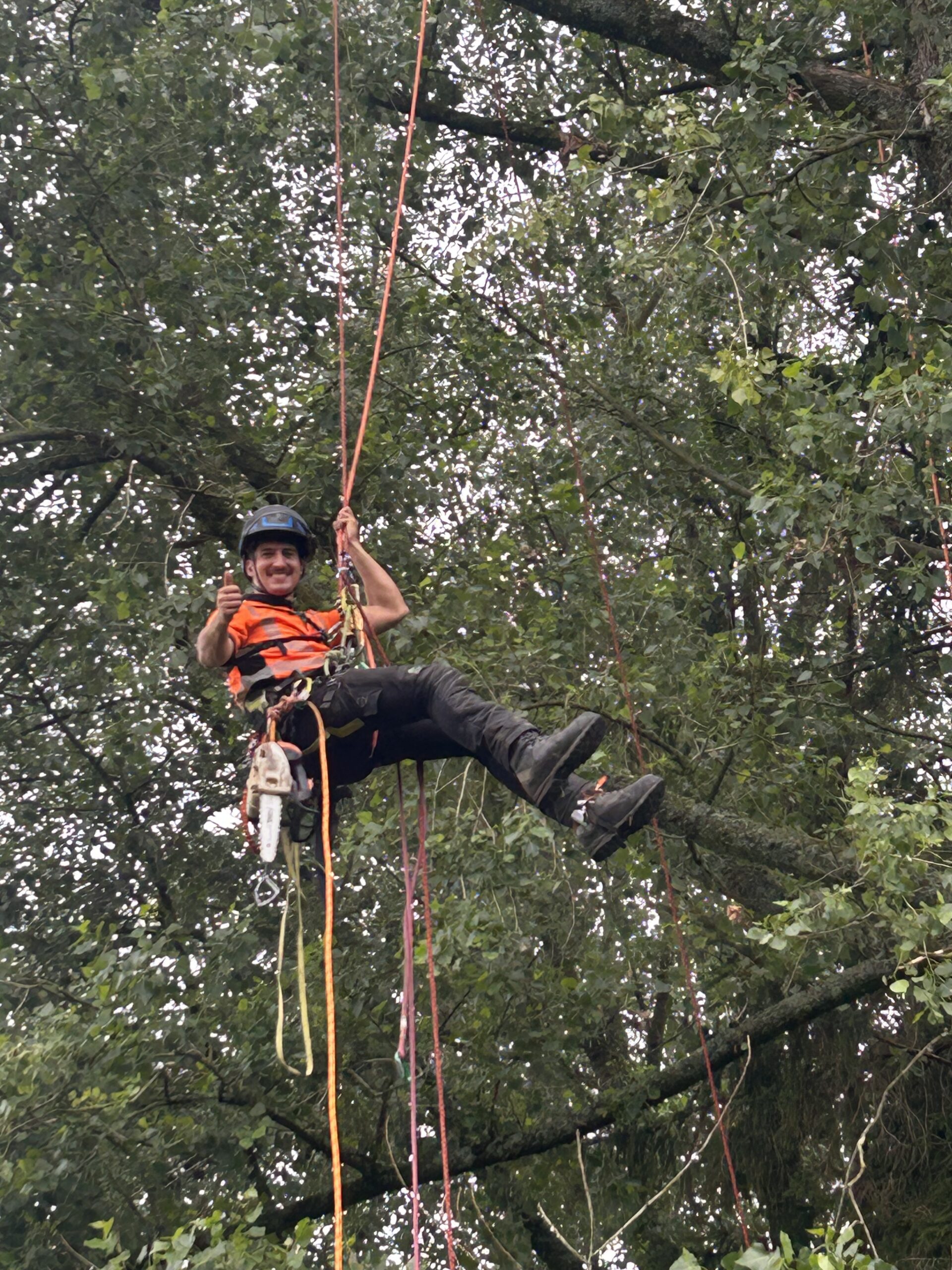
“Very friendly and professional. They delivered my job on time and at a good price.”
Glasgow Trees — that is what we aim to hear from our customers all the time.
Get a Free Quote
🔒 Your details are safe with us. No spam, ever.