Portfolio: Tree Surgery & Arborist Work in Glasgow
- Free, no-obligation quotes with a proper site visit before any price is fixed
- All work carried out to British Standard BS3998, not just "tidied up"
- Team NPTC/Lantra qualified across felling, aerial rescue, rigging and machinery operation
If you're trying to work out whether a tree company can actually do the job in front of you, the honest answer is that photos only tell you so much - what matters more is what the work involves, how it's carried out, and whether it's done to a recognised standard. This page sets out the portfolio of tree surgery and arborist work Glasgow Trees has carried out since 2005, from single garden trees to full site clearances, so you can see the range of jobs rather than just a gallery of "after" shots. It sits alongside our [[LINK:https://www.glasgowtrees.co.uk/areas-we-cover.html|areas we cover]] page, which lists the full footprint across Glasgow, Renfrewshire, Lanarkshire and West Dunbartonshire, and our [[LINK:https://www.glasgowtrees.co.uk/tree-removal.html|tree removal]] page if felling is what brought you here.
Most of the portfolio splits into three broad categories: pruning and crown work on trees that are staying put, felling and removal of trees that aren't, and ground or site clearance for land being cleared entirely - domestic gardens, commercial plots and forest ground alike. The mix reflects what actually gets asked for in this part of Scotland: gardens with mature trees close to boundaries, overgrown hedges backing onto neighbours, storm-damaged trees after winter gales, and larger commercial or agricultural sites needing stumps ground out or land cleared for redevelopment.
The three kinds of job in this portfolio
- Whole tree removal and felling, from single garden trees up to large mature specimens
- Sectional dismantling by rope and harness where a tree can't be felled whole (close to a house, wall, greenhouse or power line)
- Crown reduction and crown thinning to reduce wind sail and weight without removing a tree outright
- Pruning, crown lifting and formative work on younger or ornamental trees
- Deadwooding - removing dead limbs for safety, or leaving standing deadwood deliberately where a tree can be kept for habitat value
- Hedge cutting and hedge reduction, including overgrown boundary hedges
- Stump removal and stump grinding down to below turf or paving level
- Storm and windblown tree work, including trees that have come down across access routes or onto structures
- Ground clearance, land clearance and forest clearance for commercial landowners and private sites
- Site clearance ahead of development, landscaping or agricultural use, using our own machinery
Not Included / Costed Separately
- Planning permission or Tree Preservation Order (TPO) applications - you're responsible for checking with your local council before work starts on a protected tree, we can advise but can't submit or guarantee approval
- Removal of tree stump roots that have grown into or under drains, foundations or driveways - this is priced on site and usually separately from a standard stump grind
- Live-line utility cutting where a tree is in contact with, or very close to, a live overhead power line - this training is in progress within the team, and depending on the job may still need to be referred to the utility company
- Timber and log removal from site as standard - clearing the resulting timber, brash and arisings is usually quoted as an add-on rather than bundled into the felling price unless agreed upfront
- Replanting, landscaping or garden restoration after clearance - we clear and grind, but replanting is a separate job
- Indemnity or compensation for existing structural damage discovered once work is underway (e.g. a wall already undermined by roots) - this gets flagged and discussed before continuing, not absorbed into the original quote
From an idea over the phone to a finished site
- Initial call and rough scope -- You call or message with what you've got - a tree that's leaning, an overgrown hedge, a stump left over from someone else's felling job, or a site that needs clearing. We ask enough questions to know roughly what's involved and whether it's urgent (storm damage, a tree already down) or can be scheduled normally.
- Free site visit and assessment -- Someone comes out to look at the tree or site in person - species, size, condition, what's nearby (fences, sheds, power lines, neighbouring gardens), and access for equipment. This is also when we check whether a Tree Preservation Order or conservation area restriction might apply, since that changes what can legally be done and when.
- Quote and plan -- You get a written, no-obligation quote based on what was actually seen on site, not a phone estimate. For anything involving rigging, aerial work or machinery access, this is also when we plan how the tree comes down or is reduced - whole-tree felling if there's room to drop it, sectional dismantling by rope and harness if there isn't.
- The work itself -- On the day, the crew sets up exclusion zones, gets any machinery (chipper, stump grinder, crane, excavator) positioned, and carries out the agreed work - felling, dismantling, pruning, hedge cutting or clearance - to BS3998. Windblown or storm-damaged trees are handled with the same rigging and aerial rescue training but often under more time pressure.
- Clear-up and stump grinding -- Brash is chipped, logs are stacked or removed as agreed, and if a stump is being ground out, that's usually done straight after felling while the machine's already on site. Ground clearance jobs finish with the site left level and accessible.
- Sign-off -- You check the site before we leave. For ongoing or repeat commercial ground maintenance clients, this is also when future visits get scheduled.
Why a "medium tree" quote can vary so much
Three of the job types shown in this portfolio give a fair sense of what a quote actually depends on. A leaning garden conifer, felled whole in an open back garden with room to drop it, sits at the cheaper end of the felling range - straightforward access, no rigging, chipped and cleared in half a day. A mature beech overhanging a neighbour's greenhouse can be classed as the same "medium-sized" tree on paper, but it's a different job in practice: it has to come down in sections by rope and harness rather than felled whole, which adds time on site and pushes the price well past what the conifer cost. A stump left behind by either job is priced separately again, by its diameter and how far the roots have spread under nearby paving.
Market bands for the wider region give a rough sense of scale: small tree removal (up to around 25ft) generally runs from roughly £155 to £575, medium trees (25-50ft) are typically closer to £735, hourly labour where a job is priced by time rather than a fixed quote runs around £40-£50, and stump grinding on its own usually sits between about £60 and £150 per stump. These bands are useful for budgeting, but they're general figures, not a quote for your tree - which is exactly why the conifer and the beech above needed a site visit before either number meant anything. We do the same for every enquiry: a free look at the species, access and anything nearby before a figure gets attached to it.
Six job types, compared side by side
| Job type | Typical reason it's needed | What's involved | Roughly how long on site |
|---|---|---|---|
| Crown reduction / pruning | Tree is healthy but too large, too close to a building, or blocking light | Selective cutting to BS3998 to reduce size and wind sail without killing the tree | Half a day to a full day depending on size |
| Whole tree felling | Tree is dead, diseased, storm-damaged or simply unwanted, with room to drop it safely | Felled in one or more sections, then chipped and cleared | Half a day to a full day |
| Sectional dismantling (rope and harness) | Tree can't be felled whole - too close to a house, wall, power line or another tree | Climbed and taken down in controlled sections from the top down | One to two days depending on height and access |
| Stump grinding | Stump left after felling (by us or a previous contractor) is a trip hazard or blocking landscaping | Ground down below turf or paving level using a stump grinder | One to a few hours per stump |
| Hedge cutting / reduction | Boundary hedge has outgrown its space or is affecting a neighbour or access | Trimmed back to shape and height, or hard-reduced if badly overgrown | Half a day upwards depending on length |
| Site / ground clearance | Land is being cleared for development, agriculture or general tidy-up | Multiple trees, scrub and undergrowth removed using our own machinery | One to several days depending on site size |
Which certificate covers which job in this portfolio
The certificates behind this portfolio map fairly directly onto the job types pictured here, rather than sitting on a general qualifications list for their own sake. Whole-tree felling and smaller garden work call for the basic felling and chainsaw tickets. Anything dismantled in sections near a house, wall or power line needs rigging and dismantling certification plus aerial rescue and chainsaw-from-rope-and-harness training, because the tree is being taken down piece by piece rather than dropped whole. Storm and windblown jobs draw on that same climbing skill set, usually with less notice and more urgency than a scheduled job. The clearance and ground maintenance work at the other end of the portfolio depends on machinery tickets instead - stump grinder, wood chipper, timber crane, 360 excavator and telehandler among them. A crew holding only a basic felling ticket can manage the first category and struggle with the rest, which is worth asking about directly if the tree in front of you isn't a straightforward one to drop.
From veteran-tree retention at Pollok Park to clearance further out
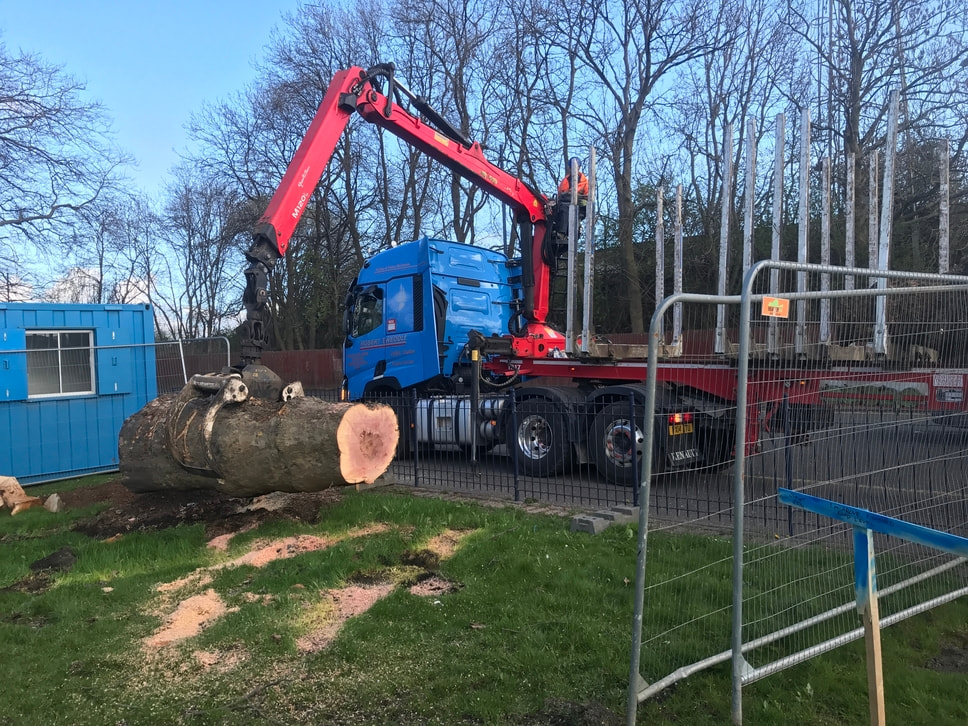
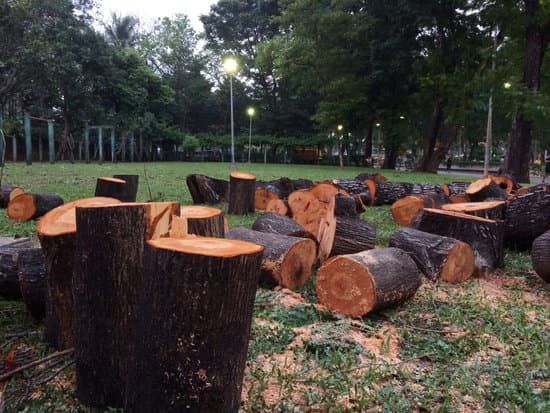
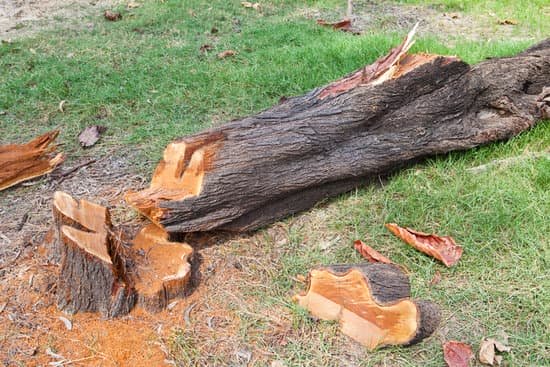
Most of what's in this portfolio was carried out in Glasgow itself, including restoration work at Pollok Country Park, where the job was to retain and manage veteran trees - among them the city's tallest Sitka spruce, at over 33 metres - rather than take anything down. That's typical of what coverage close to the city looks like: as much retention and management work as felling. Further out, the pattern shifts. Bearsden, Milngavie and Bishopbriggs to the north, Rutherglen and Cambuslang across the Clyde, and Paisley and Renfrew to the west are mostly mature gardens and older boundary hedges. Along the M74 towards East Kilbride and Hamilton, and the A82/M80 towards Stirling and Falkirk (Bo'ness), sites get larger and more rural, and the work shifts towards forest and land clearance. The footprint runs across eight council areas, but the jobs at each end of it look genuinely different from one another.
Before you book, the questions we get most
Can I see examples of tree surgery jobs you've completed in Glasgow?
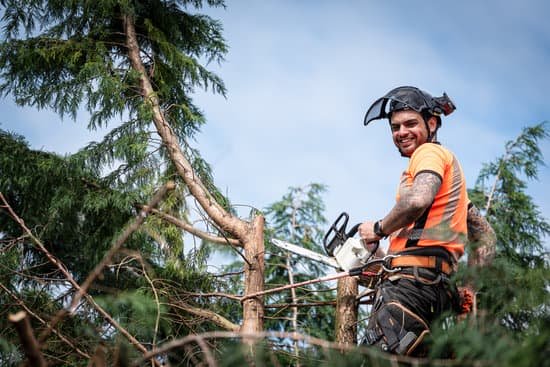
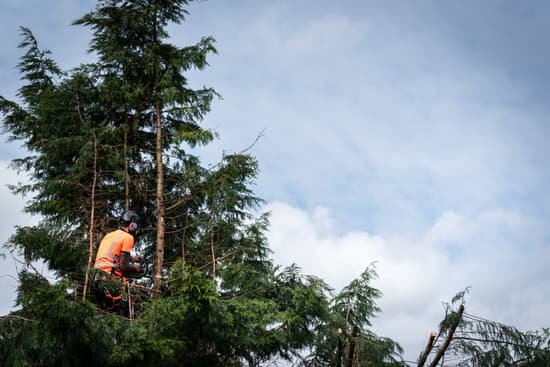
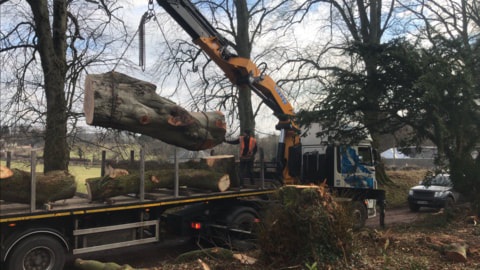
The photographs and video on this page show a cross-section of past work - felling, crown reduction, hedge cutting, stump grinding and site clearance across Glasgow and the surrounding council areas. If you have a specific type of job in mind (a particular species, a tricky access situation, storm damage), it's easier to describe it when you call and we can talk through comparable jobs directly.
What qualifications should a professional arborist hold?
At minimum, look for NPTC or Lantra certificates covering chainsaw use, tree felling (small and large), and health & safety, plus proof of insurance. For anything involving climbing or dismantling near buildings, certification in aerial rescue and chainsaw work from rope and harness matters too. Our team holds these, along with rigging and dismantling, windblown tree work, and NPTC Professional Tree Inspection qualifications, and machinery tickets for equipment like stump grinders and excavators where a job needs them.
Do you have before-and-after photos of tree work you've done locally?
Yes - this portfolio includes photographs from completed jobs. A photo of someone else's finished job isn't a guarantee of how your own tree or site will look afterwards, though, since every tree, garden and access route is different. That's part of why we do a site visit before quoting rather than pricing from photos alone.
What's the difference between a tree surgeon and an arborist?
In practice the terms overlap a lot and are often used interchangeably. "Arborist" tends to refer more broadly to tree care and management - including health checks and long-term retention decisions - while "tree surgeon" is more associated with the hands-on cutting, felling and pruning work. A properly qualified team, like ours, does both: working out whether a tree should be reduced, retained or removed, and then carrying out whichever of those turns out to be the right call.
How do I know if a tree company is fully insured and qualified?
Ask directly for proof of public liability insurance and for the specific NPTC or Lantra certificates relevant to the job - felling tickets for removal work, aerial and rigging certificates for climbing work, machinery tickets if a stump grinder or excavator is involved. A company confident in its qualifications will have no issue naming them, which is why we list ours rather than just saying "fully qualified".
What kinds of jobs make up most of your portfolio - felling, pruning, or crown reduction?
It's a genuine mix rather than one dominant job type. Domestic work leans towards crown reduction, pruning and hedge cutting - keeping trees that are staying put in good condition - while felling, stump grinding and larger clearance jobs come more from storm damage, dead or diseased trees, and commercial or agricultural land being cleared.
Can I request references from past customers in the Glasgow area?
Yes, ask when you call and we can point you towards relevant examples of work in your part of the city or the wider area. Given how long the business has been trading locally, there's usually a comparable past job to reference for most tree types and situations.
Do you handle both residential and commercial arborist projects?
Yes - the portfolio covers both. Residential work tends to be single trees, hedges or small gardens; commercial and agricultural work tends to be larger, involving ground clearance, forest clearance or ongoing ground maintenance contracts, and often calls on the heavier machinery in the team's kit.
How experienced does a team need to be for complex or high-risk tree removals?
For anything involving a tree close to a building, over a boundary, leaning after a storm, or too large to fell whole, you want a team with specific aerial rescue, rigging and rope-and-harness certification, not just a general felling ticket - because the job stops being "cut it down" and becomes a controlled dismantling exercise. That's a different skill set, and it's worth asking directly whether the crew coming to your job holds it before you book.
Get the next job into this portfolio
Whether it's a single tree that needs a proper crown reduction rather than an unnecessary felling, a stump that's been a trip hazard for years, or a site that needs clearing before anything else can happen on it, the next step is the same: get someone out to look at it in person. A phone description only goes so far, and a quote based on an actual site visit is worth more than one guessed over the phone - especially if there's any chance a Tree Preservation Order applies. Get in touch to arrange a free, no-obligation visit and find out what your job actually involves before you commit to anything.
Glasgow Trees
Call 0141-483-7485