Glasgow's Tree Specialists Since 2005
Tree Cutting Glasgow | Which Type of Cut Does Your Tree Need?
NPTC and Lantra certified arborists working to British Standard BS3998 for every type of cut – pruning, reduction, pollarding, hedge cutting or full felling – with a free, no-obligation site assessment and £5 million public liability cover.
"Tree cutting" covers a lot of different jobs, and the right approach depends entirely on what you're trying to achieve. A homeowner asking about tree cutting might mean anything from a light trim to keep a branch off the roof, right through to taking a whole tree down. Glasgow Trees has been carrying out tree work across the city since 2005, and one of the most common first conversations we have with a new customer is simply working out which of those jobs theirs actually is, before any quote gets given.
This page is here to help with that. Below, we've set out the main categories of cutting work we carry out - pruning, crown reduction and thinning, pollarding, hedge cutting, and full tree felling - so you can see roughly where your own tree sits before you call. If you're still not sure after reading this, that's exactly what the free assessment is for; we'd rather look at the actual tree than guess from a description over the phone.
At a Glance
- NPTC and Lantra certified arborists, working to British Standard BS3998 for every type of cut
- Free, no-obligation site assessment before any cutting work is agreed or priced
- £5 million public liability insurance covering all tree cutting work, domestic and commercial
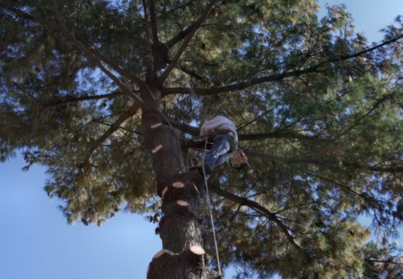
The Main Types of Tree Cutting Work, and What Each One Actually Involves
- Pruning - selective removal of specific branches to manage health, safety or shape, without changing the tree's overall size or form. Covered in full on our dedicated tree pruning page.
- Crown thinning - removing a proportion of smaller branches through the crown to let more light and air through, without reducing the tree's height or spread.
- Crown reduction - cutting back the overall size of the crown, used where a tree has outgrown its space but doesn't need to come down entirely.
- Pollarding - cutting back to a framework of main branches on a set cycle, most often used on street trees and boundary trees to keep long-term size under control. Covered on our pollarding page.
- Hedge cutting - trimming or reshaping hedging and screening rather than individual specimen trees, on both domestic gardens and commercial boundaries. Covered on our hedge cutting page.
- Felling - removing a tree completely, whether because it's dead, diseased, dangerous, or simply in the wrong place. Covered in full on our tree felling page.
- Deadwooding - removing dead or dying branches specifically, often carried out alongside a pruning or crown-thinning visit rather than as a standalone job.
Not Included / Costed Separately
- Stump removal once a tree has come down - handled as its own service, see our stump grinding and removal page.
- Cutting a tree that's protected by a Tree Preservation Order or sits in a conservation area, without the necessary council consent already in place - this needs to be checked and applied for first, not carried out on request.
- General garden maintenance unrelated to trees or hedges, such as grass cutting or border planting.
How We Work Out Which Cutting Job You Actually Need
- You describe the problem, not the solution: Tell us what's actually bothering you about the tree - a branch too close to the house, a hedge that's got out of hand, a tree that looks unwell, a specimen you'd like taken down. You don't need to know the right technical term; that's our job to work out.
- Free site assessment: One of our NPTC-qualified arborists comes out to look at the tree itself - its species, condition, size, and how close it is to buildings, boundaries or overhead lines - before recommending pruning, reduction, pollarding, hedge work or felling specifically.
- TPO and conservation area check: If the tree is in a conservation area or might be covered by a Tree Preservation Order, we check this before quoting, since protected trees need council consent before any cutting work can go ahead.
- Fixed, no-obligation quote: You get a clear price for the specific work recommended, with nothing hidden - if a job turns out to need a different approach once we're on site, we'll tell you before doing anything, not after.
- The work itself, to BS3998: Whatever the job - a light prune, a full pollard, a hedge trim, or a complete felling - it's carried out to British Standard BS3998 for tree work by our qualified team, with full public liability insurance covering the job.
- Site cleared, waste handled responsibly: Cuttings and debris are cleared from site as part of the job, with waste handled in an environmentally responsible way rather than left for you to deal with.
Why We Don't Put a Single Price on This Page
Pruning a small garden tree, pollarding a mature street tree, and felling a large specimen close to a house are different jobs with different costs, and putting one number on a page covering all of them would tell you nothing useful. What we can say is that every quote is free and no-obligation, so getting an accurate price for your specific tree costs nothing and doesn't commit you to anything. The main things that affect price across any type of cutting work are the size and species of the tree, how easy or difficult access to it is, whether it's close to buildings, overhead lines or a boundary, and whether a TPO or conservation area check is needed first. A site visit lets us give you a genuine fixed price rather than a rough guess that changes once someone's actually looked at the tree.
Pruning, Reduction, Pollarding, Hedge Cutting or Felling - Which One Is Yours?
| Type of cut | What it actually does | Typical use case |
|---|---|---|
| Pruning | Removes specific branches for health, safety or shape | A garden tree with a dead or overhanging branch |
| Crown thinning | Removes some smaller branches to let light through | A tree casting too much shade without needing to shrink |
| Crown reduction | Reduces the overall size of the crown | A tree that has outgrown its space but is otherwise healthy |
| Pollarding | Cuts back to a set branch framework on a cycle | Street trees or boundary trees needing long-term size control |
| Hedge cutting | Trims or reshapes hedging and screening | Garden hedges and commercial boundary screens |
| Felling | Removes the whole tree | Dead, diseased, dangerous, or simply unwanted trees |
Nearly Twenty Years of Cutting Glasgow's Trees the Right Way
Glasgow Trees has been carrying out tree cutting work across the city since 2005, and every type of cut described on this page - pruning, reduction, pollarding, hedge work and felling - is carried out by NPTC and Lantra certified arborists to British Standard BS3998. That certification covers the full range of chainsaw and tree work disciplines, from small tree felling and hedge cutting through to large and windblown tree felling, aerial rescue, and rigging and dismantling for more technical jobs. £5 million public liability insurance covers all of it, and every job starts with a free, no-obligation assessment rather than a quote given blind over the phone.
The team has also carried out restoration work at Pollok Country Park, home to the tallest Sitka spruce in the city at over 33 metres - the kind of large-scale, technical cutting work that gives a good sense of the range covered, from a single garden hedge trim up to work on the city's most significant specimen trees.

Tree Cutting Across Glasgow and the Wider West of Scotland
Glasgow Trees carries out cutting work across Greater Glasgow, Lanarkshire, Renfrewshire, West Dunbartonshire and Stirlingshire, along the M8, M74, M77, M80 and A82 corridors. That covers eight council areas - Glasgow City, East Dunbartonshire, West Dunbartonshire, Renfrewshire, East Renfrewshire, Inverclyde, South Lanarkshire and Stirling - plus Falkirk around Bo'ness. Within the city itself, cutting work ranges from tenement back gardens and Victorian villa plots in the West End through to street and boundary trees needing regular pollarding as part of a maintenance cycle. Glasgow's tree canopy covers around 15% of the city, above the UK's urban average of 10%, and the mix of native species like Scots pine alongside exotic specimens such as monkey puzzle trees means a cutting job in one Glasgow garden can call for a genuinely different approach to the same job two streets over.
Frequently Asked Questions
What's the difference between tree cutting and tree pruning?
"Tree cutting" is the general term for any work that removes wood from a tree, and pruning is one specific type of it - the selective removal of particular branches for health, safety or shape, without changing the tree's overall size. Crown reduction, pollarding, hedge cutting and felling are all also types of cutting, but each does something different to pruning. If you're not sure which one your tree needs, that's exactly what the free assessment sorts out.
Do I need permission to cut a tree in my own garden?
Usually not, but it depends on whether the tree is protected. If it's covered by a Tree Preservation Order or sits in a conservation area, you need council consent before cutting work goes ahead, regardless of whose garden it's in. We check this as a standard part of the assessment before quoting any job.
How do I know if my tree needs pruning, reduction or felling?
This is genuinely difficult to judge without seeing the tree - a lean that looks dangerous from the ground can be perfectly stable once assessed properly, and a tree that looks fine can have a structural issue that isn't obvious from a photo. Our NPTC-qualified arborists assess the species, condition and situation of the actual tree on a free site visit before recommending a specific type of cut.
Is there a best time of year for tree cutting work?
It depends on the species and the type of cut, though most routine pruning and reduction work is best carried out outside the bird nesting season and while deciduous trees are dormant. Emergency work - a dangerous branch or a tree damaged in a storm - is carried out whenever it's needed, regardless of season.
Do you cut hedges as well as trees?
Yes - hedge cutting is one of the main categories of work covered on this page, for both domestic gardens and commercial boundary screens. See our dedicated hedge cutting page for more detail on that specific service.
What happens to the branches and wood after cutting work?
Cuttings and debris are cleared from site as part of every job, and waste is handled in an environmentally responsible way rather than left for you to deal with or dispose of yourself.
Are your tree surgeons actually qualified for this kind of work?
Yes - the team holds NPTC and Lantra certification covering health & safety, first aid, and chainsaw and tree work including small and large tree felling, windblown trees, aerial rescue, and rigging and dismantling, alongside machinery certification for equipment such as stump grinders, wood chippers and timber cranes. All work follows British Standard BS3998, backed by £5 million public liability insurance.
Not Sure Which Type of Cut Your Tree Needs? Ask Us to Look
If you've read through the types of cutting work above and you're still not sure which one fits your tree, that's completely normal - it's genuinely easier to judge in person than from a written description. Get in touch for a free, no-obligation assessment, and we'll tell you straight whether your tree needs a light prune, a full reduction, a pollard, a hedge trim, or felling, along with a fixed price for whichever it turns out to be.
“Very friendly and professional. They delivered my job on time and at a good price.”
Glasgow Trees — that is what we aim to hear from our customers all the time.
Get a Free Quote
🔒 Your details are safe with us. No spam, ever.