
Tree Surgeon Neilston, Glasgow
- Free, no-obligation quotes for Neilston and the surrounding countryside
- Fully insured team, all work carried out to British Standard BS3998
- NPTC-qualified in tree inspection, aerial work, felling and machinery operation
If you've got a tree causing bother on a property in Neilston, Glasgow – a leaning sycamore over a burn, a shelterbelt row gone leggy on a smallholding, or a beech that's simply grown too big for a suburban garden near the village centre – this page sets out what a tree surgeon working this ground actually does, what it costs, and where the rules bite. Glasgow Trees has traded across Greater Glasgow and Renfrewshire since 2005, and Neilston brings its own set of problems that a city street doesn't: higher ground and more open exposure than most of Glasgow, farmland and paddocks mixed in with the housing, a burn running close to gardens on the lower side of the village, and land that's sometimes covered by a preservation order the owner never knew about.
The rest of this page covers what's actually included in a typical job here, roughly what it costs, how East Renfrewshire Council's tree protection rules work in practice, and the questions people in and around Neilston tend to ask before they book anyone.
Felling, pruning, stumps and shelterbelts around Neilston
- Storm and windblow response - clearing fallen or hung-up trees safely
- Checking a tree against East Renfrewshire Council's tree preservation register before work starts
- Full tree removal - dead, diseased, dangerous or simply in the wrong place
- Crown reduction, thinning and lifting to manage size, light and wind resistance
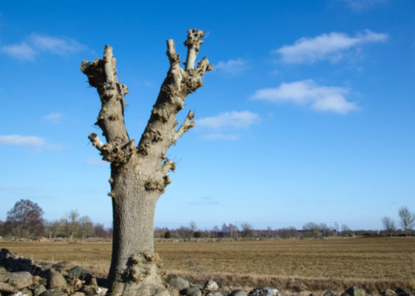
- Pollarding and formative pruning on younger or ornamental trees
- Deadwooding to remove hazardous limbs before they fail on their own
- Hedge cutting and shelterbelt management, including overgrown boundary lines on smallholdings
- Site and land clearance for gardens, paddocks or small development plots
- Stump grinding down to below turf or paving level
- Risk assessments and method statements for farm, commercial or local authority clients
Not Included / Costed Separately
- Work directly around live overhead lines needs extra caution and cost, and isn't started until the situation is properly looked at
- Scaffold, cherry-picker or specialist lifting-gear hire is priced on top where access or height rules out rigging alone
- Stump grinding is usually quoted separately from felling, priced on stump diameter and root spread
- Off-site removal of timber or chippings can be an added cost if you want the site left completely clear rather than logs left for firewood
- Structural issues such as tree roots affecting drains or foundations are flagged for a specialist rather than tackled on the day
- Replacement or replanting required as a condition of a felling consent isn't part of the removal price
How the job runs, from first call to invoice
- The first conversation -- You describe the tree and roughly where it stands - a photo on a phone helps a lot, especially if it's near a boundary, a burn or overhead cables, and it lets the crew start thinking about access and rigging before anyone's even driven out.
- Site visit, ground and register checked together -- Someone comes out and looks at the tree itself - species, condition, lean, root plate - and at the site around it: access for kit, distance to the watercourse or any buildings, how exposed or sloping the ground is, and whether it's covered by East Renfrewshire Council's tree preservation register. All of that gets looked at in the one visit rather than as separate steps.
- A written price, nothing hidden -- You get an itemised quote covering the felling or pruning method, stump work and waste handling, with anything that would cost extra spelled out rather than left to surprise you afterwards. Asking for this doesn't cost you anything and doesn't commit you to going ahead.
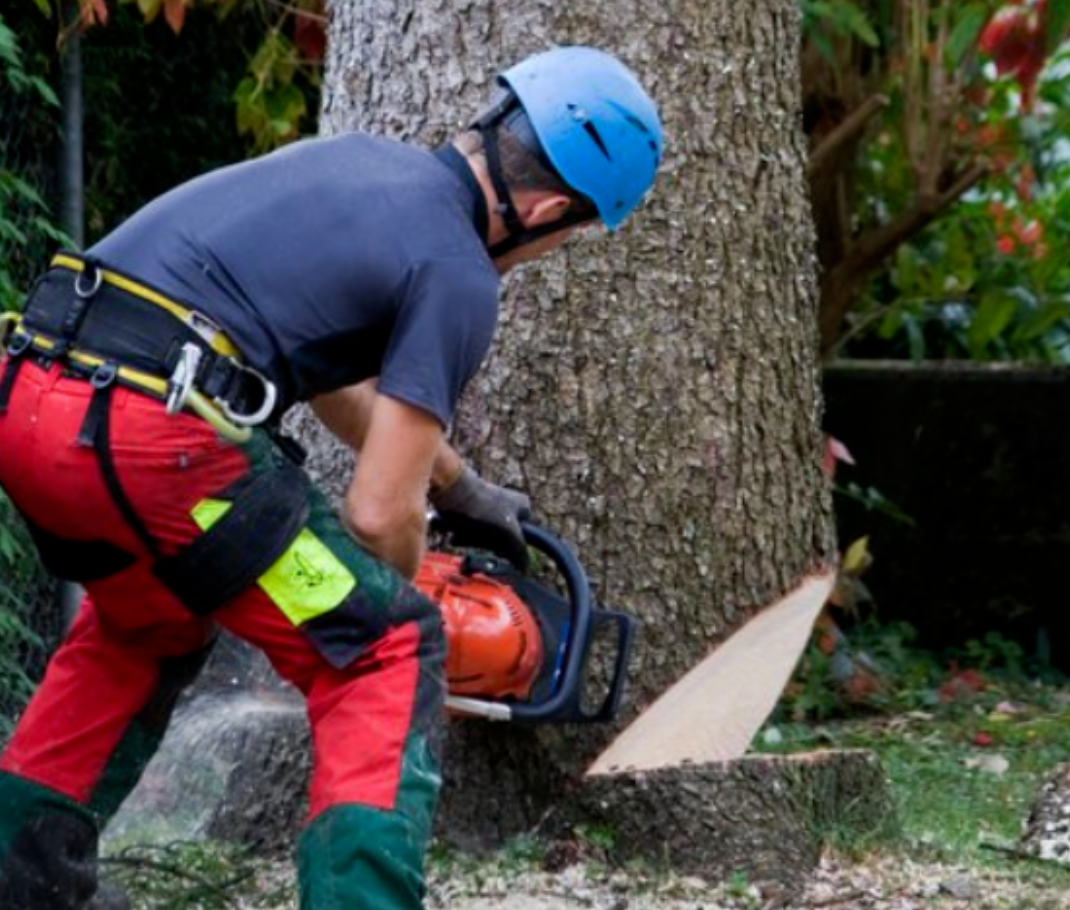
- Rigging plan, then the cut -- On exposed or sloping ground, how a tree's rigged matters as much as the felling itself - which direction it's taken down, whether it's dismantled in sections rather than dropped whole, and which machinery, chainsaws, a chipper, a timber crane or a 360 excavator, actually gets brought out. That plan is settled before the first cut, then the crew gets on with it.
- Timber sorted, site swept, job signed off -- Timber and brash are dealt with as agreed - chipped, stacked as logs for firewood, or taken away - the ground is swept clear, and you get a final look-over with the invoice rather than a bill arriving with no explanation.
Rough costs for tree work on Neilston's farms and gardens
Across the trade in the UK, a straightforward garden tree removal typically starts from around £150, while a large or awkward tree - one that has to be dismantled in sections over a building, a fence line or a burn - can run up towards £4,800 depending on size, condition and access. A two or three-person team generally works out at somewhere between £180 and £250 a day where a job is charged by time rather than by the tree. Stump grinding is normally costed separately, based on the diameter of the stump and how far the roots have spread, rather than folded into a flat felling price. Hedge cutting and shelterbelt work on farms and smallholdings tends to be priced by length and height rather than per tree. None of this replaces an actual look at your tree - a lean over a slope, proximity to the Levern Water, or a tricky access track up to a rural property can all move the price, so a full quote always needs a site visit rather than a phone estimate.
Tree surgeon versus gardener versus DIY: what you're really paying for
| What matters | Glasgow Trees tree surgeon | General gardener or handyman | DIY with a hired chainsaw |
|---|---|---|---|
| Qualifications | NPTC/Lantra certificates for felling, aerial work, rigging and machinery | No formal tree-specific certification as standard | No certification required to buy or hire a saw |
| Council and TPO checks | Checked against East Renfrewshire's protection register before work starts | Rarely checked, which can leave you liable for unauthorised work | Left entirely to you to find out, often after the fact |
| Large, leaning or storm-hit trees | Rigging, sectional dismantling and crane or forwarder support where needed | Limited to what's reachable from a ladder | Genuine risk of the tree, or a branch, landing wrong |
| Insurance | Public liability cover specifically for tree work | Often general garden cover only, felling usually excluded | No cover at all - the risk sits with you |
| Waste, stump and clean-up | Chipping, log removal and stump grinding arranged as part of the job | Often left for you to sort afterwards | You're left with the stump, brash and the mess |
Rigging for wind-exposed ground, not just city gardens
Farm shelterbelts, elevated smallholding gardens and a single conifer standing alone on a knoll get read differently before a saw ever starts on ground like this - a lone tree on rising, open land takes far more load in a gale than the same species tucked between houses further into Glasgow, and that difference is exactly why windblown tree work, climbing from rope and harness, and rigging and dismantling are held as separate NPTC/Lantra certificates rather than something picked up on the day. Where the ground's soft, sloping or cut through with drainage ditches, that's also when a stump grinder or 360 excavator earns its keep over hand tools alone, and a wider forwarder trailer or line skidder comes into play on a job with real distance between the tree and the road. On ground like this, insurance cover and a recognised working standard matter as much as the kit in the van: every job is carried out to British Standard BS3998, full insurance runs behind it throughout, and the crew doing the cutting has been trading as Glasgow Trees since 2005 rather than turning up under a new name each season. NPTC Professional Tree Inspection qualification is what shapes the first look at a tree before anyone agrees to cut it. Asking for a price doesn't cost you anything and doesn't tie you into anything either, and the paperwork behind the firm runs back to a proper office address - Clyde Offices, 48 West George Street in Glasgow city centre - rather than just a name on the side of a van.
Neilston, Neilston Pad and the Levern Water valley
Neilston sits higher and more open than most of Glasgow, and that changes how a tree gets read before anything's cut - a tall conifer on a knoll near Neilston Pad carries more wind load than the same tree would in a sheltered city garden, and that's factored into how it's rigged and in which direction it's taken down. The Levern Water runs close to a number of gardens and smallholdings on the lower ground, and any felling or root work near it is looked at with the watercourse in mind before work starts, rather than as an afterthought. The same crew works beyond the village too, out to the farms and paddocks around Uplawmoor and the built-up edge at Barrhead, then on into Glasgow, Paisley and Johnstone. From that same base the round extends through Clydebank, Dumbarton, Greenock, Rutherglen, Cambuslang, Giffnock, Clarkston, Newton Mearns, East Kilbride and Hamilton, and up as far as Bearsden, Milngavie, Kirkintilloch, Stirling and Bo'ness.

Tree work questions specific to Neilston and East Renfrewshire
How much does a tree surgeon cost in Neilston, Glasgow?
As a rough guide, a straightforward garden tree removal starts from around £150, rising towards £4,800 for a large or awkward tree that needs careful sectional dismantling. A day-rate team typically comes in around £180-£250. Stump grinding, hedge work and access difficulties all move the figure, so treat any price you're given over the phone as a starting point until someone's actually seen the tree.
Do you need East Renfrewshire Council's permission to remove a tree in Neilston?
Only if the tree is covered by a Tree Preservation Order or sits within a conservation area, in which case you'd normally need consent before felling, pruning beyond minor works, or even root work. Not every tree in Neilston is protected, but plenty of mature specimens on older plots and around policy woodland are, so it's checked against the council's register before any quote is confirmed rather than assumed either way.
Are there tree preservation orders around Neilston Pad or the surrounding hills that restrict felling for rural landowners?
Some of the woodland and policy trees around the hills and estates near Neilston do carry orders, particularly older stands and specimen trees rather than young plantation or scrub. It isn't a blanket restriction across the countryside, but a landowner planning any felling on rural ground here should have it checked against the East Renfrewshire register first - it costs nothing to ask and avoids a problem after the fact.
How fast can a tree surgeon get out for an emergency in Neilston?
Emergency and storm work - a tree down across a drive, hung up on a fence, or leaning dangerously after high winds - is dealt with as a priority call, though a genuinely rural address on a single-track road can add a little time compared with a city street. Ring and describe what's fallen and where, and you'll get an honest idea of timing rather than a guaranteed hour.
What does stump grinding cost in Neilston?
It's priced by the stump, based mainly on diameter and how far the roots have spread rather than as a flat add-on to felling. A small garden stump costs a lot less to grind out than an old field-boundary tree with a wide root plate, so it's quoted once the stump's actually been seen.
Can you deal with trees near the Levern Water or on ground with drainage ditches?
Yes, but work close to a watercourse gets looked at differently - felling or root work near the Levern Water may fall under SEPA's rules on activities near watercourses, and a buffer strip is generally left undisturbed near the bank. It's flagged during the site visit rather than left as a surprise, and doesn't usually stop work, just shapes how it's carried out.
Can you manage shelterbelts and large hedges on farms or smallholdings around Neilston?
Yes - shelterbelt and hedge management is a regular part of rural work here, whether that's cutting back a windbreak that's grown out of shape, keeping a stock-proof hedge dense at the base rather than leggy on top, or removing species like yew or cherry laurel cuttings that are poisonous to grazing livestock if left lying in a paddock.
Does Neilston's higher, more exposed setting change how a tree gets looked at before work starts?
It does. A tall tree on open, elevated ground carries more wind load than a sheltered equivalent, which affects how a lean is read, which direction a dismantle is planned in, and whether extra rigging or a slower, more sectional approach is used. Windblown tree work is one of the qualifications the team holds specifically because rural, exposed sites like this behave differently to a walled-in city garden.
What's the best time of year to fell or prune trees around Neilston?
Late autumn through winter, once trees are dormant, is generally the better window for major crown work or felling, and it also avoids the bird nesting season - working on a hedge or tree that's actively in use by nesting birds between roughly March and August can bring you into conflict with the Wildlife and Countryside Act, so anything routine is best planned outside those months where the calendar allows it.
Don't wait for the next gale to make the decision for you
A tree that's already leaning, dropping deadwood or crowding a shelterbelt tends to get worse rather than better left alone, and on exposed ground near Neilston that can turn a manageable job into an emergency call after the next spell of wind. A site visit costs nothing and gives you a straight answer on what needs doing, what it'll cost, and whether the council's protection register comes into it at all - so get in touch and have it looked at properly rather than guessed at.
Glasgow Trees
Call 0141-483-7485