Tree Surgeon Bishopbriggs in Glasgow
- Fully insured tree surgeons working to British Standard BS3998 on every job
- NPTC/Lantra qualified team, including aerial rescue, rigging and dismantling certification
- Free, no-obligation quotes with nothing added to the price after the fact
If you're looking for a tree surgeon in Bishopbriggs, Glasgow, the reason is rarely a single dramatic oak - it's usually something more ordinary and more pressing: a leylandii hedge that's blocked the light for years, a lime tree dropping sticky honeydew onto a driveway every summer, or a stump left behind by someone else's job that's now throwing up suckers across the lawn. Glasgow Trees has worked on gardens and grounds across Bishopbriggs and the rest of East Dunbartonshire since 2005, trading as Glasgow's tree surgery specialists, and most calls are less about spectacle and more about practical detail: is that beech safe to leave through winter, will grinding the stump disturb the drainage run underneath it, does felling that sycamore need anyone's permission first.
The team is fully insured and every job, from a domestic hedge trim off Kirkintilloch Road to a larger clearance for a housing association site nearer Auchinairn, is carried out to British Standard BS3998. Quotes are free and come with no obligation, so you can find out exactly what a job involves, and what it will cost, before committing to anything.
What Bishopbriggs Tree Work Actually Covers
- Tree felling and full removal, including dead, diseased, storm-damaged or simply unwanted trees of any size
- Sectional dismantling and rigged removal where a tree is too close to a house, fence, greenhouse or garage for a straight fell
- Crown reduction, crown lifting and crown thinning to open up light or cut down wind sail on a large tree
- Pollarding and coppicing on species that respond well to it, plus deadwooding to remove hazardous limbs from an otherwise healthy tree
- Formative pruning on younger trees, shaping growth before problems set in rather than correcting them later
- Hedge cutting and trimming, including overgrown leylandii and beech hedges along boundary lines
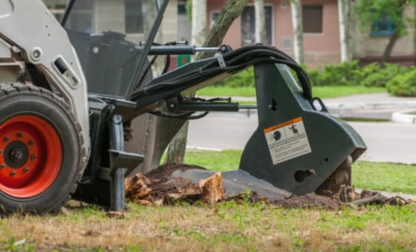
- Stump grinding down to a standard working depth, with grindings left on site as mulch or removed, whichever you'd rather
- Wood chipping and log removal, or logs left stacked on site for firewood if you want to keep them
- Land and bush clearing ahead of extensions, driveways, decking or new planting
- Emergency callout work for trees brought down or made dangerous by wind, snow loading or root failure
- Consultancy for commercial clients, including method statements and risk assessments for larger site contracts
Not Included / Costed Separately
- Forestry Commission Scotland felling licences for larger woodland felling beyond garden and amenity trees - this is a separate legal process the landowner applies for, though advice on when one is likely to be needed is part of the site visit
- Submitting a Tree Preservation Order application or conservation area notice to East Dunbartonshire Council on your behalf - that decision sits with the tree's owner or their agent, though checking whether a tree is already protected is included in the free site visit
- Ecology surveys for bats or nesting birds - if work falls during nesting season and a survey looks necessary, a specialist ecologist has to be brought in separately before cutting can proceed
- Crane hire or specialist access equipment on the small number of very restricted sites that need it - this is priced as an addition once the access has been seen in person, not folded into a standard quote
- Grinding an unusually deep stump, or grinding through significant roots running under a patio, driveway or drain - both typically cost more once the ground is visible
How a Bishopbriggs Tree Job Runs, Start to Finish
- First contact -- You call or message with a rough idea of what needs doing. A photo of the tree and where it sits relative to the house, fence or road tells us more than a description alone, and helps flag anything unusual - overhead cables, a shared boundary, a protected species - before anyone comes out.
- Free site visit -- A tree surgeon visits to look at the tree itself - species, condition, root spread, any obvious rot, cavities or dieback - and the site around it: overhead lines, sheds, neighbouring gardens, access for a chipper or stump grinder. This visit is also when we check whether the tree sits in a conservation area or already carries a Tree Preservation Order.
- Written quote -- You get a price in writing, broken down so you can see what's covered - felling, reduction or pruning, waste removal, stump work if wanted - with nothing added later that wasn't agreed up front.
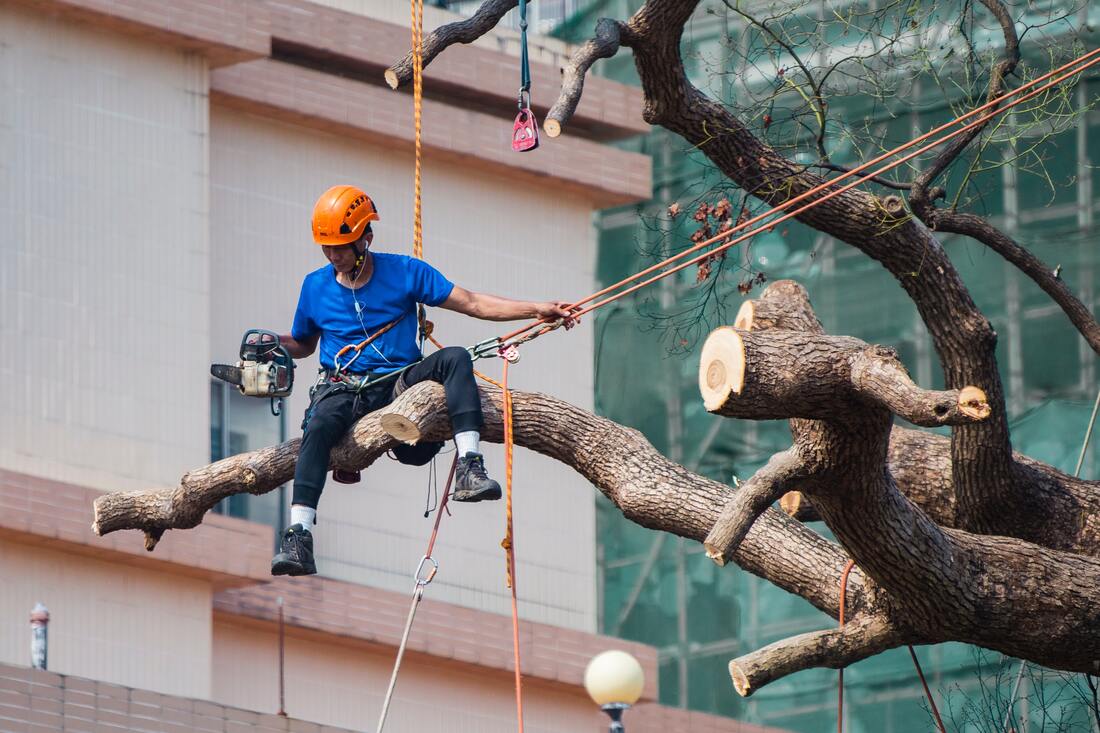
- The work itself -- On the day, hazardous limbs typically come down before the main stem on a removal, using rigging and rope access from harness where a straight fell isn't safe for the building or garden around it. Ground protection goes down first on soft lawns or driveways likely to mark.
- Clean-up and completion -- Brash is chipped on site, logs are stacked or removed as agreed, and the area is left tidy, swept of sawdust and chippings where reasonable. Photos or notes are handed over where they're useful for insurance or a council enquiry, before payment.
What Tree Work Typically Costs Near Bishopbriggs
Prices vary a good deal with tree size, access and what happens to the wood afterwards, but current UK cost guides give a useful starting point. Removing a small tree up to around 25ft typically runs £240-£340, rising to roughly £1,190-£1,720 for a larger tree up to around 50ft, once rigging, more time on site and waste removal are factored in. Stump grinding is usually £160-£220 for a small stump and £500-£710 for a larger one, depending on diameter and how deep the grind needs to go. A tree surgeon's day rate averages around £375, typically falling between £250 and £460, with a full crew costing more than a single operator working alone. These figures (drawn from MyBuilder's and Checkatrade's 2026 UK cost guides) are a guide for budgeting, not a quote - the only way to know what your particular tree and site will cost is a site visit, which is free and comes with no obligation to book.
Comparing Common Bishopbriggs Tree Jobs
| Job type | Typical price guide | Time on site | What moves the price |
|---|---|---|---|
| Small tree removal (up to ~25ft) | £240-£340 | Half a day or less | Access, proximity to the house, whether wood is taken away |
| Large tree removal (up to ~50ft) | £1,190-£1,720 | One to two days | Height, rigging required, crane access on tight sites |
| Stump grinding, small stump | £160-£220 | 1-2 hours | Stump diameter and root spread |
| Stump grinding, larger stump | £500-£710 | Half a day | Depth needed, nearby paving, drains or services |
| Crown reduction or pruning | Day rate £250-£460 | Half to full day | Number of trees, height, amount of growth removed |
| Emergency storm response | Quoted on the day | Varies with damage | Urgency, risk to property or road, machinery access |
What Backs Up the Work We Do in Bishopbriggs
Glasgow Trees has traded under that name since 2005, and every job is carried out to British Standard BS3998, the recognised standard for tree work in the UK. The team holds NPTC/Lantra certificates across health and safety, first aid, and chainsaw and tree work - including small and large tree felling, windblown trees, aerial rescue, chainsaw work from rope and harness, and rigging and dismantling - alongside machinery tickets for equipment such as stump grinders, wood chippers, a timber crane and a 360 excavator, plus NPTC Professional Tree Inspection qualification, used to inspect tree condition and risk. The business is fully insured, and quotes are free with no obligation attached. Beyond routine garden work, the team has been involved in restoration work at Pollok Country Park, home to the tallest Sitka spruce in the city at over 33 metres - the kind of site where getting the inspection and rigging right matters as much as the felling itself. The registered office is Clyde Offices, 2nd Floor, 48 West George Street, Glasgow G2 1BP.
Bishopbriggs and the Ground Covered Around It
Bishopbriggs sits just north-east of Glasgow, close to the Forth and Clyde Canal, and the housing stock reflects it - a good number of older sandstone semis and terraces around Kenmure, Auchinairn, Cadder and Wester Cadder, sitting alongside newer estates nearer Balmuildy and Springfield. Older sandstone properties in particular tend to have mature trees planted close to the building line, which is often the actual reason a homeowner calls - roots near foundations, or a large tree that's simply outgrown the space it was planted into decades ago. Land near the canal and the greenbelt strips around Bishopbriggs can also carry biodiversity or ancient woodland designations that affect what's permitted, on top of anything East Dunbartonshire Council has separately protected under its own Tree Preservation Order register - distinct from Glasgow City Council's, and worth checking against the specific address rather than assuming either way.
Beyond Bishopbriggs, the same team covers Glasgow, Kirkintilloch, Bearsden, Milngavie and Strathblane to the north, out towards Renfrew, Paisley, Johnstone and Clydebank to the west, and down through Rutherglen, Cambuslang, Giffnock, Clarkston, Newton Mearns and Barrhead to the south, with jobs further afield in East Kilbride, Hamilton, Bothwell and Blantyre in Lanarkshire, and as far as Stirling and Bo'ness when the work calls for it - broadly the M8, M74, M77, M80 and A82 corridors radiating out from Glasgow.
Bishopbriggs Tree Surgery Questions Answered
How much does it cost to hire a tree surgeon in Bishopbriggs?
As a rough guide, a small tree removal (up to about 25ft) tends to run £240-£340, rising to £1,190-£1,720 for a larger tree up to around 50ft. Stump grinding is typically £160-£220 for a small stump and £500-£710 for a larger one. A day rate for a tree surgeon averages around £375, more for a full crew. These are national 2026 guide figures rather than a quote for your specific tree - access, condition and what happens to the wood afterwards all move the final price, which is why a free site visit is the only reliable way to price a job.
Do I need council permission to cut down a tree in my Bishopbriggs garden?
It depends on whether the tree is protected. If it sits within a conservation area or has a Tree Preservation Order (TPO) against it, you'll normally need East Dunbartonshire Council's consent before any felling, significant pruning or removal - this is separate from Glasgow City Council's own register, so it's worth checking the right authority for a Bishopbriggs address specifically rather than assuming. Trees without a TPO and outside a conservation area generally don't need permission for routine work, though a felling licence can still apply to larger woodland outwith a garden setting. Checking protected status is part of a free site visit before any quote is given.
What's the difference between tree pruning and tree pollarding?
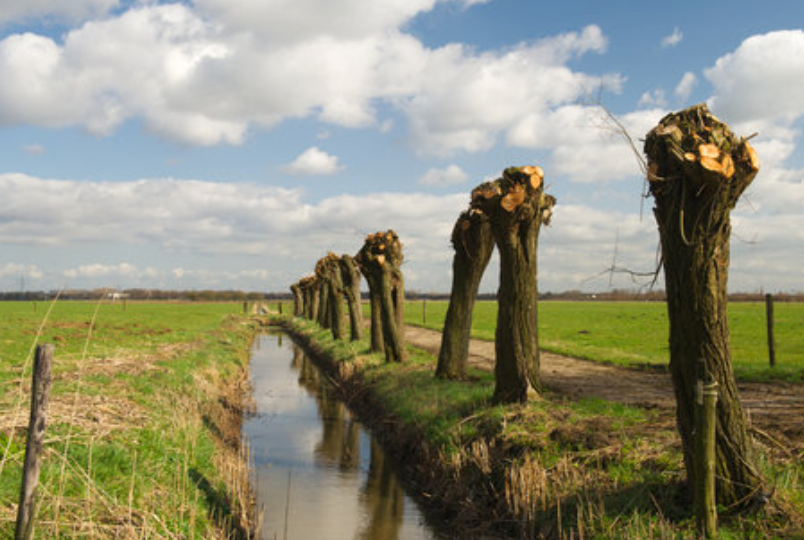
Pruning is selective - removing specific branches for shape, light, deadwood or clearance, while leaving the tree's natural form largely intact. Pollarding is more severe: cutting back to a framework of main branches or the trunk at a set height, usually repeated every few years, which keeps a tree permanently smaller than it would otherwise grow. Not every species tolerates pollarding well, and starting it on a mature tree that's never been pollarded before can shock or damage it, so it's usually only recommended where a tree has either been managed that way historically or genuinely needs its size controlled long-term.
How quickly can you respond to a storm-damaged tree in Bishopbriggs?
Emergency callouts for storm damage - a split limb, a leaning tree, or one that's brought down power or telephone lines - are treated as priority work and looked at as quickly as access allows. If a fallen tree is blocking a road or affecting overhead cables, that's usually a matter for the relevant utility or the council's roads team first, with tree removal following once the site is made safe to work on.
Are your tree surgeons insured and properly qualified?
Yes. The business is fully insured, and every job is carried out to British Standard BS3998. The team holds NPTC/Lantra certificates covering health and safety, first aid, chainsaw and tree work - including small and large tree felling, windblown trees, aerial rescue, and rigging and dismantling - plus NPTC Professional Tree Inspection qualification and machinery tickets for equipment such as stump grinders and a 360 excavator.
What time of year is best for pruning or felling trees near Glasgow?
Late autumn through winter, once leaves have dropped, is usually the best window for structural pruning and felling - it's easier to see the tree's shape and any decay, and the tree is dormant. Bird nesting season, broadly March to August, is the main thing to work around: hedges and trees with active nests can't be cut until nesting has finished, unless a suitably qualified person confirms none are present. Hedge trimming and light maintenance can generally happen at other times of year without issue.
Can you remove a tree that's leaning over my neighbour's fence or garden?
Yes, though it's worth sorting access and agreement with the neighbour before booking, since safe felling or rigging of an overhanging tree sometimes needs to use their side of the boundary, even briefly. Where a tree is actually on the boundary line or its ownership is unclear, that's worth establishing first too - it affects who's responsible for the cost and who needs to give consent.
What happens to the wood and branches after a tree is felled?
Branches and brash are normally chipped on site as part of the job. Logs from the trunk can either be removed and disposed of, or left stacked for firewood if you'd rather keep them - this gets agreed at quote stage so there are no surprises about what's included and what would cost extra to clear away.
Can a tree's roots cause subsidence to an older Bishopbriggs sandstone semi, and what do insurers usually want to see?
Root-related subsidence is a genuine risk with mature trees planted close to older sandstone properties, particularly on clay-rich ground where roots draw moisture unevenly from beneath foundations. Insurers and subsidence surveyors typically want an arboricultural report identifying the species and distance from the property, evidence linking the damage to root activity (often via monitoring and trial pits from a structural engineer), and a recommendation on whether crown reduction, root pruning or removal is the appropriate response - removal isn't always the first answer, since abrupt water table changes from felling a large tree can occasionally cause their own ground movement.
Book a Free Tree Assessment in Bishopbriggs
Deadwood, storm-loosened limbs and stumps left to spread suckers rarely improve by waiting, and the window for felling or hard pruning before bird nesting season closes each spring - so if a tree's been on your mind, it's worth getting it looked at properly rather than putting it off another year. Get in touch for a free, no-obligation site visit and a written quote with nothing hidden in it.
Glasgow Trees
Call 0141-483-7485