Lanark is the county town for this stretch of the Clyde Valley, sitting above the gorge that runs down past New Lanark and the Falls of Clyde, with orchard ground and old glasshouse plots still dotted along the valley floor below. Trees here range from mature specimens in walled gardens and orchard boundaries to conifers and self-seeded growth clinging to the gorge sides, and a fair number of gardens back onto ground that's steep, wooded, or close enough to the river gorge that working out access comes before anything else. We cover the town itself along with the villages around it, as part of the wider [[LINK:https://www.glasgowtrees.co.uk/lanarkshire.html|Lanarkshire]] and [[LINK:https://www.glasgowtrees.co.uk/clyde-valley.html|Clyde Valley]] area, and can flag where a [[LINK:https://www.glasgowtrees.co.uk/tree-preservation-order-glasgow.html|Tree Preservation Order]] or conservation area designation is likely to apply to a tree near the town's older buildings before any cutting starts.
Tree Surgeon, Lanark, Clyde Valley, South Lanarkshire24 Hour Emergency Tree Services
  Welcome to Glasgow tree Surgeons, Lanark, South Lanarkshire, tree removal and arborist Services.
Our way of thinking is to associate you with respect for trees and the surroundings like we do. Our Company works with trees every day and have become experts, in all the aspects of tree surgery and arborist work. We refuse to cut corners in either the job in hand or health and safety issues. If a task needs completing it must be executed correctly, no excuses! We pride ourselves in our ongoing business and dedicated customer service relationships we have built up over the years, completely at ease and confident in our ability to complete any tree surgery contract, either in the domestic or commercial sectors. We have all the modern up to date machinery together with highly trained, capable tree surgeon and arborist staff that really do enjoy their work. Example: You can also rest at ease All our work is covered by £5 million public liability insurance 24 Hour Emergency Tree Services Some of the Professional Tree Services we off our clients in the residential and commercial sectors.
|
     |


A full Consultancy and management service is available to all our commercial clients. This could be used by our customers for various high profile contracts that need arboricultural guidance with their chosen projects. We can provide the relevant documents including method statements and risk assessments.
Our Guarantees To You:
All services are completed by trained certificated Tree surgeons and Arborists
All work will be completed to the Health and Safety regulations according to the correct procedures and will be adhered to at all times.
We promise to quote you the best price possible for our professional services.
Any other work not listed on the original quotation will be discussed beforehand and not completed prior to your knowledge.
Our Company will professionally guide you from start to finish, and complete your chosen service in a respectful way to you and your neighbours.
We understand that every job is unique and needs to be tailored to our customers to find the correct solution, and the very best solution will be applied every time.
We will try and save you money best we can, our prices are very competitive within the Tree surgery and arborist industry.
Here at Glasgow trees, we offer a unique approach to customer service, we really do take care of everyone as we love repeat work, we promise you, no nasty surprises!
Telephone: 0141-483-7485 Click number to call
Have a fantastic day from Glasgow Trees, Lanark Division
Keeping it Local
Other areas that we operate our Tree surgery and Arborist Business in the Clyde Valley
Boghead - Braidwood - Carluke - Crossford - Dalserf - Hawksland - Kirkmuirhill - Law - Lanark - Lesmahagow - Larkhall - Nemphlar - Rosebank - Clyde Valley
Felling, Reductions, Stumps and Hedges: What's Included Near the Gorge
- Tree felling and sectional dismantling, with hazardous limbs removed and rigged down before the main trunk comes out
- Crown reduction, crown lifting, crown thinning and pollarding
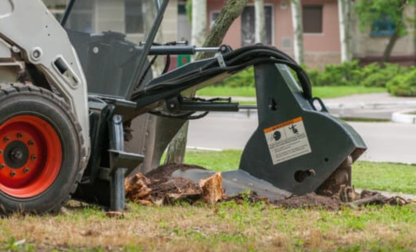
- Stump grinding and removal
- Hedge cutting, shaping and topiary maintenance
- Tree planting and species advice suited to Clyde Valley conditions
- Land and ground clearance for building plots, golf courses and larger rural sites
- Tree inspections, surveys and reports for mortgages, insurance, planning applications or TPO queries
- Cabling and bracing for split, cracked or unbalanced limbs
- Emergency callout for storm-damaged, windblown or dangerous trees
Not Included / Costed Separately
- Large-volume timber or chip disposal off-site is agreed and costed as its own line, separate from the felling or pruning price
- Checking and obtaining Tree Preservation Order or conservation area consent stays with the landowner -- we'll flag a tree that looks likely to be protected, but the formal application is a council matter
- Replanting, landscaping or garden reinstatement beyond the agreed tree work is quoted as an extra
- Anything not on the original quotation is discussed and agreed with you first -- it's never carried out and added to the bill afterwards
From First Call to Cleared Ground: One Site Visit, One Quote
- First contact -- You get in touch with where the tree or hedge actually is -- a garden in the town, an old orchard boundary out toward the gorge, or a farm near one of the surrounding villages -- and what's prompting the call: dieback, storm damage, overgrowth, or a branch overhanging a boundary or path.
- Site visit and assessment -- A tree surgeon looks at the ground in person, because access on gorge-side slopes, in a walled garden with a single narrow gate, or down a farm track changes what's realistic more than the tree's size does, and checks whether the tree is likely to sit inside a Tree Preservation Order or the town's conservation area before anything is costed.
- Free written quotation -- You get a no-obligation price in writing, and for felling or larger jobs a plan setting out how the tree will come down and what's being protected nearby -- a wall, an outbuilding, power lines, or a neighbouring boundary.
- The work itself -- For felling, hazardous limbs are removed and rigged down before the main trunk, working from the crown outward on rope or, where flatter ground and access allow it, with a crane; for reductions, thinning or hedge work, cutting follows the agreed shape and the percentage of crown or growth to come off.
- Clearance and sign-off -- Timber and arisings are chipped, stacked as logs, or removed as set out in the quote, the ground is left usable, and any follow-on work -- stump grinding, orchard restoration pruning, a return visit for a second hedge -- is booked separately if it wasn't part of the original job.
No Flat Rate: Why Access Decides More Than Tree Size Here
There's no flat day rate, because access and the tree itself matter more than time on site: a straightforward crown lift on a garden tree with an easy driveway costs less than felling a large tree on gorge-side ground or under power lines, where rigging, extra rope work and traffic control add hours. Stump grinding is priced on the stump's diameter and how far down it needs to go, hedge work on length and how overgrown it's become rather than a fixed sum, and land clearance or grounds maintenance contracts are quoted against the scale of the ground rather than per tree. Every quote is free and given after a site visit rather than over the phone, since species, access and site conditions here -- steep gorge sides, old orchards, walled gardens and boundary trees -- change the answer more than most people expect. For a general steer on typical job types, our [[LINK:https://www.glasgowtrees.co.uk/tree-surgeon-costs.html|tree surgery costs]] page covers the main ones, though a firm figure still needs eyes on the actual tree.
Lanark Tree Surgeon vs a General Landscaping Contractor
| Glasgow Trees | General landscaping/handyman contractor | |
|---|---|---|
| Tree work standard | Carried out to British Standard BS3998 | Rarely worked to a named tree standard |
| Felling & rigging qualifications | NPTC/Lantra certificates covering small and large tree felling, windblown trees, aerial rescue and rigging | Often subcontracted out once a tree is beyond a small size |
| Machinery on site | In-house stump grinder, wood chipper, timber crane and 360 excavator operators | Typically hired in separately, adding cost and delay |
| Insurance | Fully insured tree surgeons | Cover varies, and isn't always tree-work specific |
| Tree inspection | NPTC Professional Tree Inspection qualified | Visual opinion only, no formal inspection qualification |
What the Ground at Cartland Crags Decides Before the Saw Does
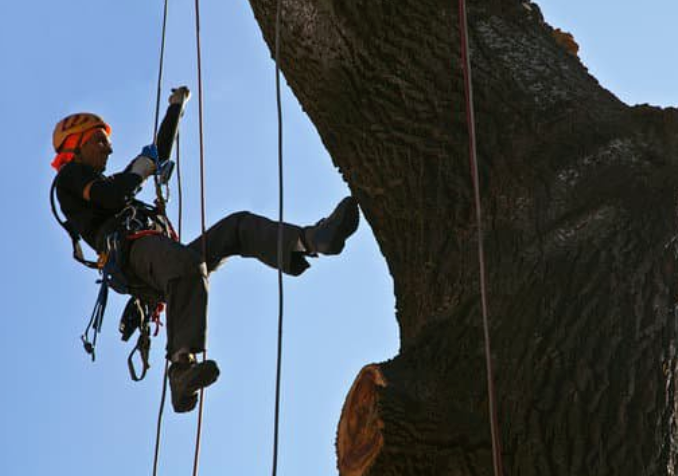
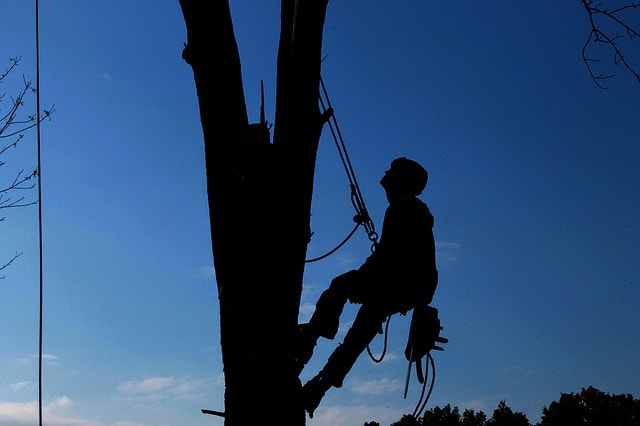
Gorge-side ground above Cartland Crags rarely gives a crane anywhere flat enough to stand, and that's often the detail settling how a tree comes down before its species or height get a look in: dismantled and lowered in sections on rope rather than dropped whole, with the rigging and aerial rescue certificates covering exactly that kind of job. An old fruit tree in one of the walled orchard gardens nearer the town asks something else of the same crew -- whether there's still enough sound wood left to build a reduction plan around over a season or two, so a tired-looking tree keeps producing rather than getting felled on a first impression. Those two calls -- restore or remove, climb or crane -- sit behind the NPTC and Lantra certificates the team holds for aerial rescue, rigging and dismantling, and chainsaw work from rope and harness, alongside the felling tickets that cover a small garden tree and a larger gorge-side one alike. A written report rather than a verbal opinion is what the NPTC Professional Tree Inspection qualification is for, useful where a mortgage lender, an insurer, or the council's conservation area officer wants something on paper rather than a phone call. None of that changes what a site visit costs to arrange -- nothing, and no obligation attached -- or the standard the work gets measured against once it's booked in: British Standard BS3998, from a team that's worked this ground since 2005 and carries insurance that covers gorge-side rigging and orchard pruning just the same. That same read carries through to what's left once a tree's down: a hollowed-out apple stump in an old orchard bed still needs grinding out below the surface before the ground can be replanted, in much the same way a wind-toppled conifer's stump needs clearing before a gorge-side bank can be made tidy again, and it's the same stump grinder and the same crew doing both jobs. Health and safety and first aid certification underpins every one of those visits too, whether the ground is a level orchard row or a slope above the gorge where footing matters as much as the cut itself, and it's why a second pair of hands often turns up on anything involving rope work near a drop.
From the Town Centre to Cartland Crags and Kirkfieldbank
Lanark sits above the Clyde gorge that drops down past New Lanark and the Falls of Clyde, and that stretch of gorge-side and riverside ground is a genuinely different access problem to a flat garden -- a chipper or crane needs level standing ground and a clear run in, which isn't always there on the steep ground around Cartland Crags or the wooded banks near Lanark Loch. Coverage runs from the town itself out to Kirkfieldbank, Crossford and Carluke, and down the valley toward Larkhall and Lesmahagow, with a site visit used to work out whether a job needs rope access and rigging rather than machinery before we quote.


Questions About Tree Work in Lanark and the Clyde Valley
Do you cover Lanark and the Clyde Valley villages, or just Glasgow?
Yes -- alongside Glasgow, coverage runs down the M74 corridor through South Lanarkshire, taking in Lanark, Kirkfieldbank, Crossford, Carluke, Larkhall, Lesmahagow and the smaller villages around them. It's part of an eight-council-area footprint that also takes in Renfrewshire, East Renfrewshire, West Dunbartonshire, Inverclyde and further out to Stirling and Bo'ness.
Do you need to see the tree before giving a price?
For anything beyond a very small job, yes. Quotes are free and no-obligation, but access, the tree's condition, its species and what's nearby -- power lines, a wall, a neighbour's fence -- all change the price, so a site visit comes before any figure is fixed.
Is my tree protected because it's near New Lanark or another historic site, or inside a conservation area?
It might be, and checking with the local council is the landowner's responsibility before work starts -- felling or heavily pruning a protected tree without consent can lead to enforcement action. We can flag a tree that looks likely to be covered by a Tree Preservation Order or conservation area rules during the site visit, but the formal check sits with the council, not with us.
We've got old fruit trees on the ground near Lanark -- can they be pruned rather than removed?
Often, yes. Old orchard trees can usually be restored with careful reduction pruning over a season or two rather than taken out in one go, provided there's enough sound wood left to work with -- a site visit is how that gets judged, since a tree that looks tired can still have plenty of life in it, and one that looks fine can be more hollow than it appears.
What happens to the branches and timber after a felling or reduction job?
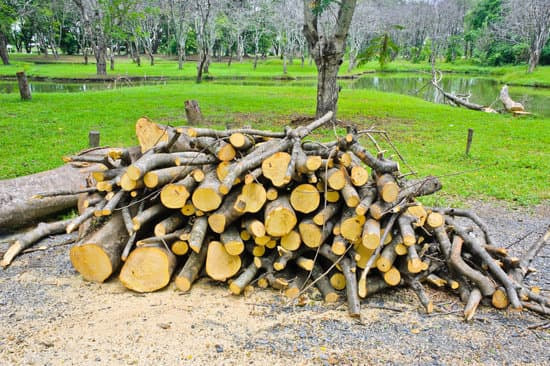
That's agreed as part of the quote. Arisings are usually chipped on site or removed depending on volume and what you'd like kept -- some customers want logs left for firewood. Larger-scale disposal is costed separately from the tree work itself, so there are no surprises on the invoice.
Can a stump be removed completely, or does it need grinding?
Grinding is the usual method -- it takes the stump down below ground level so the area can be turfed or planted over, and it's a job for a trained operator with the right machine rather than a DIY attempt, since stumps can hide roots, stones and old services. Full stump removal, digging the whole root ball out, is possible but disturbs more ground and costs more; which one suits depends on what you want to do with the space afterwards.
Do you handle emergency work if a tree comes down in a storm?
Yes, storm and windblown trees are part of what the team is trained and equipped for, including aerial rescue and rigging where a tree is hung up or resting on something. Get in touch as soon as it's safe to do so and the site can be talked through before a visit is arranged.
How much does crown reduction or hedge cutting typically cost?
There's no flat rate -- crown reduction is priced on the tree's size and how much needs to come off (around a quarter of the crown is typical for a reduction), while hedge cutting depends on length, height and how overgrown it's become. The [[LINK:https://www.glasgowtrees.co.uk/tree-surgeon-costs.html|tree surgery costs]] page gives a general steer, but a firm price still needs a look at the actual tree or hedge.
Do you work for commercial clients in this area as well as homeowners?
Both. Alongside garden and residential tree work, land clearance, grounds maintenance, and tree surveys or reports for construction, planning applications, mortgage and insurance purposes are all handled, backed up with method statements and risk assessments where a commercial client needs them.
Get a Free Quote for Tree Work in Lanark or the Clyde Valley
An old orchard tree left unpruned, or a leaning conifer on gorge-side ground, rarely gets safer or easier to deal with on its own, and storm season along the valley only adds to the risk of leaving it. Get in touch for a free, no-obligation quote and a site visit to see what's actually needed before the weather decides for you.
Glasgow Trees
Call 0141-483-7485