
Tree Surgeon in Glasgow
- Trading as Glasgow Trees since 2005
- All work carried out to British Standard BS3998
- Free, no-obligation quotes
Glasgow's mix of Victorian terraces with tight back courts, leafier West End gardens, and exposed sites along the Clyde means tree work here rarely looks the same twice — a leaning sycamore reached through a tenement close is a different job to a wind-damaged conifer in a detached garden. [[LINK:https://www.glasgowtrees.co.uk/|Glasgow Trees]] has worked on trees across the city since 2005, and every job, large or small, is carried out to British Standard BS3998 by a fully insured team.
Whether it's a single overgrown hedge, a tree that needs to come down, or ongoing grounds maintenance for a commercial site, you can read more about the team's background and qualifications on the [[LINK:https://www.glasgowtrees.co.uk/about-us.html|about us]] page, check the full list of towns covered on the [[LINK:https://www.glasgowtrees.co.uk/areas-we-cover.html|areas we cover]] page, or look through examples of finished jobs on the [[LINK:https://www.glasgowtrees.co.uk/portfolio-of-work.html|portfolio of work]] page. Quotes are free, with no obligation to book.
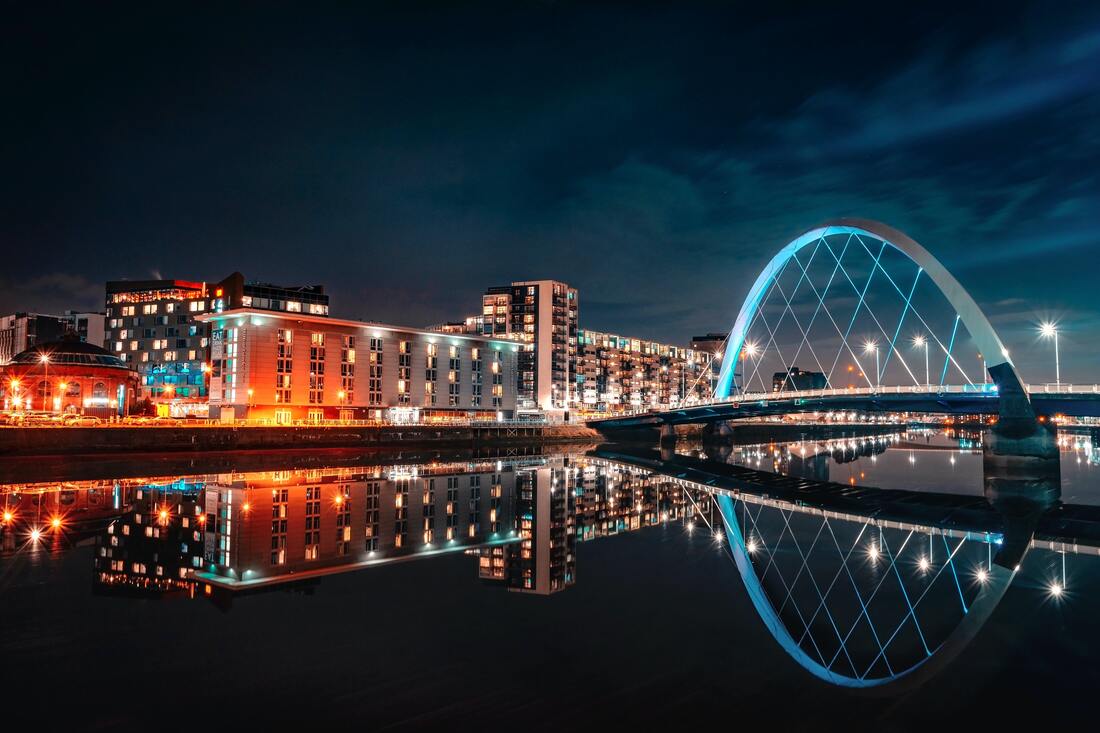
For nearly two centuries, Glasgow has been at the centre of global trade. After all, this was a time when tobacco ruled over Britain and half of that empire’s imports came through Glasgow.
Glasgow's underground railway system is the only one in Scotland, and it opened its doors to commuters back in 1894. It was built on a creative whim by engineers who wanted their kids' school near them at all times. They designed an elaborate plan that allowed for just such convenience. But what they ended up with was something much more exciting than anticipated! The trains are painted orange because of this whimsical origin story. Engineers had originally chosen blue as the colour of choice for these speedy little carts which would carry children around town. This was until someone pointed out how starkly different (and less desirable) bright purple looked against Glasgow’s cloudy skies so close to Christmas Eve.
Glasgow is a massive football city. It is home to the three largest football stadiums in Scotland: Celtic Park (Celtic), Ibrox (Rangers) and the national stadium, Hampden Park. Scottish Football League clubs Partick Thistle and Queens Park are also based in the city. You will be hard pressed to find another city with the passion for football that Glasgow has.
Glasgow is indeed a football city. It’s the home to three of the biggest football stadiums in Scotland. Ibrox that homes Rangers, Celtic park that hosts Celtic and the national stadium which is Hampden park. Also you have Partick Thistle and Queens park that are located within the city of Glasgow. History confirms that the first team from Glasgow was formed around 150 years ago by the pupils of St Patrick’s school that were after an after school venture that would provide good exercise and keep them from roaming the streets with nothing to do!
The first international football match to take place in the world was between England and Scotland on November 30, 1872. The game ended with a score of 0-0 but is still heralded as one of history's most important sporting events.
John Logie Baird, inventor of the television and a native Scot living in England, had been working on his invention for over 10 years when he made history with transmitting an image to a screen. This Glasgow engineer never stopped innovating until inventing what we now know as one of society’s great luxuries: TV!
Though not the oldest civic square in Glasgow, George Square is definitely one of the most popular. The City Chambers are located on its east side and a Merchant's House lies at its western edge. It was given this name to honor King George III but it wasn't developed for another twenty years after that initial decision until 1883 when construction began with laying foundation stones. All sorts of architecture can be seen around here like buildings from Victorian times as well as more modern structures such as BBC Scotland (it shares space with SSE Scottish Hydro).
The Glasgow Botanic Gardens is a lush and lively place to spend an afternoon. There are many sections that house plants from all over the world including tropical rainforests, Mediterranean forests, cactus gardens and more! Visitors can also enjoy walking along one of their riverside walks or taking in some culture at Kibble Palace which houses the national collection of tree ferns amongst other things.
What is Glasgow famous for
Glasgow is a city that has been shaped by its people and their passions. It's easy to see this in the architecture, with Gothic buildings from centuries ago standing across the street from new modern structures. There are plenty of parks where you can stroll through fields or along rivers, discovering Glasgow as it was years past and imagining what will come next for Scotland’s largest city!
Glasgow sits on both banks of River Clyde which bounds about half its boundary line. The river divides many neighbourhoods within Glasgow such as Queen Street, Dalmarnock and Cambuslang.
Architecture
Glasgow is a wonderful city of architecture. It's the second most populous in Scotland and has been called "the Second City of the Empire. The history of Glasgow can be traced back to Roman times, but its modern-day identity was shaped by a series of significant events that happened in the 18th century. We will attempt to highlight some of Glasgow’s most famous buildings, which have attracted tourists from all over the world.
Glasgow is a city that has the perfect atmosphere to get you exploring. Things don't have to be complicated or hard, as there are so many things for people of all ages and interests! From beautiful Victorian architecture and art nouveau buildings along with modern designs, Glasgow will keep your curious mind entertained throughout your journey.
Glasgow Cathedral is one of the most beautiful examples of gothic architecture in Scotland. Built between the 13th and 15th centuries, it's jaw-dropping beauty is matched by its history as St Mungo founded Glasgow here.
Famous for its distinctive red sandstone and striking facade, the Glasgow School of Art is one of Scotland's most iconic buildings. It was designed by Charles Rennie Mackintosh in 1897, with a second phase completed ten years later. The building remains an important centre for architecture today but is also open to the public as a museum and art gallery
The Kelvingrove Museum is a museum and art gallery located in the West End of Glasgow, Scotland. The building was originally designed as an exhibition hall for the General Assembly of the Church of Scotland in 1893, but it has since been converted into one of Glasgow's main attractions. The museum houses over 100,000 objects, spanning from ancient Egyptian artefacts to contemporary art installations.
Glasgow City Parks and Woodlands are a set of nature reserves in the city. Glasgow City Council owns this area, which is managed by their parks department. The total size is around 18 hectares (44 acres). These include: Bellahouston Park, Calderglen Country Park, Drumchapel Woods, Firhill Stadium and Hampden Park. These tree lined inner city parks are a indeed a credit to the park keepers and tree surgeons that look after and maintain them throughout all the seasons.
Shopping in Glasgow
Glasgow is a shoppers paradise, with the city catering for all tastes and budgets. From vintage wares to designer gear. You will find it all in Glasgow! The majority of stores can be found on Style Mile where an extraordinary concentration of shops make their home. Here you'll find leading individual stores as well as shopping centres and premier department stores. Glasgow is a city bursting at the seams with creativity, style and entrepreneurial spirit. It's no surprise that it has attracted so many designers from around the world! You can find some of these international fashion brands in Glasgow boutiques which specialise in Scottish-designed clothes, or Textile Traders who stock materials, ready-to-make garments that are specially made to order to your exact requirements.
History of Glasgow
Glasgow is the largest city in Scotland and has been a hub of transatlantic trade for centuries. It played an important role during the industrial revolution, being one of few cities to be industrialised at that time with cotton mills, shipyards and coal mines fuelling its economic growth. Glasgow was considered part of Britain’s second-city following this period which extended through much if not all Victorian times into Edwardian history when it became known as ‘the workshop town’ due to its leading position among British industries.
The River Clyde in Glasgow has made the city its centre of shipbuilding since it was first navigated by European explorers 500 years ago. For centuries, thousands of ships have been built here including vessels as large and legendary as The Titanic!
In a time when steam power ruled over sailboats for travel across oceans, no other location had more experience building such huge sailing crafts than Glasgow-the home to Scotland's largest inland waterway and birthplace of one the most famous seafaring disasters ever seen at sea.
Glasgow is known as the second city of Britain, after London. Glasgow's industrial past created a third of its jobs in industries such as glass-making and textiles during 18th century times; it was once one of the most powerful cities on earth because people flocked to make their fortune here.

Contact Us


Copyright Glasgow Trees
What Tree Surgery Covers in Glasgow's Closes, Back Courts and Gardens
- Tree removal and felling, including tall or hard-to-reach specimens in tenement back courts that need rope and rigging rather than a straight drop — background on both is on the [[LINK:https://www.glasgowtrees.co.uk/tree-removal.html|tree removal]] and [[LINK:https://www.glasgowtrees.co.uk/tree-felling.html|tree felling]] pages
- Emergency call-outs for storm-damaged and windblown trees, worked ahead of the routine booking queue — see [[LINK:https://www.glasgowtrees.co.uk/emergency-tree-services.html|emergency tree services]]
- Crown reduction, crown thinning, crown lifting, [[LINK:https://www.glasgowtrees.co.uk/tree-pollarding.html|pollarding]] and [[LINK:https://www.glasgowtrees.co.uk/deadwooding|deadwooding]], all cut to British Standard BS3998
- Pruning and routine tree trimming, including trees reached by rope access where a ladder isn't a safe option, set out on the [[LINK:https://www.glasgowtrees.co.uk/pruning-and-maintenance.html|pruning and maintenance]] page
- Stump grinding, including larger stumps that need the bigger grinder kept for wider commercial contracts — the [[LINK:https://www.glasgowtrees.co.uk/stump-grinding-and-removal.html|stump grinding and removal]] page has more detail
- Hedge cutting and shaping for domestic gardens, with [[LINK:https://www.glasgowtrees.co.uk/commercial-hedge-cutting|commercial hedge cutting]] arranged on its own terms for factors and landowners managing several properties at once
- Site clearance ahead of building or landscaping work, from a single garden ([[LINK:https://www.glasgowtrees.co.uk/land-clearance-site-clearance.html|land clearance]]) up to larger development sites using the 360 excavator, telehandler and forwarder trailer ([[LINK:https://www.glasgowtrees.co.uk/commercial-site-clearance.html|commercial site clearance]])
- Ongoing commercial ground maintenance contracts, [[LINK:https://www.glasgowtrees.co.uk/commercial-vegetation-management.html|vegetation management]] and [[LINK:https://www.glasgowtrees.co.uk/commercial-landscape-contractors.html|landscape contracting]] — a standing arrangement that shows up more on Glasgow's commercial sites than on a one-off domestic job, covered on the [[LINK:https://www.glasgowtrees.co.uk/grounds-maintenance-glasgow|grounds maintenance]] page
- Highways and trackside vegetation work under the [[LINK:https://www.glasgowtrees.co.uk/commercial-highways-and-trackside-arboriculture.html|highways and trackside arboriculture]] contract, for verges and lineside growth rather than garden trees
- Woodland management for larger stands of trees, through the [[LINK:https://www.glasgowtrees.co.uk/woodland-management-glasgow|woodland management]] service
- Wood chipping of arisings on site, including [[LINK:https://www.glasgowtrees.co.uk/contract-biomass-chipping|contract biomass chipping]] for larger volumes, using the team's own [[LINK:https://www.glasgowtrees.co.uk/wood-chipping.html|wood chipper]] rather than leaving brash behind for someone else to deal with
- [[LINK:https://www.glasgowtrees.co.uk/onsite-tree-milling-services.html|Onsite tree milling]], turning felled timber into usable boards on site rather than sending it straight to a chipper or a skip
- [[LINK:https://www.glasgowtrees.co.uk/tree-planting.html|Tree planting]] for a replacement specimen once removal or reduction work is finished
- [[LINK:https://www.glasgowtrees.co.uk/tree-light-hanging.html|Tree light hanging]] for seasonal displays, and [[LINK:https://www.glasgowtrees.co.uk/tree-lightning-protection.html|lightning protection]] systems fitted to specimen trees worth protecting long-term
Not Included / Costed Separately
- Felling a tree under a Tree Preservation Order, or one standing in a conservation area, needs council consent first — arranging that sits with the homeowner or landowner, though the team can flag likely cases at the site visit
- Full root removal beyond a standard stump grind (for example where roots are lifting a driveway or path) is a separate, larger job and is quoted on its own terms
- Cutting near live overhead power or utility lines isn't offered yet — the team's certification for this work is still in progress
- Replacement planting is a separate job from removal or reduction work
What Actually Decides How a Glasgow Job Gets Run
- Domestic call or commercial contract — same office, different next move -- A homeowner ringing about a back-court sycamore and a factor asking about a standing ground-maintenance contract land on the same desk, but what happens next isn't identical: a domestic enquiry usually goes straight to a free site visit, while a commercial one often starts with a conversation about scope, frequency and access across more than one site before anyone comes out. Either way, nothing gets priced from a description alone.
- What the site visit is actually checking -- A qualified inspector reads species, height and structural condition, checks access and nearby hazards such as walls, sheds or overhead lines, and confirms whether a Tree Preservation Order or conservation-area status applies — more likely in denser parts of the city like the West End. Where a written record is needed instead of a verbal opinion, for a mortgage lender, insurer or planning condition, that's the [[LINK:https://www.glasgowtrees.co.uk/tree-surveys-and-tree-reports.html|tree surveys and reports]] service rather than something folded quietly into the same visit.
- Why the heavier kit is based here, not sent here -- The timber crane, 360 excavator and forwarder trailer are kept in Glasgow because the city is where the largest share of the wider coverage area's bigger and commercial jobs originate, not because it happens to sit in the middle of the map. A tenement back-court removal gets a climbing team; a development-site clearance gets excavator and telehandler support instead — which crew and which kit shows up is decided by what the site visit found, not by a fixed rota.
- Two speeds: booked in, or ahead of the queue -- Routine jobs are scheduled around the customer's own timescale. Storm damage and windblown trees don't wait for the next free slot — they're handled by team members specifically trained for windblown-tree work, ahead of whatever else was already booked that week.
- Finished on site, not left for a second visit -- Climbing, rigging or a crane gets used depending on what the site allows, with every cut made to British Standard BS3998. Branches and offcuts are chipped and cleared before the crew packs up rather than scheduled as a separate skip run, and there's a walkthrough to check the result while someone's still there to answer a question about it.
Pricing a Tree Job Across Glasgow's Tenements, Gardens and Development Sites
The biggest factors are the tree's height and species, how close it stands to a building, road or overhead line, and how the team can get to it — a detached back garden is a different job from a tenement back court reached through a close. Whether the job needs rigging or a crane, whether the stump is being ground out as well as the tree removed, and whether it's scheduled work or an emergency call-out after a storm all affect the figure too. None of that can be priced accurately from a description over the phone, which is why quotes are free and a site visit is the normal next step before any number is confirmed.
Weighing DIY Against a Qualified Surgeon in a City of Tenement Back Courts
| Consideration | Doing it yourself | Using a qualified tree surgeon |
|---|---|---|
| Safety equipment & insurance | Ladder and a domestic chainsaw, with no public liability cover if a branch damages a fence, car or roof | Rope, harness and rigging gear used by NPTC/Lantra-qualified climbers, working under a fully insured team |
| Meeting recognised standards | No formal standard applied to how cuts are made | Work is carried out to British Standard BS3998 for tree work |
| Checking for a Tree Preservation Order or conservation area | Easy to miss, and can mean a council enforcement notice after the tree is already down | Checked at the site visit, before any cutting starts |
| Dealing with the stump and arisings | Left to sort separately, usually with hired equipment or a skip | Stump grinding and site clean-up can be arranged as part of the same visit |
| Cost | Looks cheaper up front, more expensive if access is misjudged or damage is caused | Free, no-obligation quote agreed before work starts, based on a site visit |
Trading From Glasgow Since 2005 — Where the Qualifications Come From
Glasgow Trees is registered at Clyde Offices on West George Street, in the city centre — this is the city the business has traded from since 2005, not a satellite area worked from somewhere else. That's part of why the qualifications run as wide as they do: the team's NPTC and Lantra credentials cover small and large tree felling, handling windblown trees, aerial rescue work, chainsaw operation from rope and harness, and rigging and dismantling, alongside NPTC Professional Tree Inspection, with certification for live-line utility cutting currently being added.
What that head office actually handles, day to day, is two very different kinds of call arriving down the same phone line: a homeowner describing one leaning sycamore in a back court, and a factor or facilities manager asking about a standing ground-maintenance contract running across several sites. Neither gets passed to a separate depot or a different crew — the qualifications and the equipment sit in one place, so whoever answers has usually seen both kinds of job often enough to ask the right follow-up question rather than reading from a script. A registered address that's also where the kit lives and the certificates are logged is worth more in practice than a head-office listing on a website with vans dispatched from somewhere else entirely.
Areas of Glasgow and the Surrounding Corridor We Work In
Glasgow's tree canopy covers around 15% of the city, above the UK's urban average of 10%, and that canopy runs from native Scots pine to more unusual planting like monkey puzzle trees in older gardens — so the species mix on any one street can be wider than people expect. The team has also been involved in restoration work at Pollok Country Park, home to the city's tallest Sitka spruce at over 33 metres, which gives a sense of the scale of tree some jobs involve alongside the far more common back-garden sycamore or overgrown leylandii hedge. Beyond the city itself, work runs out along the M8, M74, M77, M80 and A82 corridors into Renfrew, Paisley, Clydebank and Dumbarton to the west, East Kilbride, Hamilton and the Lanarkshire towns to the south and east, and Bearsden, Milngavie, Kirkintilloch and Bo'ness to the north, with [[LINK:https://www.glasgowtrees.co.uk/areas-we-cover.html|the full list of towns covered]] set out on its own page.


Tree Surgery Questions From Glasgow Customers
Do I need permission to cut down a tree in Glasgow?
It depends on the tree. If it's covered by a Tree Preservation Order, or stands within a conservation area, you need the council's consent before any felling, and in some cases before pruning too. Getting that consent sits with the homeowner or landowner, but we can point out at the site visit whether a tree looks likely to be protected so you know before committing to work.
What does it mean that work is carried out to BS3998?
BS3998 is the British Standard for tree work — it sets out how operations like pruning, felling and crown reduction should be carried out so the tree's structure and health aren't compromised and the site is left safe. In practice it means cuts are made at the right points on the branch, the right amount is removed for the tree's age and condition, and the job isn't just cutting back whatever's easiest to reach. Terms like crown reduction, crown lifting and other jargon that come up in a quote are explained in plain language on our [[LINK:https://www.glasgowtrees.co.uk/helpful-tree-surgeon-terminology.html|tree surgeon terminology]] page.
Can you come out for storm-damaged or windblown trees?
Yes, emergency call-outs for storm damage and windblown trees are part of the service, and the team holds specific NPTC/Lantra training for handling windblown trees safely, which is a different job to felling a standing tree. Emergency work is prioritised over routine scheduling when a tree is an immediate risk to people or property.
How much does tree removal or pruning cost?
There's no fixed rate because height, species, access and whether rigging or a crane is needed all change the job. Quotes are free and with no obligation, but an accurate figure needs a site visit rather than a description over the phone.
Will grinding a stump damage my lawn or driveway?
A stump grinder is a targeted piece of equipment operated by a certified operator, so it's used to take the stump down below ground level with minimal disturbance to the surrounding surface. Full root removal beyond a standard grind — for example where roots are lifting a driveway or path — is a separate, larger job and would be quoted on its own terms.
What happens to the branches and timber once the job's done?
Arisings are chipped or cut down on site using the team's own wood chipper and cleared away as part of the job, so you're not left with a pile of brash or logs to deal with yourself. What happens to larger timber can be discussed at the quote stage if you'd rather keep any of it.
Do you take on commercial sites as well as domestic gardens?
Yes — alongside individual homeowners, the team carries out site clearance and ongoing ground maintenance for commercial and development sites, using machinery such as a 360 excavator, telehandler and forwarder trailer where a job needs it, not just hand tools and a chipper.
Is crown reduction the same as topping a tree?
No, and this is where a lot of damage gets done by unqualified work. Topping means hacking back main stems to a fixed height regardless of where a natural branch junction falls, which leaves stubs prone to rot and weak regrowth. Crown reduction under BS3998 achieves a similar overall reduction in size but makes cuts back to suitable lateral branches, so the tree keeps a sound structure and a better chance of staying healthy.
Can you cut trees near overhead power or utility lines?
Not yet as a routine part of the service — the team's certification for live-line utility cutting is still in progress, so this is currently outside scope. If a tree is close to overhead lines, it's worth flagging this when you get in touch so it can be discussed honestly rather than assumed.
Book a Free Site Visit Anywhere in Glasgow
A tree that's leaning, overgrown or blocking light doesn't get safer for being left another season, and storm-damaged branches over a shared back court get worse the longer they're left up. [[LINK:https://www.glasgowtrees.co.uk/contact.html|Get in touch]] for a free, no-obligation quote — a site visit gives an honest answer on what the job actually needs, whether that's a full crown reduction, a stump ground out, or just confirmation that a hedge trim will do. Prices, timescales and any advice given are general guidance for your own tree rather than a fixed guarantee, set out in full in our [[LINK:https://www.glasgowtrees.co.uk/terms-of-service.html|terms of service]] and [[LINK:https://www.glasgowtrees.co.uk/privacy-policy.html|privacy policy]], with further detail in our [[LINK:https://www.glasgowtrees.co.uk/disclaimer.html|disclaimer]].
Glasgow Trees
Call 0141-483-7485