Tree Surgeon Bearsden Scotland, Glasgow: Tree Care for Conservation Area Gardens
- Free, no-obligation quotes, with straight answers on whether a tree needs council consent before work starts
- NPTC/Lantra-qualified team, all work carried out to British Standard BS3998
- Fully insured, with machinery for everything from a single crown lift to full site clearance
Council notice periods aren't usually the first thing on a homeowner's mind when a garden tree needs attention, but in Bearsden they're often the first practical question a job actually turns on. East Dunbartonshire Council has designated several conservation areas across the town, layered on top of the individual Tree Preservation Orders that already protect many of its older gardens, and a plan to fell, top or heavily reduce a tree in either can mean a six-week written notice before any saw goes near it. That's the trade-off behind a town known for tree-lined avenues and generous Victorian and Edwardian plots: the beech, sycamore and monkey puzzle specimens that give Bearsden its character come with a bit more process attached than the average suburban prune.
Glasgow Trees has worked private gardens, church grounds and commercial sites across Bearsden since 2005, and the pattern that's emerged over that time is simple even when the rules aren't: work out what's actually protected, say so plainly before any quote is finalised, and turn down jobs that try to skirt round a notice requirement rather than work with it properly. [[LINK:https://www.eastdunbarton.gov.uk/|East Dunbartonshire Council]]'s own published guidance sets out how conservation area and Tree Preservation Order designations apply street by street, and it's worth a look before booking anything in - we're just as happy to talk through what it means for one specific tree over the phone.
From routine pruning to conservation-protected trees: the work itself
- Tree removal, including dismantling in sections where a garden is enclosed by walls, hedges or neighbouring conservatories
- Crown reduction and crown lifting to bring light back to a lawn or clear a driveway or path
- Formative and maintenance pruning of ornamental and specimen trees, including monkey puzzle, copper beech and mature limes common in Bearsden's older gardens
- Deadwooding and crown cleaning to remove hazardous limbs from trees that are otherwise sound
- Stump grinding down to root-plate level, including access into narrow rear gardens where a full-size grinder won't fit
- Hedge cutting and reduction, particularly leylandii and beech hedging along boundary lines
- Storm and windblow response for trees brought down or destabilised in gales
- Site clearance and scrub removal ahead of extensions, driveways or landscaping
- Written method statements and risk assessments for housing associations, churches, schools and commercial clients
- Advice and liaison on Tree Preservation Orders and conservation area notices before any cutting takes place
Not Included / Costed Separately
- Any felling, topping or root pruning of a tree protected by a TPO, or within a conservation area, until the required notice period with East Dunbartonshire Council has run its course or consent has been granted
- Replanting, ornamental planting schemes or long-term landscaping design work, though we can advise on suitable replacement species after a removal
- Structural building work, such as underpinning or repairs where root-related subsidence has already caused damage - that needs a structural engineer, though we can carry out any tree work they specify
- Removal of trees on land you don't own or have written permission to work on, including some boundary and amenity trees that are technically council or factor-managed
- Access equipment hire costs (such as a cherry picker) where a site genuinely can't be rigged or climbed safely - this is quoted separately when it applies
- Waste removal beyond standard chipping and log stacking, if a client wants timber removed entirely from site rather than left for firewood or mulch
Booking, council notice and the job itself: how it actually unfolds
- Tell us about the tree and the site -- You call or message with a description of the tree, its rough size and location, and whether it's near a boundary, driveway or building. If you know or suspect the property is in a conservation area, mention it - it changes the timeline.
- Free site visit and quote -- We visit to assess the tree itself (species, condition, decay, deadwood, lean, root plate) and the site around it (access, overhead cables, glasshouses, neighbouring gardens). You get a written, no-obligation quote, and if the tree looks like it may need council notice we'll flag that on the spot rather than after the fact.
- Council notice, if the tree needs it -- For TPO or conservation area trees, we can help prepare the notification to East Dunbartonshire Council, including species, works proposed and reason. The statutory notice period is typically six weeks unless the council responds sooner or work is genuinely an emergency (a dangerous, storm-damaged tree, for example, which is handled differently).
- Fixing a date and planning access -- Once you're happy with the quote (and any consent is in place), we book a date and plan access - narrow driveways, shared lanes and rear gardens accessed through a house are all things we plan for rather than discover on the day.
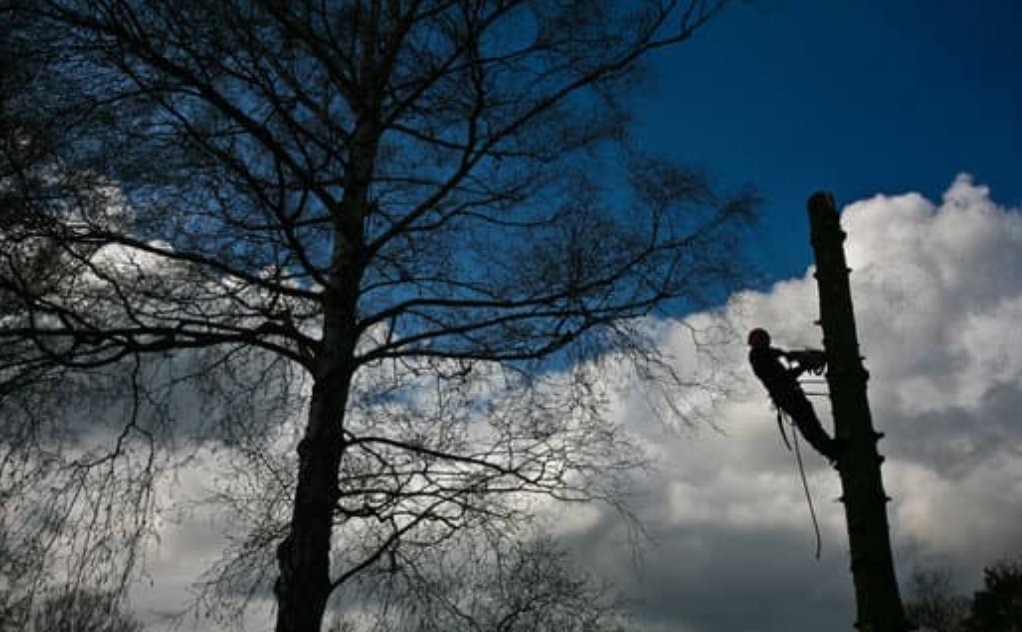
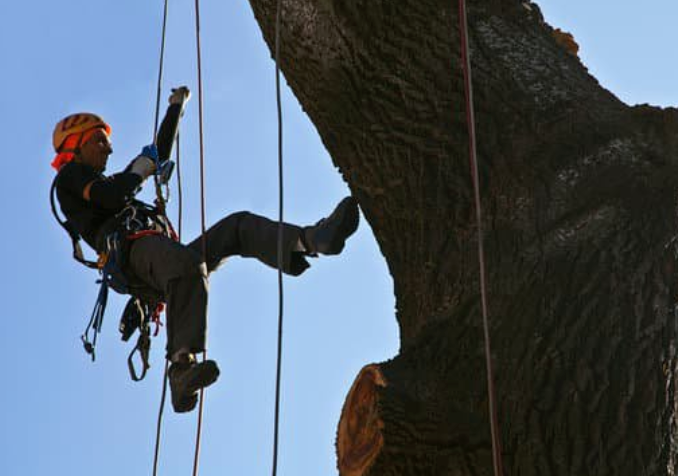
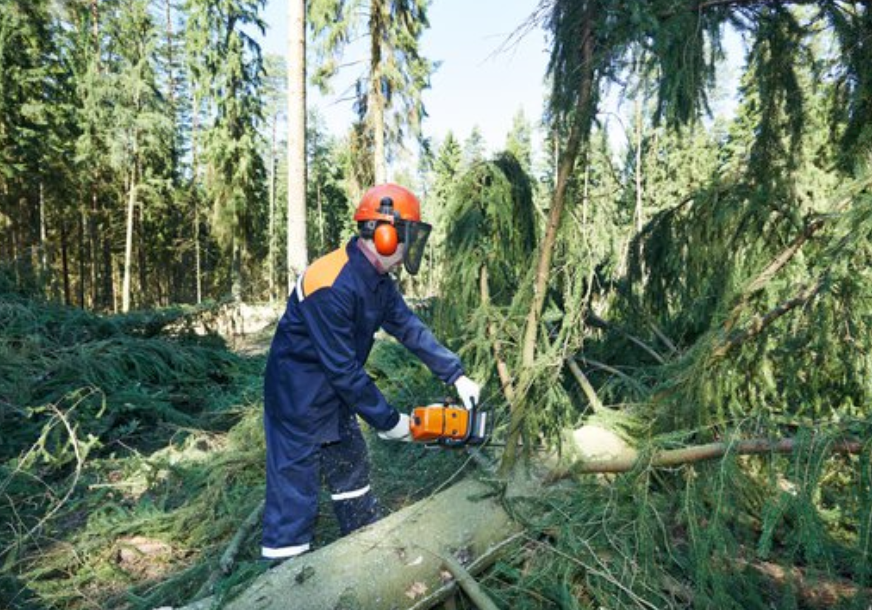
- Climbing, rigging or felling, whichever the tree needs -- Climbing, rigging and dismantling in sections where space is tight, or direct felling where there's a clear drop zone. Branches are chipped on site where practical; larger sections are cut to length and stacked or removed depending on what you've asked for. Stump grinding, if included, is usually done the same visit or as a short follow-up.
- Clearing up and talking you through what's next -- Site is raked, swept and checked for stray debris before we leave, and we'll talk you through what's been done and anything to watch for afterwards - regrowth from a stump, for instance, or how a newly reduced crown will fill out over the next season.
Typical costs, and why Bearsden's older gardens often price higher
Prices for domestic tree surgery generally sit between around £200 and £3,000 depending on the size of the tree, access, and how much rigging or dismantling is needed. A full removal of a medium to large garden tree typically runs from roughly £1,190 to £1,720 once climbing, dismantling and disposal are factored in, while pruning or crown work on a single tree is more commonly in the £420 to £600 range. Bearsden's older, larger gardens and mature specimen trees mean quotes here often land toward the upper end of these ranges rather than the lower - a big beech behind a Victorian villa with restricted rear access costs more to bring down safely than the same species standing in an open field. Stump grinding, hedge trimming and small crown lifts for driveway clearance tend to be at the lower end. None of this replaces an actual quote: tree size, decay, proximity to buildings, glasshouses and overhead lines, and whether a TPO or conservation area notice is needed all move the price, so a site visit is the only way to give you a number you can rely on, and it costs nothing to arrange.
Bearsden conservation area tree work versus a standard suburban job
| Standard garden tree (no protection) | Tree in a Bearsden conservation area or under a TPO | |
|---|---|---|
| Council notice required | No | Yes - typically six weeks' written notice, or full consent for a TPO tree, before cutting |
| Timescale | Can often be booked within days | Add the statutory notice period unless it's a genuine emergency |
| What can be done without consent | Most pruning, reduction and removal | Minor pruning may be exempt; felling, topping or major crown work generally isn't |
| Emergency/dangerous tree exception | Not applicable | Council can be notified after urgent safety work, but evidence of the danger should be kept |
| Typical cost impact | Standard quote applies | Usually similar once consent is granted, though a longer timeline and any required arboricultural report can add cost |
Qualifications that matter when a tree is protected, not just present
A six-week conservation area notice only works in a client's favour if it's filled in properly - the species named correctly, the tree's condition described in accurate detail, and the reason for the proposed work explained clearly enough for a planning officer to weigh up rather than query or reject outright. That's squarely what the team's NPTC Professional Tree Inspection qualification is for: reading decay, deadwood and root-plate movement well enough to put a genuine written case behind a fell, reduction or dismantle, rather than an opinion dressed up as one.
Behind that inspection qualification sits the rest of the team's NPTC and Lantra certificates: felling tickets covering both small and large trees, aerial rescue, chainsaw work from rope and harness, and rigging and dismantling for garden trees too large, too enclosed by walls and hedges, or too close to a neighbour's greenhouse to come down in one piece. Machinery certificates cover the stump grinder, wood chipper and timber crane used on the bigger clearance jobs that come up on Bearsden's larger plots. Trading as Glasgow Trees since 2005, the business carries full insurance, and every job is carried out to British Standard BS3998, whether that's a straightforward crown lift or a felling plan built around a six-week council notice. Quotes are free, with no obligation to go ahead.
Bearsden's conservation streets, and the ground we cover beyond them
Bearsden sits around six miles north-west of Glasgow city centre, and its character - tree-lined avenues, mature gardens behind Victorian and Edwardian villas, and several designated conservation areas protecting that streetscape - is exactly why tree work here tends to carry more planning consideration than a newer estate elsewhere. The clay-heavy garden soils common across parts of Bearsden are also worth knowing about if you're removing a large, mature tree close to a house: clay shrinks and swells with moisture, and a big tree's roots can be managing that moisture balance more than people realise, so removing it near foundations sometimes needs a bit of thought about phased work or replanting rather than a straight take-down. We cover the surrounding area too, from neighbouring Milngavie and Bishopbriggs through Kirkintilloch and Strathblane, and out towards Killearn, Balfron and Fintry on the edge of the Campsies, as well as Glasgow itself and the wider central belt corridor down through Clydebank, Paisley, Renfrew, Rutherglen, Cambuslang and into Lanarkshire and as far as Stirling and Bo'ness. Wherever the job is, the same conservation area and TPO awareness applies if your street happens to sit inside a protected area, and we'll always check that before quoting rather than after.
Common questions about tree surgery in Bearsden
How much does a tree surgeon cost in Bearsden?
Most domestic jobs fall between roughly £200 and £3,000. A full tree removal is typically £1,190 to £1,720, and pruning or crown work on a single tree is more commonly £420 to £600. Bearsden's mature gardens and larger specimen trees often push quotes toward the upper end of these figures because of the extra rigging, climbing time and access work involved, so a site visit is the only reliable way to get a firm number.
Is my tree in a conservation area covered by extra protection in Bearsden?
Possibly. East Dunbartonshire Council has designated several conservation areas within Bearsden under the Town and Country Planning (Scotland) Act 1997, and trees within these areas generally need six weeks' written notice to the council before any felling, topping or significant pruning, even without an individual Tree Preservation Order in place. Not every street is covered, and the level of protection can vary between the different conservation areas, so it's worth checking your specific address with the council or asking us to check when we visit.
Do I need East Dunbartonshire Council's permission to remove a large tree?
If the tree has an individual Tree Preservation Order, yes - you need formal consent before any work. If it's simply within a conservation area but has no individual TPO, you generally need to give six weeks' written notice rather than seek full consent, which gives the council a chance to object or impose a TPO before work starts. If neither applies, no council process is needed, though it's still good practice to check boundary ownership and any factor or management company rules first.
What's the typical cost of crown lifting for driveway clearance?
Crown lifting to raise the canopy clear of a driveway, path or roofline is usually one of the more affordable jobs, often sitting in a similar bracket to general pruning - roughly £420 to £600 for a single tree, depending on height, species and how much material needs to come down safely rather than just cut and drop.
How do I get a fast quote for hedge and tree maintenance?
A phone call with a rough description of the hedge or trees, their height, and access to the site is usually enough to arrange a site visit, and quotes are free with no obligation to book. If the hedge or tree sits in a conservation area, mentioning that upfront means any council notice requirement is dealt with from day one rather than causing a delay later.
Are tree surgeons in Bearsden qualified to NPTC/City & Guilds standard?
Our team holds NPTC and Lantra certificates across health and safety, first aid, chainsaw and tree work - including small and large tree felling, windblown trees, aerial rescue, chainsaw work from rope and harness, and rigging and dismantling - plus machinery certificates for equipment like stump grinders, wood chippers and timber cranes, and a specific NPTC qualification in Professional Tree Inspection. All work is carried out to British Standard BS3998.
How much does it cost to remove a diseased or dangerous tree safely?
Cost depends on size, condition and access rather than the disease itself, but a diseased tree with significant decay often needs more careful dismantling in sections rather than a straightforward fell, which can push the job toward the upper end of the typical £1,190 to £1,720 removal range. If the tree poses an immediate danger, work can sometimes proceed before any conservation area notice period completes, though evidence of the risk should be kept in case the council asks about it afterwards.
What should I check before hiring a local tree surgeon?
Confirm they carry public liability insurance, ask what BS3998 compliance means in practice for your job, and check they'll identify - unprompted - whether your tree needs council notice before quoting a start date. A surgeon who doesn't ask about TPOs or conservation area status in a town like Bearsden is missing a step that can cause real problems later, including enforcement action if work goes ahead without the required notice.
Can removing a mature tree in a Bearsden garden affect subsidence risk given the clay soil?
It can, in some cases. Clay soils shrink and swell with moisture content, and a large mature tree can be drawing significant water from the ground around it; removing it suddenly can let clay soil rehydrate and swell, which has been linked to subsidence in properties built on shrinkable clay, particularly older properties with shallower foundations. It's not a reason to avoid necessary tree work, but for a large tree close to a house on clay ground, phased crown reduction rather than outright removal, or replanting advice afterwards, is sometimes the more sensible route, and we'll flag it if we think it applies to your garden.
Get your Bearsden tree assessed before autumn works pile up
Trees don't wait for a convenient council notice period, and neither does storm damage or a stump that's already causing a trip hazard. If a tree on your property might be protected, or you simply want an honest read on what a job will cost and how long it will take, get in touch for a free site visit and a written quote with no obligation to proceed.
Glasgow Trees
Call 0141-483-7485