Tree Surgeon Bridgeton Glasgow: Removal, Pruning and Emergency Tree Work
- Every job planned and cut to British Standard BS3998, whatever the access or tree size
- NPTC Professional Tree Inspection qualified - useful for judging a tree's real condition before committing to a plan
- Free, no-obligation quotes, with a site visit before any price is fixed
Bridgeton is one of the few parts of Glasgow where you'll find two quite different tree problems within a few streets of each other: century-old sandstone tenements with back courts that have never had any proper tree management, and newer ground around Dalmarnock and the Clyde Gateway regeneration area where street trees and landscaping are only a few years old and need a different kind of care altogether. Whichever end of that you're dealing with - a mature tree that's outgrown a shared back court off London Road, a lean that's worsened after a storm, or formative pruning on recently planted stock near the newer developments - the starting point is the same: work out what's actually there, and what access allows, before anyone picks up a saw.
This has been East End ground for a long time - tight back courts reached through a single close, shared gardens split between several flats, boundary trees nobody's quite sure whose responsibility they are, and now a growing number of younger trees from the area's regeneration that need shaping rather than removal. All work is carried out to British Standard BS3998, the team is fully insured, and quotes are free and without obligation, which counts for a lot when half the job on a site like this is sorting out access and ownership before the cutting even starts.
What's Covered on a Bridgeton Tree Surgery Job
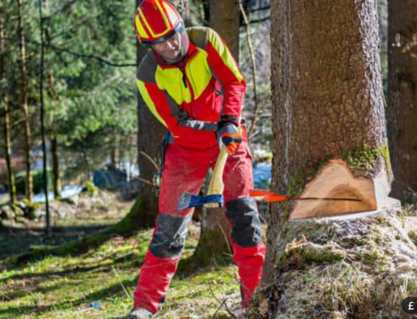
- Full tree removal and felling - dead, diseased, storm-damaged, dangerous or simply too big for the space, including sectional dismantling where a back court or close won't take a straight fell
- Crown reduction, crown lifting and crown thinning to manage size, light and clearance from windows, cables or neighbouring gardens
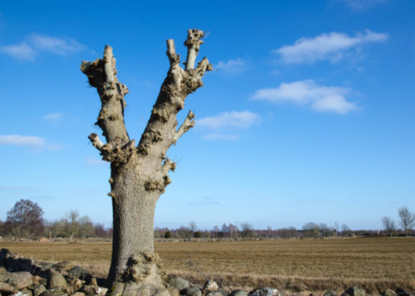
- Pollarding, coppicing and formative pruning for younger trees that need shaping over several seasons
- Deadwooding - removing dead limbs before they drop into a shared court or onto a path
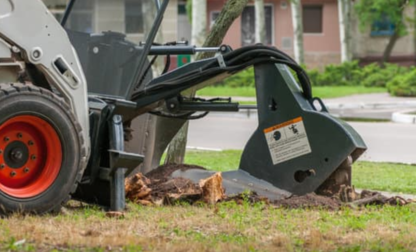
- Stump grinding down to below turf or paving level, with arisings cleared or left as mulch by arrangement
- Hedge cutting and trimming, including tall boundary hedges between back courts
- Emergency callout for wind-damaged, leaning or fallen trees, including making a hazard safe before full removal
- Site and ground clearance, wood chipping on site, and log removal
- Consultancy, method statements and risk assessments for housing associations, factors and commercial clients managing shared or communal ground
- Advice on tree preservation order status and conservation area rules before work starts, and handling the paperwork with Glasgow City Council where it's needed
Not Included / Costed Separately
- Large volumes of sawn timber beyond a standard chip-and-remove tidy-up - if you want full firewood-length logs kept and stacked, or extra timber skipped away, that's agreed and priced separately
- Access plant such as a cherry picker, mobile elevating work platform (MEWP) or crane hire for back courts with no vehicle access - this is quoted once the site visit confirms what's actually needed
- Structural investigation - if a tree's roots are suspected of affecting a wall or foundation, that's a job for a structural engineer or subsidence specialist, not tree surgery
- Formal arboricultural reports for planning applications (BS5837 style surveys) - a separate paid service, not something a standard site-visit quote includes
- Getting sign-off from co-owners of common back-court ground, or from Network Rail where a boundary runs onto the railway - advice is given, but the consent itself is down to you, your neighbours or your factor to arrange
- Reinstating fencing, paving or planting disturbed during access, unless it's agreed as part of the quote beforehand
How a Bridgeton Job Runs, Start to Finish
- Get in touch -- Call and describe the tree - species if you know it, roughly how tall, and where it sits: back court, close, front garden, or boundary with a neighbour. A photo sent over beforehand saves time on site and flags early if a lift or crane might be needed.
- Site visit and assessment -- Someone comes out to look at the tree itself - condition, lean, deadwood, root plate - and just as importantly, the site: is there vehicle access to the back court, is the ground shared with other flats, does the council's tree preservation order or conservation area map cover the address. Bridgeton's older tenement stock often means this step takes longer than the cutting itself.
- Free written quote -- You get a price covering the actual work, the access method - rope and rigging through a close, or a compact MEWP where the court allows it - how the wood and brash will be cleared, and a realistic timescale. Nothing extra gets added once the job starts without discussing it with you first.
- Council notification, if it applies -- Where a tree is protected by an order or sits in a conservation area, the council needs formal notice before work goes ahead - typically a six-week window unless it's an emergency. This is handled as part of the job rather than left for you to sort out.
- The work itself -- Limbs and hazardous sections come down before the main stem, rigged and lowered rather than dropped, particularly where there's a shared court, washing lines, parked cars or a neighbour's greenhouse below. Ground sheets protect paving and shared grass while chipping happens on site.
- Clean-up and sign-off -- Stump ground out or treated as agreed, arisings and brash cleared, the site left tidy, and a final look round with you before the invoice goes out, so there's no surprise about what's been done.
What Tree Work Costs Around Bridgeton
Prices for tree surgery generally sit between about £200 and £3,000 depending on the size and complexity of the job, with a full tree removal more often landing between roughly £1,190 and £1,720, and pruning or crown reduction work typically £420 to £600. In a dense urban area like Bridgeton, jobs often run towards the upper end of these ranges - not because the tree itself is unusual, but because a back court with a single close for access, shared ground, or a tight lane takes longer and sometimes needs rope access or a compact MEWP rather than a straightforward drive-up-and-cut job. Stump grinding is usually cheaper when it's added onto a removal rather than booked as a standalone visit, and hedge trimming tends to sit at the lower end unless the hedge is unusually tall or overgrown. None of this replaces an actual quote - the only way to give you a firm figure is a site visit, because access moves the price around more than the tree itself does.
Typical Job Types and What Drives the Price
| Type of work | Typical price range | Typical time on site | What moves the price most |
|---|---|---|---|
| Small tree removal, easy garden access | £200-£450 | Half a day | Tree size and how the waste is disposed of |
| Tree removal, tenement back court or restricted access | £600-£1,720 | One to two days | Whether rope access or a MEWP is needed, and how far wood has to be carried to a vehicle |
| Crown reduction or formative pruning | £420-£600 | Half to a full day | Height, spread and how much reduction is needed |
| Stump grinding | £80-£250 (often less when combined with a removal) | One to two hours | Stump diameter and how close roots run to paving or walls |
| Hedge cutting and trimming | £100-£300 | Half a day | Length, height and how overgrown the hedge has become |
| Emergency storm or wind-damage callout | Priced on the day | Response first, full job to follow | How urgent the hazard is and what access allows there and then |
Why Bridgeton Households and Factors Use Glasgow Trees
A back court reached through a single close, shared by three or four flats and boxed in by sandstone walls on every side, isn't a site where a tree can simply be dropped in one piece - there's nowhere for it to land. That's precisely what the team's NPTC and Lantra certificates in chainsaw work from rope and harness, rigging and dismantling, and aerial rescue are for: taking a tree apart section by section and lowering each piece past windows, washing lines and bins rather than felling it whole. NPTC Professional Tree Inspection training covers the other half of the job - reading a tree's root plate, crown and any lean properly before committing to a felling or reduction plan, which counts for more on shared ground where a wrong call risks a common wall or fence rather than open garden behind a house. Behind both skills sits a business that's been climbing and cutting trees around this city long enough to have a name for doing it well: Glasgow Trees, trading since 2005. Every job still goes out to British Standard BS3998 and under full insurance, points that carry more weight than usual when the ground being worked runs directly under several households' windows rather than one private garden. The registered office sits at Clyde Offices, 48 West George Street, Glasgow, and a quote costs nothing to get and commits you to nothing either way.
Bridgeton and the Surrounding East End
Bridgeton itself is the main focus here, from the tenement back courts either side of London Road and Dalmarnock Road to the smaller lanes and closes running off Main Street. The area's characteristic Victorian sandstone tenements were mostly built with shared back courts rather than individual gardens, which is why so much of the work here involves communal ground with more than one owner and access through a close rather than a driveway. Bridgeton Cross, with its listed cast-iron umbrella structure and the restored Olympia building nearby, sits within a conservation area, so tree work anywhere near there needs a quick check against the council's conservation area and preservation order records before anything is cut - the same applies moving towards the Barras and Calton to the west. A rail corridor runs through toward Dalmarnock, which is relevant if a boundary tree backs onto the railway, and the ongoing regeneration around Bridgeton and Dalmarnock has brought a fair bit of new landscaping and younger tree planting that needs a different kind of care to the mature trees in the older back courts. Beyond Bridgeton, cover extends across Glasgow and out to Renfrew, Clydebank, Paisley, Johnstone, Dumbarton, Greenock, Pollokshaws, Rutherglen, Cambuslang, Giffnock, Clarkston, Baillieston, Barrhead, Newton Mearns, Bothwell, Blantyre, East Kilbride, Hamilton, Bishopbriggs, Bearsden, Milngavie, Kirkintilloch, Strathblane, Killearn, Balfron, Fintry, Bo'ness and Stirling.
Bridgeton Tree Surgery Questions
How much does it cost to remove a tree from a small back garden or back court in Bridgeton?
For a straightforward small tree with reasonable access, you're typically looking at somewhere around £200 to £450. Where the tree sits in a shared back court behind a tenement with only a close for access, the price usually moves up - often well past that - because the wood has to be carried or barrowed out rather than loaded straight onto a vehicle, and there's more care needed working around washing lines, bins and other flats' windows. A site visit gives you the real number.
Do tenement flats in Bridgeton need council permission for a tree on shared garden ground, and what happens when several owners share the land?
Permission from Glasgow City Council is only needed if the tree is covered by a Tree Preservation Order or the property sits within a conservation area - both apply across the city including the East End, so it's worth a check before you commit to anything. Separately, where the ground is common back-court land owned jointly by several flats, the tree itself is usually a shared asset too, meaning ideally all the owners, or the factor acting for them, agree to the work before it goes ahead. Advice can be given on both fronts, but getting the co-owners' agreement is down to you and your neighbours, not something that can be arranged on your behalf.
How does access affect pricing for tree work in a dense area like Bridgeton?
More than almost anything else. A tree that can be reached by a vehicle and dropped in an open direction costs a fraction of the same tree in a back court reachable only through a narrow close, where every branch has to be roped down section by section and carried out by hand. Confined sites also sometimes need a compact MEWP or extra ground protection for shared paving, both of which add time and cost. It's the main reason two seemingly similar jobs in Bridgeton can come back with quite different prices.
What's the process for removing a tree that overhangs a lane, close or right-of-way?
The first job is establishing who actually owns the tree - it might sit on your ground with the canopy overhanging the lane, or the reverse - and whether anyone else has a right of access along that lane that the work needs to work around. Once that's clear, the removal itself is usually done in sections rigged down rather than felled, to keep the lane clear and safe for anyone still using it during the job.
Are there tree preservation orders or conservation area rules that apply in Bridgeton, and does that include areas like Bridgeton Cross?
Yes - Tree Preservation Orders and conservation area protections under the Town and Country Planning (Scotland) Act 1997 apply across Glasgow City Council's area, not just in the West End or leafier suburbs, and that includes the East End. Bridgeton Cross and the ground around its listed umbrella structure and the Olympia building fall within a conservation area, so a tree standing on or near a listed site there needs checking against the council's records before any work starts, even if it turns out no order applies to that particular tree.
How quickly can you attend for emergency tree work in Bridgeton?
Storm damage, a leaning tree or a limb that's come down get priority over routine bookings, and Bridgeton sits close to the normal working area so getting someone out isn't usually the issue - what takes the time on the day is often the access itself, especially in a back court where a fallen branch might be blocking the only route in. Call and describe what's happened; that's enough to work out how urgent it is and what's needed to get to it.
Do I need my neighbour's consent to work on a tree that sits on a boundary?
If the trunk sits on the boundary line itself, the tree is generally considered to belong to both properties, and cutting anything beyond what overhangs your own side really needs your neighbour's agreement first, both as a matter of ownership and to avoid a dispute over damage to a tree they've also got a stake in. Where the trunk is clearly on one side, the owner can generally deal with their own tree, though it's still worth a word with the neighbour if the canopy overhangs their garden.
What about the young trees planted as part of Bridgeton's regeneration - do they need different treatment to older tenement trees?
Yes. Newly planted street trees and landscaping around Dalmarnock and the wider regeneration area are usually only a few years old, and the priority with these is formative pruning to establish a good shape and structure early on, not the deadwooding or crown reduction that older back-court trees usually need. Stakes, ties and guards on young trees also need checking periodically rather than left in place indefinitely, since a tie that isn't loosened as the trunk thickens can cut into the bark and do real damage over a couple of growing seasons.
Could a large tree affect the foundations of a Victorian tenement, and does a tree near the railway need Network Rail's involvement as well as the council's?
Older tenements were built on shallow foundations that predate modern root-related subsidence guidance, so a large, thirsty species growing close to a wall on clay-rich ground is worth having looked at, particularly if there's already cracking - though diagnosing actual subsidence is a job for a structural or subsidence specialist rather than a tree surgeon. Separately, where a boundary backs onto a rail line, such as the stretch running towards Dalmarnock, any work near the railway boundary itself may need Network Rail's agreement in addition to any council consent - worth flagging early so it doesn't hold the job up.
Get a Free Quote for Tree Work in Bridgeton
A tree that's already leaning, dropping deadwood into a shared court, or growing into cables doesn't tend to improve by waiting, and a quick call now costs nothing but could save a much bigger job - or a much bigger bill - later on. Get in touch for a free, no-obligation site visit and a straight answer on what your tree actually needs.
Glasgow Trees
Call 0141-483-7485