Tree Surgeon Clarkston Glasgow: Tree Care, Removal and Hedge Work for East Renfrewshire Gardens
- Free, no-obligation quotes, with a site visit before any price is fixed
- All work carried out to British Standard BS3998, by a fully insured team
- NPTC Professional Tree Inspection qualified, so a report on a doubtful tree stands up if a neighbour or the council ever queries it
If a beech, sycamore or old orchard tree in your Clarkston garden needs attention, the tree surgeon Clarkston Glasgow homeowners tend to call first is Glasgow Trees, working across East Renfrewshire since 2005. Whether it's a storm-loosened branch hanging over next door's fence, a leylandii hedge that's outgrown the boundary, or a mature tree close enough to the house that you've started wondering about the roots, the job needs someone who knows the trade and knows the rules East Renfrewshire Council applies to garden trees on this side of Glasgow.
Clarkston's mix of 1930s sandstone bungalows, semis with long rear gardens, and the odd survivor from the orchards that stood here before the streets were laid out means most jobs are domestic: crown reduction on a tree shading a conservatory, a dead ash coming down before it drops a limb onto a path, or a stump left by a previous owner that's now throwing up suckers through the lawn. The same crew handles commercial ground maintenance and site clearance for developers and housing associations working in the area too.
Beech Crowns, Leylandii Hedges and Everything Between
- Tree removal, from a single dead conifer to a full-height tree felled and lowered in sections where the garden is tight
- Crown reduction and crown lifting, bringing a tree back within its space without leaving it looking hacked about
- Pruning and formative pruning on younger trees, correcting shape while it's still a cheap job to do
- Hedge cutting and height reduction, including tall leylandii and beech hedges along boundary fences
- Stump grinding down below lawn level, so turf or a new border can go straight back over it
- Deadwooding, taking dead limbs out of an otherwise sound tree before they drop on their own
- Emergency callout after storm damage, a split limb, or a branch hanging over a path, drive or greenhouse roof
- Site clearance and land or bush clearing ahead of landscaping or building work
- Tree planting and advice on species that will cope with Clarkston's often clay-heavy garden soil
- Consultancy, method statements and risk assessments for commercial clients and housing associations
Not Included / Costed Separately
- Work on any tree covered by a Tree Preservation Order, or one inside a conservation area boundary, until East Renfrewshire Council has given consent - the surgeon can help prepare the application but can't skip that step
- Structural repairs to a fence, greenhouse, driveway or wall damaged by roots or a fallen limb - that's a builder's job, though the site will be made safe first
- Replanting, turfing or wider garden landscaping beyond making good the immediate work area
- Felling a tree that isn't legally yours, such as one rooted on a neighbour's side of a shared boundary, without their agreement
- A structural engineer's judgement on subsidence or foundation risk - a tree surgeon can flag the concern but that call isn't theirs to make
From First Phone Call to a Cleared Garden - in Four Stages, Not Six
- Get in touch -- Describe the tree, roughly its size, and what's prompted the call - overhang, dead wood, storm damage, a subsidence worry - so the crew knows what to expect before they arrive.
- One visit covers the site, the price and the paperwork -- Someone comes out to look at the tree itself, the access (side gate, narrow drive, road-facing garden), and anything overhead such as power lines, a greenhouse roof or a neighbour's fence. That same visit is also when the question of a Tree Preservation Order or a conservation area notice gets settled, if the tree's age or the property's position makes it relevant to East Renfrewshire Council - so the number you're given already accounts for any six-week notice period rather than springing it on you afterwards as an add-on delay.
- The work itself -- Felling, or dismantling from the top down where space is tight, crown work from rope and harness or a platform depending on access, with rigging used to lower heavy sections rather than letting them drop.
- Everything after the last cut -- Grinding the stump where that's part of the job, chipping brash on site or hauling it away, and leaving paths, drives and lawns clear afterwards - plus a written record of what was actually done, which is worth having for insurance, a future TPO application, or simply your own file if you sell the house on.
Realistic Numbers for Removal, Reduction and Stump Work
Based on current UK-wide trade pricing data, tree removal generally runs from around £150 for a small garden tree up to roughly £4,800 for a large, difficult one - the gap is driven mostly by height, trunk diameter, and how much of the tree has to come down by rope rather than simply being felled. Day-rate labour for tree surgery sits around £180-£250, which covers jobs like crown reduction, deadwooding or hedge work that don't fit a simple per-tree price. Stump grinding typically costs £160-£710 depending on stump diameter and root spread - a small garden stump is at the low end, a substantial mature trunk at the high end. None of these figures account for a specific garden: access down a narrow side passage, a tree overhanging a neighbour's greenhouse, or the need for a TPO application first can all move the price, which is why a proper quote for your Clarkston property needs someone to actually stand in the garden and look at the tree before a firm number goes on paper.
Chainsaw, Handyman or Qualified Surgeon: Weighing the Real Difference
| Option | Reasonable for | Where it falls short |
|---|---|---|
| Qualified tree surgeon (BS3998, NPTC-inspected) | Any tree bigger than garden shears can handle, TPO or conservation area work, storm damage, felling near buildings | Costs more than a gardener with a chainsaw, but the paperwork and the standard of work hold up if a neighbour, council or insurer ever asks |
| General gardener or handyman | Light hedge trimming, small shrub pruning | Rarely insured for tree work specifically, no felling or aerial rigging training, and can't advise on TPO or conservation area status |
| DIY with a domestic chainsaw | Small branches reachable from the ground | No rope, harness or aerial rescue training - a real risk on anything needing a ladder, ropes or climbing into the crown |
| Leaving a leaning or dead tree alone | A tree confirmed stable and simply being monitored | Risk builds with each storm season, and a limb falling onto a shared boundary can turn into a liability dispute with a neighbour |
The Paperwork Behind a Judgement Call on a Doubtful Tree
Clarkston's stock of mature trees - the beeches and sycamores planted when the 1930s sandstone bungalows went up, the odd orchard survivor from before the streets existed at all - throws up the same question again and again: is a given tree actually a problem, close enough to a foundation or a shared driveway to justify taking it down, or does it just look that way from the kitchen window? Answering that in a way that holds up if East Renfrewshire Council, an insurer or a neighbour ever wants the reasoning spelled out is what the crew's Professional Tree Inspection training was built for - it's an NPTC qualification aimed specifically at that judgement call, not a general chainsaw ticket, and it turns "that tree looks dodgy" into a written report with root plate, crown condition, deadwood and lean actually assessed and set down on paper.
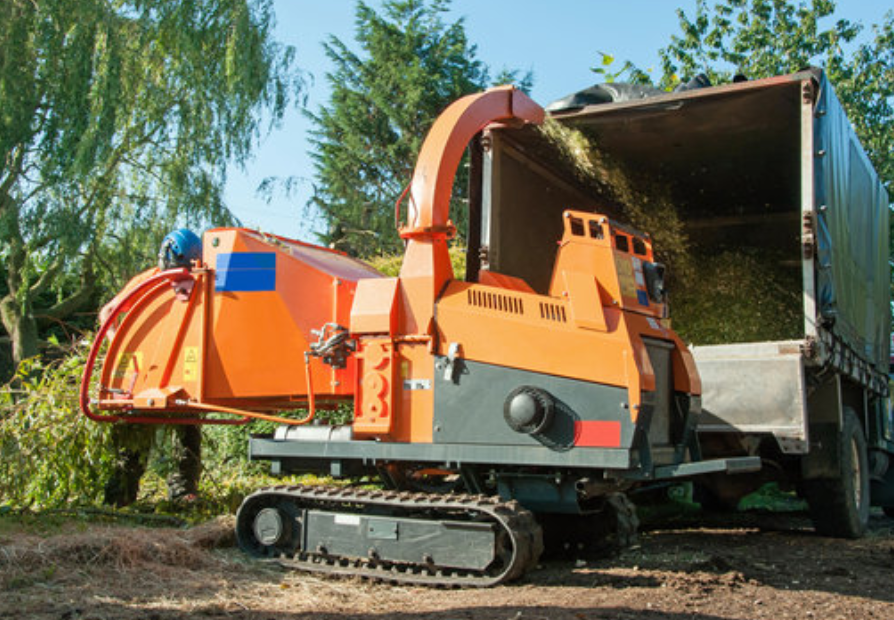
That inspection background doesn't stand alone. It sits behind a wider set of NPTC and Lantra certificates covering health and safety, first aid, small and large tree felling, windblown trees, aerial rescue, chainsaw work from rope and harness, and rigging and dismantling, plus machinery tickets for the stump grinder, wood chipper, timber crane, 360 excavator and telehandler that come out on the bigger clearance jobs for developers and housing associations. Glasgow Trees has traded under that name since 2005, so a fair few Clarkston gardens have already had a look from this crew one way or another. Every job goes out to British Standard BS3998, the team works fully insured throughout, and a site visit to price the work costs nothing and commits you to nothing - book it, hear the number, and walk away if it's not for you. The registered office is Clyde Offices, 48 West George Street, Glasgow.
East Renfrewshire Gardens, From Giffnock to the M77 Corridor
Clarkston sits just off the M77 corridor into East Renfrewshire, which puts most jobs within easy reach of Giffnock and Newton Mearns to the south and west, and the wider Glasgow southside toward Pollokshaws and Rutherglen. Garden soil in and around Clarkston tends toward clay, which holds water after heavy rain and can make root plates less forgiving when a tree is under stress - worth knowing if you're deciding between reducing a tree's crown to ease wind-loading versus taking it out altogether. The service footprint runs wider than East Renfrewshire on its own, following the M8, M74, M77, M80 and A82 corridors out to Renfrewshire, West Dunbartonshire, South Lanarkshire (including Cambuslang and Rutherglen), East Dunbartonshire, Inverclyde, and as far as Stirling and Bo'ness - so a job at a Clarkston property and one at a client's second site in Bearsden or East Kilbride can be handled by the same crew without a second call-out fee for the initial visit.
Clarkston Homeowners' Most Common Questions
What does a tree surgeon in Clarkston typically charge?
As a rough guide, removing a garden tree runs from around £150 for something small up to roughly £4,800 for a large, awkward one, with day-rate work such as crown reduction or hedge cutting at £180-£250 a day and stump grinding at £160-£710 depending on the stump's size. Your actual price depends on access, height, and whether a Tree Preservation Order needs sorting first, so treat these as a starting point rather than a quote - a site visit is free and gives you an exact figure.
Is Clarkston a conservation area, and does that affect tree work?
East Renfrewshire Council administers Tree Preservation Orders and conservation area consents across the area, and parts of East Renfrewshire do carry conservation area status. Whether your specific property falls inside one of those boundaries isn't something to assume either way - it's worth checking with the council's planning department or asking your tree surgeon to check on your behalf before any cutting is booked in, since work inside a conservation area on a tree above a certain size generally needs six weeks' notice even without a formal TPO.
How do I find out if a tree in my garden has a Tree Preservation Order?
East Renfrewshire Council holds the TPO register and can confirm whether a specific tree or group of trees is protected - most councils now publish an interactive map, or you can phone the planning team directly with the address. A tree surgeon doing your quote will usually check this as a matter of course before work starts, because cutting a protected tree without consent can lead to a substantial fine, regardless of whether the person doing the cutting knew about the order.
Can a tall conifer hedge be height-reduced without killing it or leaving it bare?
Leylandii and most conifers don't regrow from old, leafless wood, so a height reduction has to be planned carefully - cutting back to just above where green growth still exists usually keeps the hedge alive and lets it fill back in over a season or two, whereas cutting hard into bare brown wood can leave a permanent gap that never recovers. A hedge that's been left to grow tall for years sometimes needs reducing in stages over more than one visit rather than all at once, to avoid shocking it.
How long does a typical tree removal take in a Clarkston garden?
A straightforward small to medium tree with good access, felled in one piece or a couple of sections, is usually a half-day job including clean-up. A larger tree needing to be dismantled piece by piece because it's close to a house, a greenhouse, or a neighbour's fence, or one requiring rigging to lower heavy sections safely, can take a full day or more. Stump grinding, if you want it done at the same time, adds on separately.
My neighbour's tree overhangs my garden in Clarkston - what are my rights?
Under Scots law you're generally entitled to cut back branches or roots that cross onto your side of the boundary, up to the boundary line itself, without needing your neighbour's permission - though you can't go onto their property to do it, and any cuttings or fruit technically still belong to them unless otherwise agreed. It gets more complicated if the tree is protected by a TPO or sits in a conservation area, in which case the same consent rules apply even though it's not your tree. Where the tree's roots are actually causing damage, such as to a shared driveway, it's worth trying to resolve it directly with your neighbour first, with a tree surgeon's written assessment as evidence if it needs to go further.
Are you insured if a falling branch damages a fence, greenhouse or shed during the work?
The team works fully insured, and part of the site visit before any job is spent looking at exactly what's nearby - fences, greenhouses, garden buildings, a neighbour's property - so that rigging and dismantling sequences are planned to avoid damage in the first place rather than relying on insurance to fix it afterwards. If something specific and fragile is close to the work area, flag it before the quote so it can be planned around.
Our garden has heavy clay soil and a large tree close to the house - should we worry about the foundations?
Clay soil shrinks and swells with moisture, and a large tree drawing water from clay close to a building's foundations can, in some cases, contribute to ground movement - this is a genuine factor in parts of the west of Scotland with clay-rich subsoil, Clarkston included. A tree surgeon can look at the tree's condition, root spread and proximity and advise whether reduction or removal makes sense, but if there's already visible cracking or movement in the building, that's a job for a structural engineer alongside the tree surgeon, not instead of one - the two professions answer different questions.
Can you help settle a disagreement between neighbours over a shared boundary tree affecting a driveway?
Yes, though the tree surgeon's role is to give an honest, independent read on the tree's condition, root spread and the actual cause of any driveway damage, rather than to take sides. That written assessment is often what allows two neighbours to agree a way forward - reduction, root barrier, or removal - without it turning into a drawn-out dispute. Where ownership of the tree itself is unclear, that's a legal question the tree surgeon can't resolve, but the technical read is usually the missing piece that lets everyone move on.
Get the Tree Looked At While It's Still in Full Leaf
A tree in full leaf shows up thin patches, dieback and storm damage far more clearly than a bare winter crown does, which makes late summer a genuinely useful time to get a doubtful tree looked at before autumn winds test it properly. A free, no-obligation quote costs you nothing to arrange and gives you an honest answer on whether a tree needs taking down, reducing, or simply leaving alone - book the site visit now rather than waiting until a branch has already come down on its own terms.
Glasgow Trees
Call 0141-483-7485